
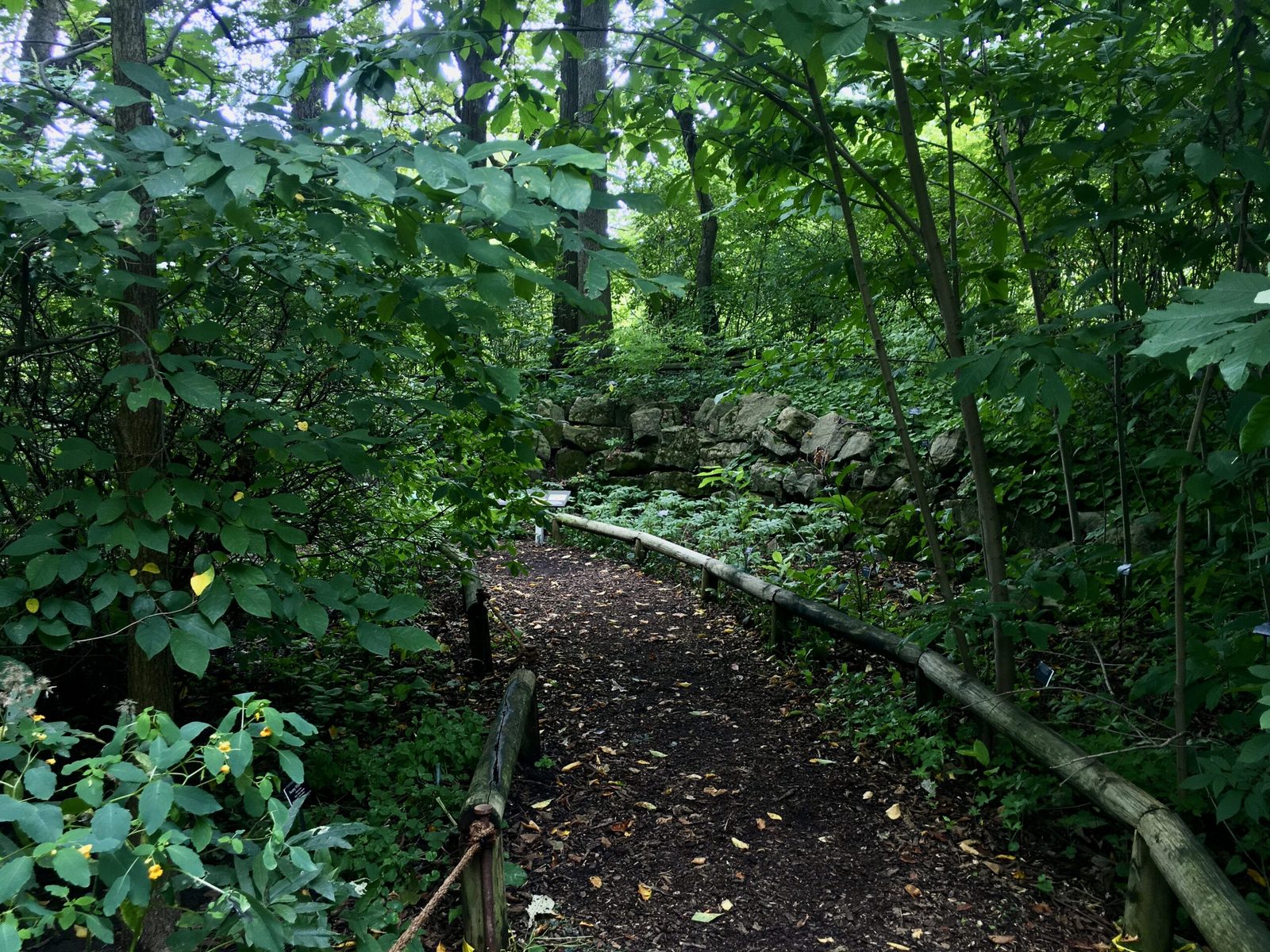
Shade is not a gardening failure. It is a different habitat. Instead of forcing sun-loving lawn or meadow plants under trees, shade-friendly native plants can turn low-light areas into useful, lower-maintenance garden space.
Key Takeaways
- Identify whether the site is bright shade, part shade, dense shade, or dry shade.
- Layer groundcovers, sedges, ferns, perennials, and shrubs where space allows.
- Use regionally native plants rather than generic shade lists.
- Avoid damaging established tree roots during planting.
- A defined edge and repeated groups help shade gardens look intentional.
Understand Your Shade
Morning sun, filtered tree canopy, north-wall shade, and dense evergreen shade all behave differently. Moisture also varies: some shade is cool and damp, while tree-root shade can be very dry.
Check the soil after rain and during dry spells before choosing plants. Site fit matters more than flower color.
Build in Layers
A strong shade planting often resembles a woodland edge. Low groundcovers protect soil, sedges and ferns add texture, perennials add bloom, and small shrubs provide structure.
Layering makes the bed look full even when flowers are not in season. It also provides more habitat than a flat mulch-only area.
Plant Under Trees Carefully
Tree roots are part of the existing landscape. Use small plants, small holes, and minimal disturbance. Avoid deep tilling or adding thick soil over roots.
A modest mulch layer can protect the soil, but keep mulch away from trunks and avoid burying root flares.
Choose Plants by Function
Instead of shopping by one species list, choose functions: soil-covering plants, texture plants, seasonal bloomers, and structure plants. Then pick native species appropriate to your region.
This approach lets the planting stay useful even if one species underperforms.
Keep It Low Maintenance
Shade gardens still need establishment watering and early weed control. As plants fill in, maintenance shifts toward editing, refreshing mulch, and keeping edges clean.
Common Mistakes to Avoid
Do not assume all shade plants tolerate dry shade. Tree-root competition can be severe.
Do not cut major roots to install a new bed. Protect existing trees.
Do not rely on one plant species for the whole area; layered plantings are more resilient.
FAQ
Can native plants grow in full shade?
Some can, but options narrow as shade deepens. Many plants prefer part shade or filtered light.
Are shade native plants useful for pollinators?
Yes. They can provide early flowers, foliage for insects, shelter, and leaf litter habitat.
What should I plant under a large tree?
Use small, regionally appropriate plants and avoid major root disturbance.
Should I remove leaf litter?
Not always. Leaf litter can protect soil and habitat when it is not blocking paths or drainage.
How do I make shade planting look tidy?
Use a clean edge, repeated groups, and contrasting foliage textures.
Related Reading
For plant selection and design, read How to Choose Native Plants for Your Yard and Do Pollinator Gardens Need to Look Wild?.
Conclusion
Shade-friendly native planting turns low-light areas into working garden space. Understand the shade, build layers, protect tree roots, and choose regional plants that can thrive where sun plants struggle.
External References
- USDA Forest Service native gardening resources
- University extension guidance on native shade gardens and woodland edges
- EPA archived native landscaping guidance
Explore this topic
For more practical guidance around gardening, visit the Gardening hub.
- How to Keep Weeds Down Without Reaching for Herbicide
- How to Water New Plants Until They Are Established
- No-Dig Garden Beds for Beginners: Build Better Soil Without Tilling
Image Credits
- Featured image: Shade-friendly native planting works best when it is layered like a woodland edge. Photo by Andre Carrotflower via Wikimedia Commons, licensed CC BY-SA 4.0.