
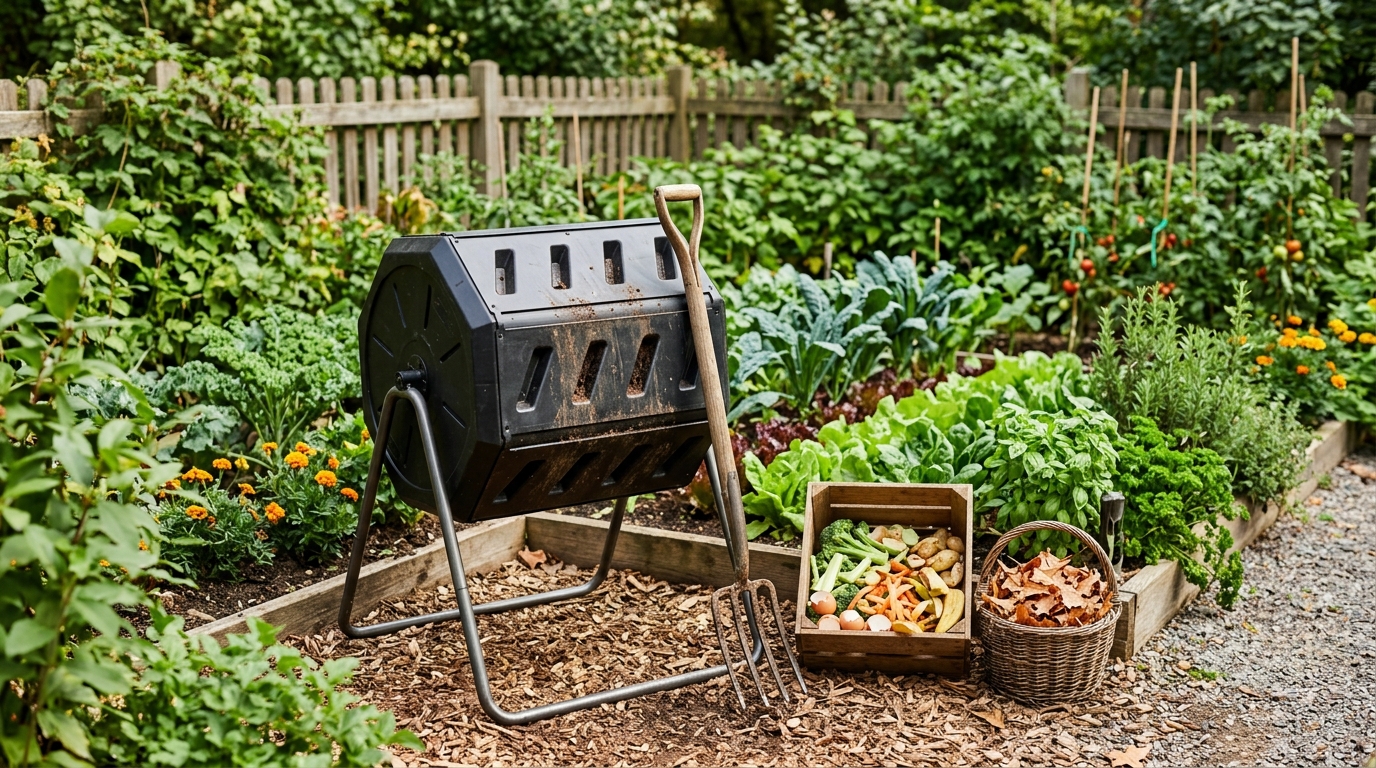
Compost tumblers are appealing because they look tidy, fit small spaces, and make turning easier. For a patio, townhouse yard, or small garden, that can be a real advantage.
They are not magic compost machines, though. A tumbler still needs the right mix of greens and browns, enough moisture, and time. Whether it is worth it depends on your space, scraps, and patience.
Key Takeaways
- Tumblers are useful for tidy small spaces and easier turning.
- They work best as batch systems, not endless daily dumping spots.
- They can dry out or clump if greens and browns are not balanced.
- A simple bin or pile may be better if you have lots of bulky yard waste.
Quick Guide
| Compost Setup | Best For | Main Tradeoff |
|---|---|---|
| Tumbler | Small tidy spaces | Limited batch volume |
| Stationary bin | Steady household scraps | Manual turning |
| Open pile | Leaves and yard waste | Less tidy appearance |
| Worm bin | Indoor or small food scraps | More sensitivity |
A tumbler helps with turning and tidiness
The strongest case for a tumbler is convenience. You can rotate the chamber instead of digging into a pile with a fork, and the enclosed design can look neater in a small yard.
If you are comparing systems, start with Compost Bin vs Tumbler vs Pile.
It works best in batches
Many tumblers perform better when you fill a chamber with a balanced mix, rotate it regularly, then let it process. If you keep adding fresh scraps every day, the material may never reach a finished stage.
Dual-chamber tumblers can help because one side can cure while the other side receives newer scraps.
Small volume changes the compost recipe
A tumbler may not have the mass of a large hot pile, so balance matters. Chop bulky scraps, add plenty of dry browns, and avoid dumping in wet food without carbon material.
Use How to Balance Greens and Browns in a Small Compost Bin for the same small-system logic.
Watch moisture carefully
Tumblers can dry out in sun or turn dense and wet if loaded with too many kitchen scraps. The contents should feel damp, not dripping. Add water if dusty, or browns if soggy.
If the mix gets wet and sour, follow What to Do When Compost Is Too Wet.
Choose a bin if you have lots of leaves
If your main compost material is fall leaves, garden cleanup, or bulky plant stems, a stationary bin or pile may be easier. Tumblers are usually better for smaller, chopped, mixed batches.
FAQ
Do compost tumblers make compost faster?
They can speed mixing and aeration, but only when the contents are balanced, moist, and chopped small enough to break down.
Can I put kitchen scraps in a compost tumbler?
Yes, but cover wet scraps with dry browns and avoid overwhelming the tumbler with food waste.
Why is my compost tumbler clumpy?
It may be too wet, too heavy on greens, or not mixed with enough bulky browns. Add dry material and rotate it gently.
Conclusion
A compost tumbler is worth it when you need a tidy, turnable, small-space system and can manage it in balanced batches. If you have lots of yard waste or want a very low-effort pile, a bin may be the better fit.
Image Credits
- Featured image generated with Nano Banana for Renewable Gardening as a custom, topic-specific editorial image for Are Compost Tumblers Worth It for Small Gardens? (media ID 673).