
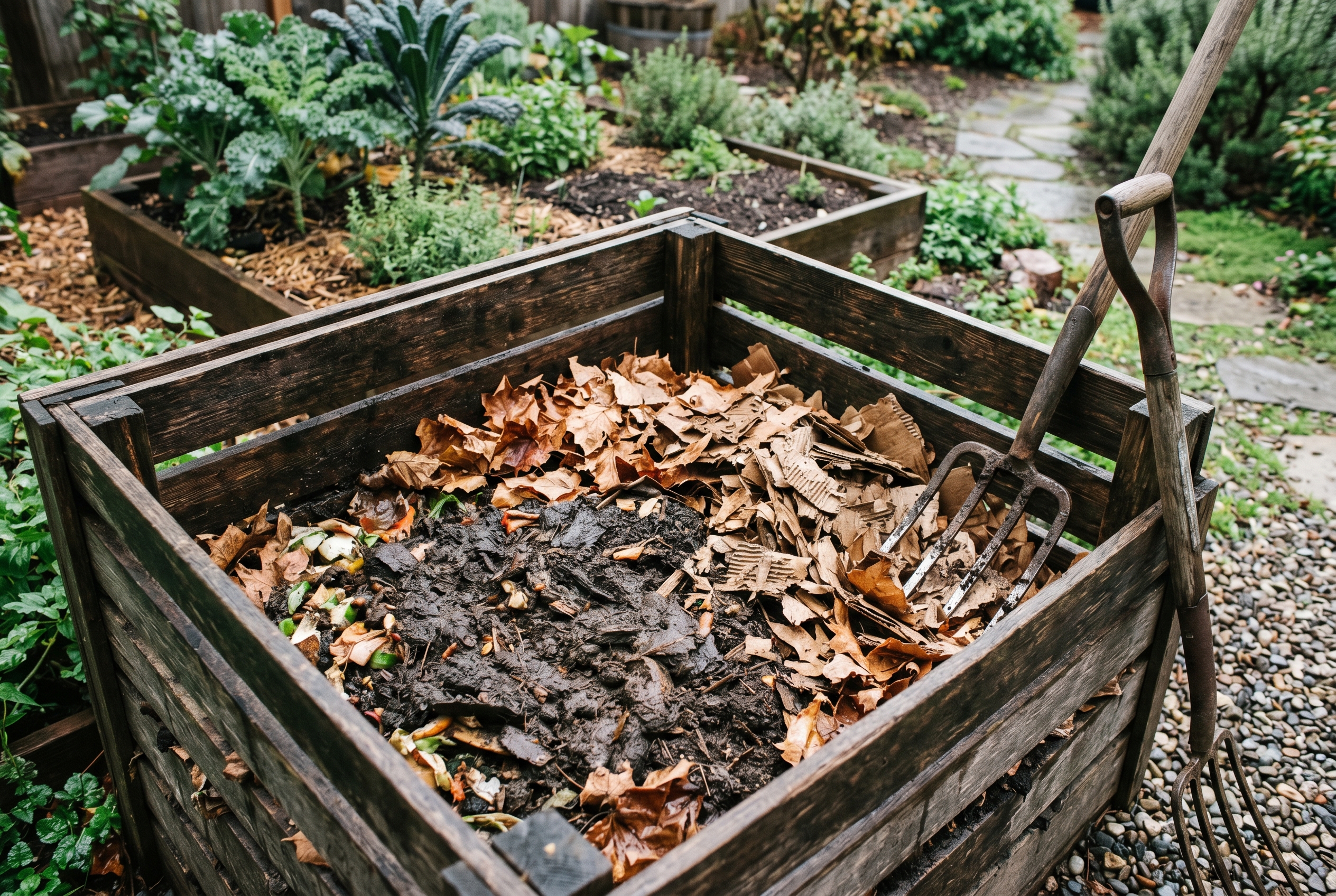
Compost that is too wet turns heavy, sour, and slow. It may clump, smell rotten, attract flies, or sit there without breaking down well. The good news is that wet compost is usually easy to rescue with dry carbon material and better airflow.
Key Takeaways
- Wet compost needs dry browns before it needs more turning.
- Shredded leaves, plain cardboard, straw, and dry plant stems are useful fixes.
- A soggy pile should be opened up so air can move through it.
- Pause wet scraps until the compost feels like a wrung-out sponge.
Quick Comparison
| Symptom | Cause | Fix |
|---|---|---|
| Slimy clumps | Too much moisture | Mix in shredded dry browns |
| Rotten smell | Low oxygen | Fluff pile and create air pockets |
| Fruit flies | Exposed wet scraps | Bury scraps under browns |
Add dry browns generously
Start with shredded dry leaves, torn plain cardboard, straw, dry stems, or untreated sawdust in small amounts. Mix them into wet pockets instead of only sprinkling them on top.
If smell is the main issue, use Compost Smells Bad? alongside this guide.
Open the pile so it can breathe
Wet compost often collapses into dense layers. Use a garden fork or compost aerator to lift and loosen the material. You do not need to pulverize it; the goal is to create space for oxygen.
Protect the bin from extra rain
If the pile is open to storms, add a loose lid, tarp, or breathable cover that keeps heavy rain off without sealing the pile completely. Compost needs moisture, but it should not become a bucket of wet scraps.
For setup tradeoffs, see Compost Bin vs Tumbler vs Pile.
Restart kitchen scraps slowly
Once the pile smells earthy and feels damp instead of soggy, restart scraps in smaller amounts. Bury them in the center and cover each addition with dry browns so the bin does not slide back into wet conditions.
FAQ
Can wet compost be saved?
Yes. Add dry browns, loosen compacted material, and protect the pile from excess rain until it returns to a damp, earthy balance.
Should I add soil to wet compost?
A little soil is not harmful, but dry carbon material is usually more helpful. Soil can make a wet pile heavier without solving the balance problem.
How wet should compost be?
It should feel like a wrung-out sponge: damp enough for decomposition, but not dripping, slimy, or waterlogged.
Conclusion
Too-wet compost is not ruined. Treat it as a balance issue: add dry browns, restore airflow, block extra rain, and restart food scraps slowly.
Image Credits
- Featured image generated with Nano Banana for Renewable Gardening as a custom, topic-specific editorial image for What to Do When Compost Is Too Wet (media ID 614).