
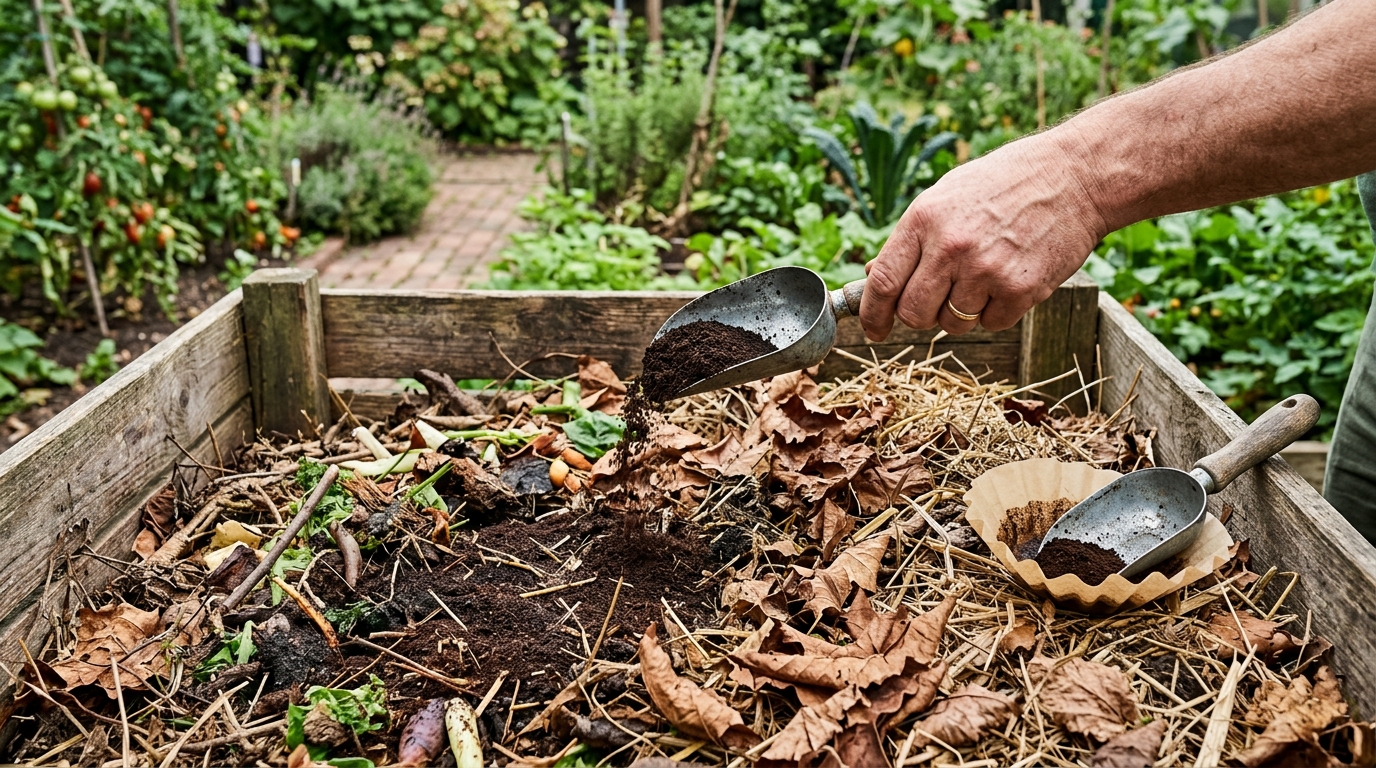
Coffee grounds are useful in compost, but they are easy to overdo. They look brown, yet they behave more like a nitrogen-rich green, especially when added in wet clumps.
Too many coffee grounds can make a small compost bin dense, sour, or slow because air cannot move through the pile. The fix is to add them in thin layers and mix them with dry, bulky browns.
Key Takeaways
- Coffee grounds count as greens in compost, not browns.
- Add grounds in thin layers instead of thick wet clumps.
- Balance coffee grounds with leaves, shredded cardboard, straw, or paper.
- If the pile smells sour or feels dense, add browns and loosen it.
Quick Guide
| Coffee Ground Habit | Result | Better Approach |
|---|---|---|
| Dumping wet clumps | Dense and low-air pockets | Break up and mix thinly |
| Adding daily without browns | Too much nitrogen and moisture | Add dry carbon each time |
| Sprinkling lightly | Usually manageable | Keep doing it |
| Adding filters too | Adds carbon if plain | Tear filters first |
Treat coffee grounds as greens
Coffee grounds contain nitrogen and moisture, so they should be balanced with carbon-rich browns. The color can be misleading, especially for beginners.
For a simple balancing routine, see How to Balance Greens and Browns in a Small Compost Bin.
Avoid thick wet layers
A dense mat of coffee grounds can shed water, trap moisture, and limit airflow. Sprinkle grounds across the pile or mix them with leaves before adding them.
If you collect grounds for several days, let them cool and break up clumps before they go into the compost.
Pair every batch with bulky browns
Dry leaves, shredded cardboard, straw, torn egg cartons, and plain paper filters all help keep coffee grounds from compacting. Bulky browns create air space as well as carbon balance.
Plain paper filters may help too. Check Can You Compost Paper Towels? for related paper-safety guidance.
Use smell and texture as warnings
If the compost smells sour, feels muddy, or forms dark dense pockets, the grounds are probably part of a wet green-heavy mix. Add dry browns and open the clumps with a fork or compost tool.
Odor fixes are covered in Compost Smells Bad? How to Fix a Stinky Bin.
Be careful with small bins and worm bins
Small systems have less buffer, so a large coffee habit can overwhelm them. Add smaller amounts more often, and avoid making coffee grounds the dominant food source in a worm bin.
FAQ
Are coffee grounds acidic in compost?
Used coffee grounds are usually closer to neutral than many people expect. The bigger compost issue is density and moisture, not acidity.
Can coffee filters go in compost?
Plain paper coffee filters can usually be composted. Avoid filters with plastic, heavy chemicals, or questionable residues.
How much coffee grounds is too much?
There is no exact household number, but grounds should be a modest part of the mix, not a thick dominant layer. Balance each addition with dry browns.
Conclusion
Coffee grounds belong in compost when they are used modestly and mixed well. Treat them as greens, break up clumps, add bulky browns, and stop adding large amounts if the pile turns dense or sour.
Image Credits
- Featured image generated with Nano Banana for Renewable Gardening as a custom, topic-specific editorial image for Can You Put Too Many Coffee Grounds in Compost? (media ID 675).