
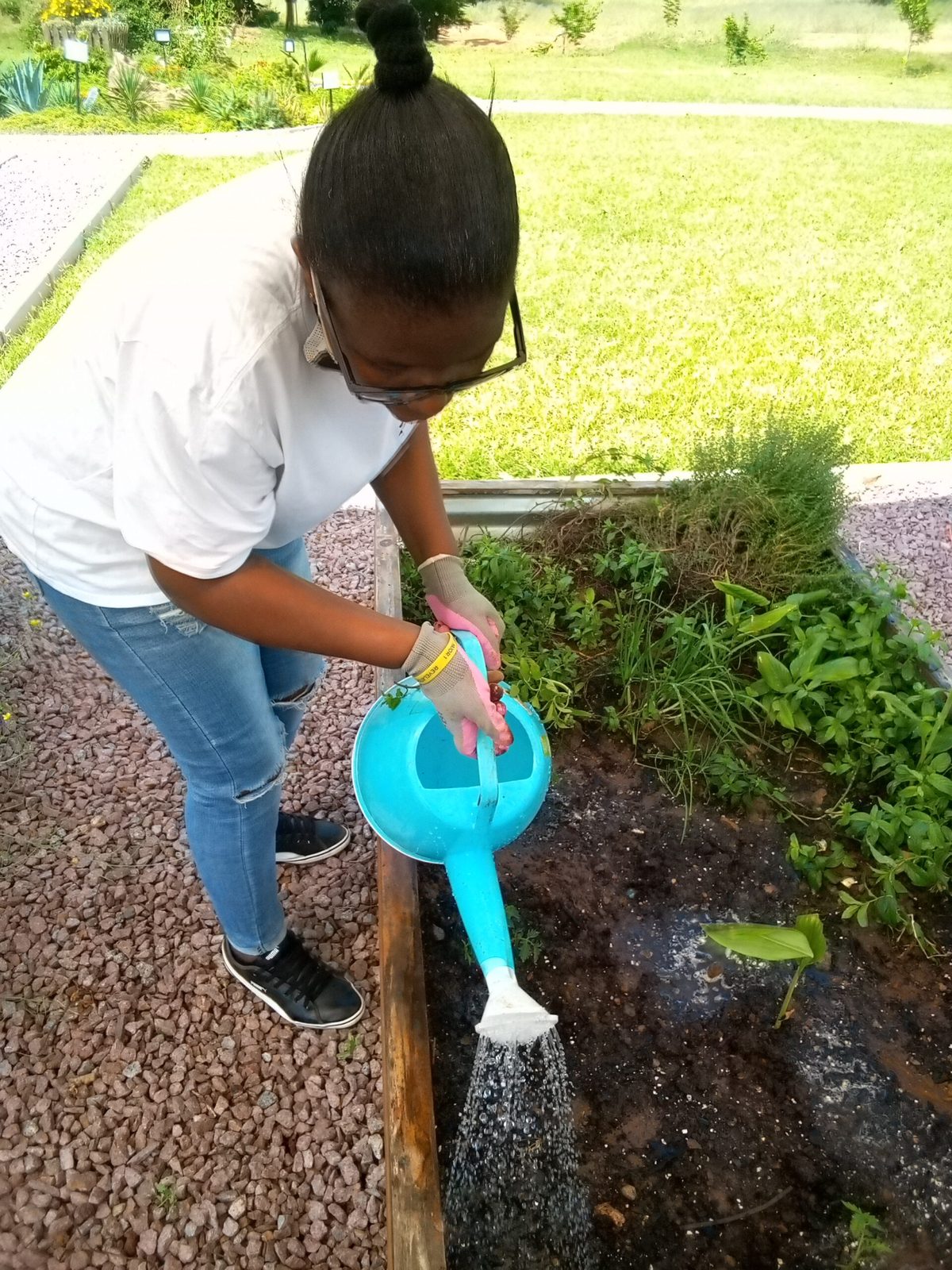
New plants often struggle after installation because their roots are still confined to a small planting area. Establishment watering bridges that gap. The goal is not to water by habit, but to keep the root zone consistently moist while roots grow into the surrounding soil.
Key Takeaways
- New plants need extra attention until roots grow beyond the original root ball.
- Water deeply at the root zone instead of lightly sprinkling leaves.
- Check soil moisture before watering again so you avoid both drought stress and soggy soil.
- Mulch helps conserve moisture when it is kept away from stems and crowns.
- Gradually reduce watering as plants show new growth and tolerate longer dry intervals.
What Established Really Means
A plant is established when its roots can support normal growth from the surrounding soil. A new transplant may look settled on top while the root ball is still drying faster than the bed around it.
Container-grown plants, divisions, bare-root plants, shrubs, and trees all establish at different speeds. Small annuals may settle quickly. Woody plants can need a much longer transition.
Water Deeply at Planting
The first watering should soak the planting area slowly. Water needs to settle soil around roots and remove large air pockets, not simply wet the mulch surface.
If water runs off, pause and let it soak in before continuing. A slow hose, watering can, drip line, or soaker hose is usually better than a hard blast.
Match Watering to Weather and Soil
There is no reliable one-size schedule. Sandy soil, wind, heat, full sun, and small root systems dry quickly. Heavy soil, cool weather, shade, and thick mulch can hold moisture longer.
Check a few inches down near the root zone. Water when it is drying, and wait when it is already moist. This same logic supports broader water-wise gardening.
Water the Roots, Not the Air
Aim low and water the soil around the plant. Overhead watering can lose water to wind and evaporation, and dense foliage may keep water from reaching the root area evenly.
Morning is often the easiest time to water. Leaves dry faster if they get wet, and the plant enters the warm part of the day with better moisture.
Reduce Watering as Roots Grow
As the plant establishes, stretch the interval between waterings while continuing to check the soil. Deep, less frequent watering encourages roots to explore more soil than shallow daily watering.
Drought-tolerant plants still need this transition. Drought tolerance describes an established plant, not a plant installed yesterday.
Common Mistakes to Avoid
Do not water every day just because a plant is new. In cool or heavy soil, that can create root problems.
Do not assume rainfall reached the root ball. Foliage, mulch, slopes, and dry soil can all redirect water.
Do not pile mulch against stems. Mulch protects soil, but it should not hold damp material against vulnerable plant tissue.
FAQ
Should I water new plants every day?
Not automatically. Check the root zone often, then water when it is drying. Daily watering may be too much in cool or heavy soil.
Is deep watering better than shallow watering?
Usually, yes. Deep watering reaches the root zone and supports stronger establishment.
Do native plants need watering after planting?
Yes. Native plants can still need establishment watering before they become lower-input.
Can mulch replace watering?
No. Mulch slows moisture loss, but new plants still need water when the root zone dries.
How do I know when a plant is established?
Look for steady new growth and better resilience between waterings. Larger plants take longer than small annuals or perennials.
Related Reading
For more water-wise context, read How to Reduce Water Use in Your Garden Without Sacrificing Healthy Plants and Drought-Tolerant Gardening Tips for Home Landscapes.
Conclusion
Watering new plants is a temporary support system. Check the soil, water deeply when needed, protect the surface with mulch, and reduce watering as roots expand. That keeps plants alive without turning water-wise gardening into guesswork.
External References
- University of Minnesota Extension guidance on watering newly planted trees and shrubs
- Penn State Extension guidance on plant establishment and watering
- EPA WaterSense outdoor watering principles
Explore this topic
For more practical guidance around gardening, visit the Gardening hub.
- How to Keep Weeds Down Without Reaching for Herbicide
- Shade-Friendly Native Plant Ideas for Low-Maintenance Yards
- No-Dig Garden Beds for Beginners: Build Better Soil Without Tilling
Image Credits
- Featured image: New plants need steady root-zone moisture while they establish, even if they will be lower-water later. Photo by VNGao via Wikimedia Commons, licensed CC0.
- RG-024 Featured – How to Water New Plants Until They Are Established optimized: New plants need steady root-zone moisture while they establish, even if they will be lower-water later. Photo by VNGao via Wikimedia Commons, licensed CC0.