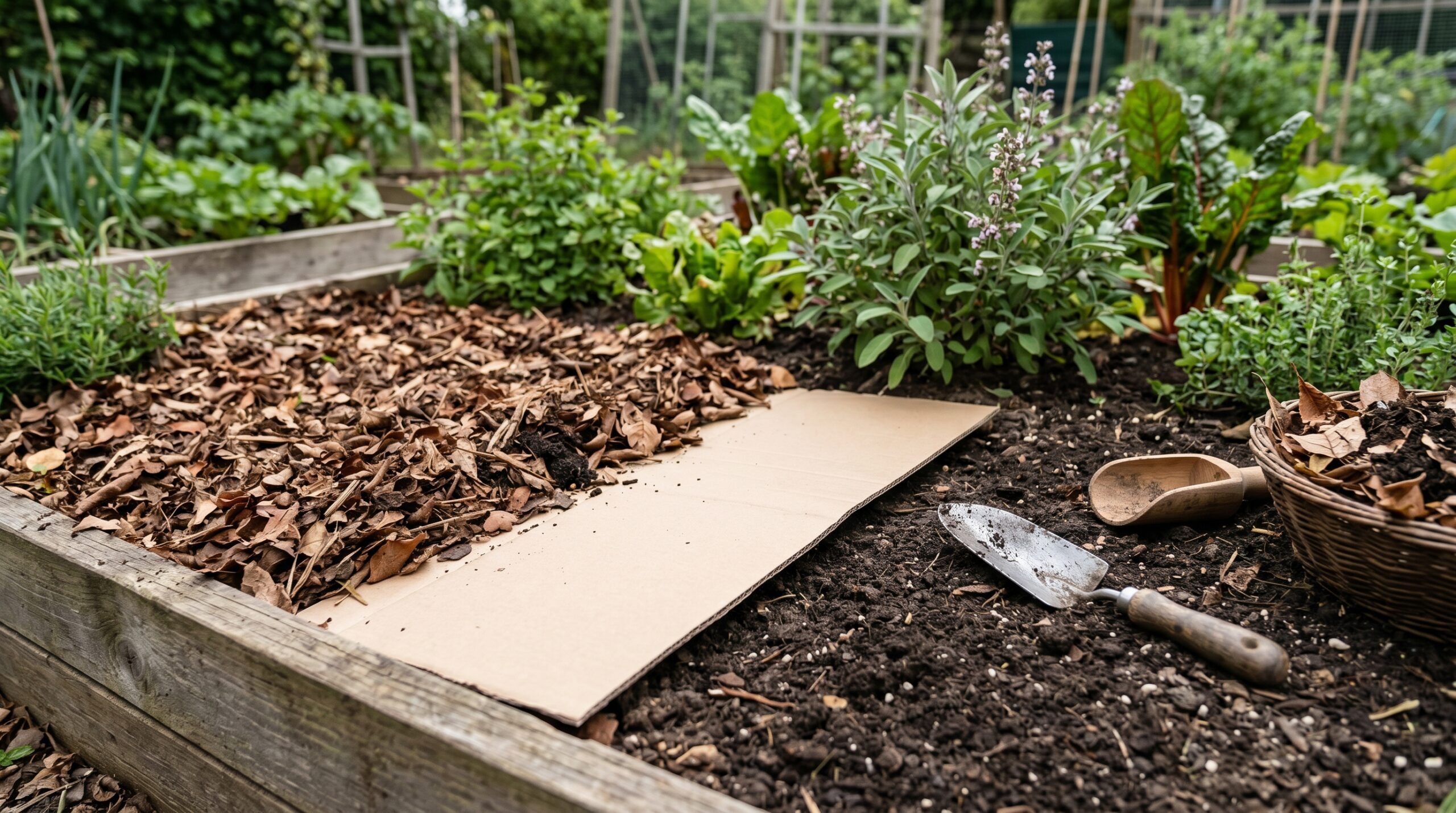
Cardboard can be useful in the garden when it is used carefully. It can suppress weeds, protect soil, help start no-dig beds, and give you a low-waste way to reuse clean boxes.
The problems begin when cardboard is too thick, glossy, taped, dry, or treated like a permanent barrier. Used poorly, it can shed water, block air, shelter pests, and make planting harder.
Key Takeaways
- Use plain, uncoated cardboard and remove tape, labels, staples, and plastic windows.
- Apply cardboard in a single overlapping layer, not a thick stack.
- Wet cardboard thoroughly and cover it with mulch or compost.
- Avoid using cardboard where it will block drainage or stay dry and exposed.
Quick Guide
| Use Case | Good Practice | Avoid |
|---|---|---|
| No-dig bed | One wet layer under compost and mulch | Dry stacked boxes |
| Path weed control | Cardboard under wood chips | Glossy coated cardboard |
| Around plants | Leave space near stems | Tight collars that trap moisture |
Choose clean cardboard first
Plain brown corrugated cardboard is the safest garden choice. Remove plastic tape, shipping labels, staples, glossy print, waxy coatings, and any food-contaminated sections before using it.
If the cardboard has a slick surface or unknown coating, recycle it or discard it instead of burying it in a bed.
Use one layer, not a cardboard mattress
A single overlapping layer can suppress grass and weeds while still breaking down. Thick stacks can block water, slow air movement, and create a stubborn barrier roots struggle to pass through.
For bed-building context, see No-Dig Garden Beds for Beginners.
Wet it before covering
Dry cardboard can repel water and shift around. Wet it thoroughly before adding compost, leaves, straw, or wood mulch on top. The goal is soil contact, not a dry sheet floating under mulch.
Keep cardboard away from plant crowns and trunks
Do not wrap cardboard tightly around stems, shrubs, or tree trunks. Leave breathing room so moisture does not sit against living tissue and create rot or pest hiding places.
If you are filling a raised bed, pair this with What to Put in the Bottom of a Raised Garden Bed.
Use cardboard as a temporary helper
Cardboard is best as a starter layer, not the main long-term soil strategy. Over time, rely on mulch, compost, living roots, and regular organic matter to keep weeds down and soil covered.
For broader reuse ideas, read How to Reduce Yard Waste With Smarter Garden Practices.
FAQ
Is cardboard safe to use in the garden?
Plain, uncoated cardboard is generally useful when tape, labels, staples, and glossy materials are removed. Avoid coated or contaminated cardboard.
Can cardboard stop water from reaching soil?
Yes, especially if it is dry, stacked too thickly, or not covered well. Wet it thoroughly and use only a single layer.
Should I put cardboard under mulch?
Cardboard can work under mulch for weed suppression, especially when starting a bed or path. Cover it fully so it stays moist and breaks down.
Conclusion
Cardboard can be a useful low-waste garden material, but it should be clean, thinly layered, wet, and covered. Treat it as a temporary weed-suppression helper, not a permanent barrier.
Image Credits
- Featured image generated with Nano Banana for Renewable Gardening as a custom, topic-specific editorial image for How to Reuse Cardboard in the Garden Without Creating Problems (media ID 653).