A raised garden bed does not need a complicated bottom layer to work well. In most yards, the best base is open to the soil below, filled with clean organic material only when useful, and topped with a balanced growing mix that roots can actually use.
Key Takeaways
- Skip plastic liners that block drainage unless there is a specific contamination concern.
- Use cardboard sparingly for weed suppression, not as a permanent barrier.
- Logs, sticks, and leaves can fill deep beds, but they should not replace good soil near the root zone.
- The top 10 to 12 inches matter most for vegetables and young plants.
Quick Comparison
| Material | Use It? | Why |
|---|---|---|
| Cardboard | Sometimes | Short-term weed suppression if it can break down |
| Plastic | Usually no | Can trap water and block soil life |
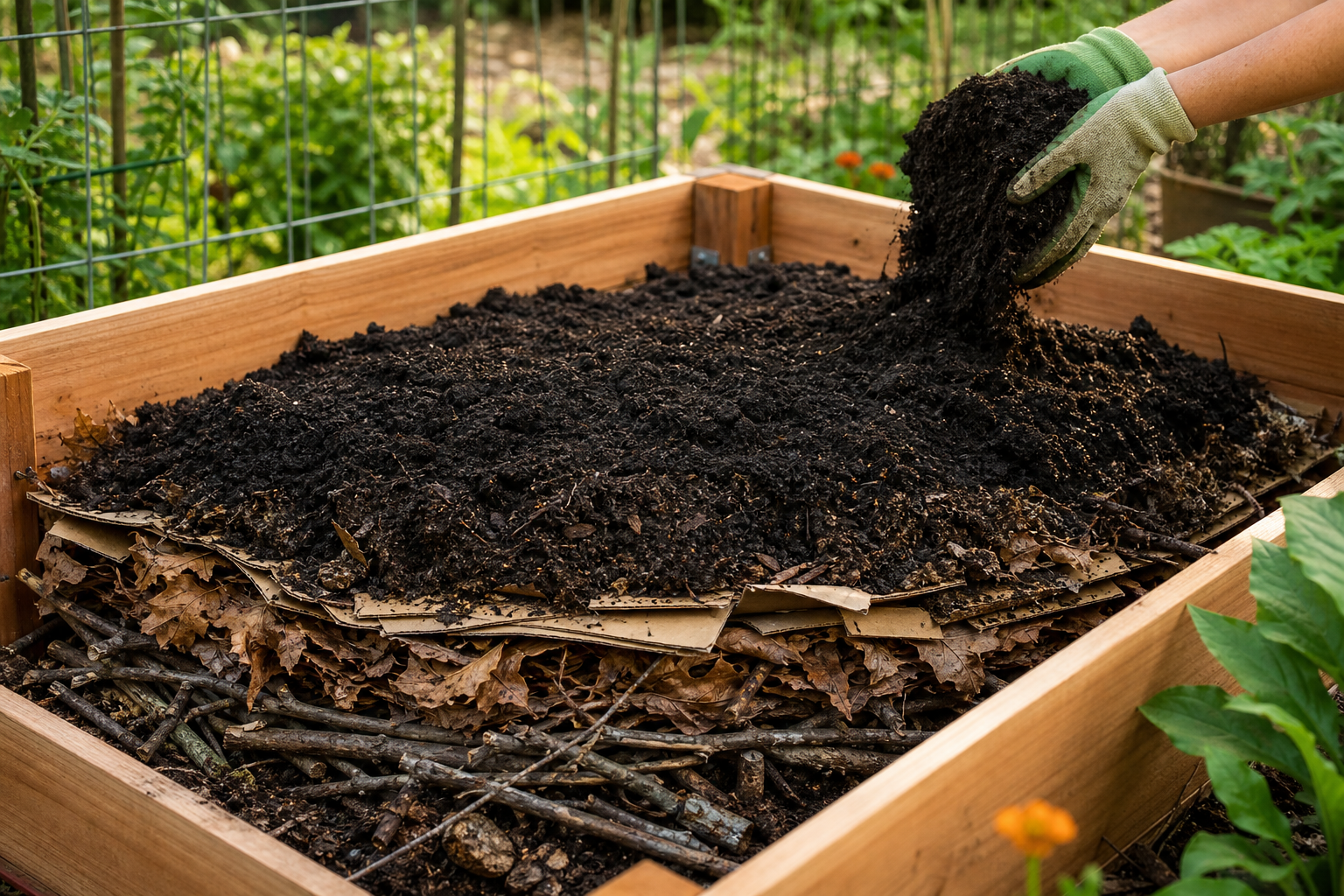
| Logs and sticks | In deep beds | Bulk organic fill below the main root zone |
| Finished compost | Yes, mixed | Improves soil when used moderately |
Keep the bottom open when possible
If the bed sits on decent soil, leave the bottom open. Roots, worms, water, and soil life can move between the bed and the ground below. That connection is one reason raised beds can be productive without becoming sealed containers.
Use cardboard for weeds, not drainage
A layer of plain cardboard can help suppress grass at the start. Wet it well and avoid glossy or heavily printed material. It should break down over time. Do not stack so much cardboard that water cannot move through the bed.
Fill deep beds without wasting premium soil
Very deep beds can be partly filled with small logs, sticks, leaves, and rough compostable material. Keep bulky material low in the bed and reserve the top layer for a consistent growing mix.
If you are comparing bed types, see Raised Garden Bed vs In-Ground Bed.
Build the root zone with balanced soil
The upper portion of the bed should be stable, moisture-retentive, and not overloaded with compost. A mix of mineral soil, finished compost, and organic matter usually performs better than pure compost.
For compost restraint, use How to Use Compost Without Overdoing It.
FAQ
Should I put rocks in the bottom of a raised bed?
Usually no. Rocks do not improve drainage the way many people expect, and they can reduce useful root space.
Can I put cardboard under a raised garden bed?
Yes, if it is plain cardboard used as temporary weed suppression. Avoid heavy layers that block water.
How deep should good soil be in a raised bed?
For many vegetables and annuals, aim for at least 10 to 12 inches of good growing mix near the top.
Conclusion
The bottom of a raised bed should support drainage, soil life, and roots. Keep it open where possible, use simple biodegradable weed suppression if needed, and spend most of your attention on the growing mix plants actually use.
Image Credits
- Featured image generated for Renewable Gardening as a custom editorial image for What to Put in the Bottom of a Raised Garden Bed (media ID 564).