
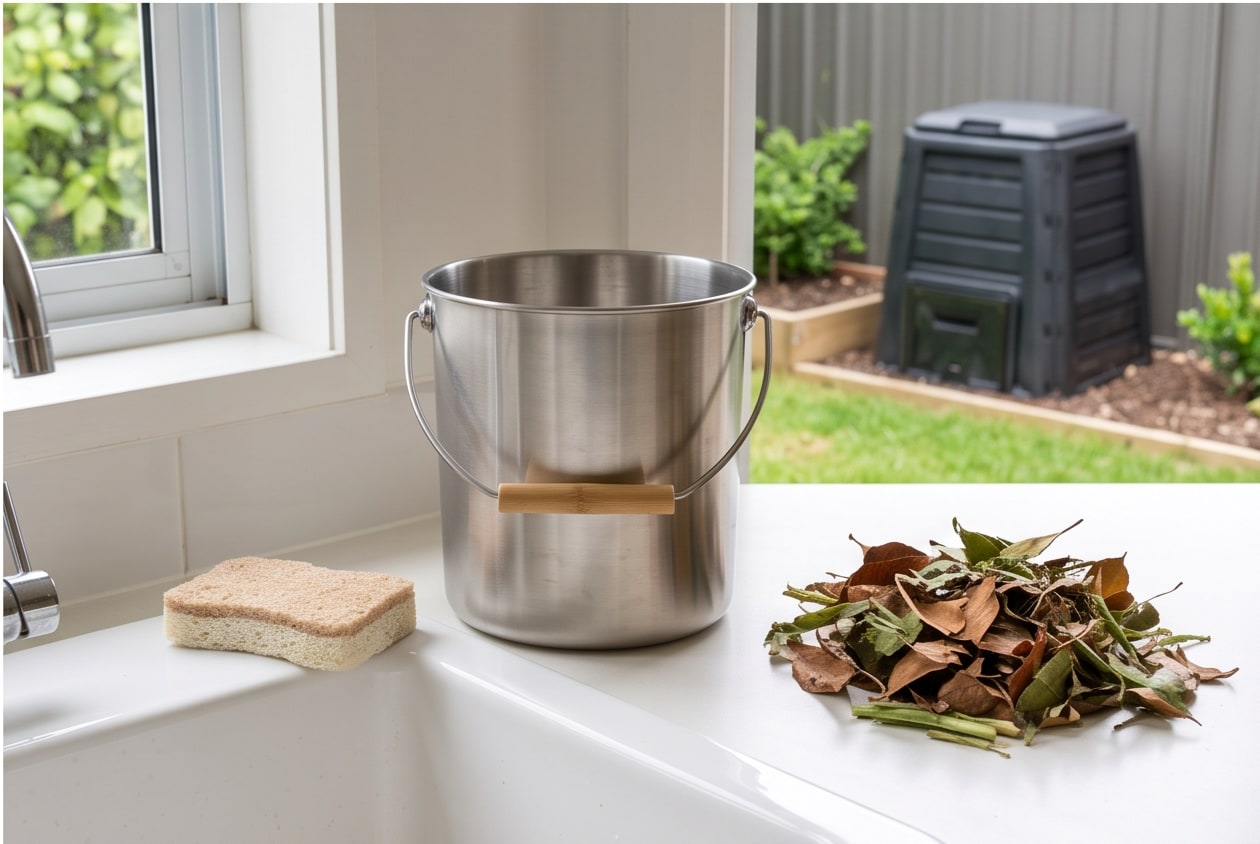
Compostable sponges are usually marketed as a lower-waste swap for synthetic kitchen sponges, but the word compostable does not always mean you should toss the whole sponge into a backyard bin.
The right disposal depends on the material, dyes, scrubber layers, antimicrobial treatments, and whether the product is certified for home compost or only commercial composting.
Key Takeaways
- Check whether the sponge is cellulose, loofah, coconut fiber, or a blended product.
- Remove synthetic scrubber layers if present.
- Home-compost only products clearly labeled for home composting.
- When in doubt, use municipal guidance or trash the questionable part.
Quick Guide
| Sponge Material | Compost Potential | Watch For |
|---|---|---|
| Plain cellulose | Often possible | Dyes or additives |
| Loofah | Often possible | Plastic stitching or handles |
| Coconut fiber scrubber | Sometimes | Binders and backing layers |
| Synthetic sponge | No | Plastic foam and microplastics |
Material matters
A sponge made from plant fibers is a better compost candidate than a synthetic foam sponge. But blends, glues, dyes, and scrubber pads can change the answer. Read the product details before assuming it belongs in soil.
Separate mixed materials
Some sponges have a plant-based body and a synthetic scrubber layer. If the layers can be separated, compost only the acceptable plant-based part and discard the synthetic piece.
Be realistic about home compost
A backyard compost bin is cooler and less controlled than an industrial composting facility. Even plant-based sponges may take time and should be cut up before adding.
Fit it into a low-waste kitchen routine
Compostable sponges work best when paired with habits that keep them useful longer: rinse well, dry between uses, and replace before they become unpleasant.
For kitchen compost handling, see How to Keep a Kitchen Compost Pail From Smelling in Summer.
FAQ
Can I put a compostable sponge in backyard compost?
Only if the sponge material and label support home composting. Cut it into pieces and remove synthetic layers.
Are cellulose sponges compostable?
Plain cellulose often can be, but dyes, additives, and attached scrubbers may change the answer.
Are regular kitchen sponges compostable?
Most regular synthetic sponges are not compostable and can shed plastic material.
Conclusion
Compostable sponges can be a useful swap, but disposal still requires material judgment. Compost only clearly suitable plant-based parts, cut them up, and keep synthetic layers out of the bin.
Image Credits
- Featured image generated with Nano Banana for Renewable Gardening as a custom, topic-specific editorial image for Compostable Sponges: What They Are and How to Dispose of Them (media ID 696).