
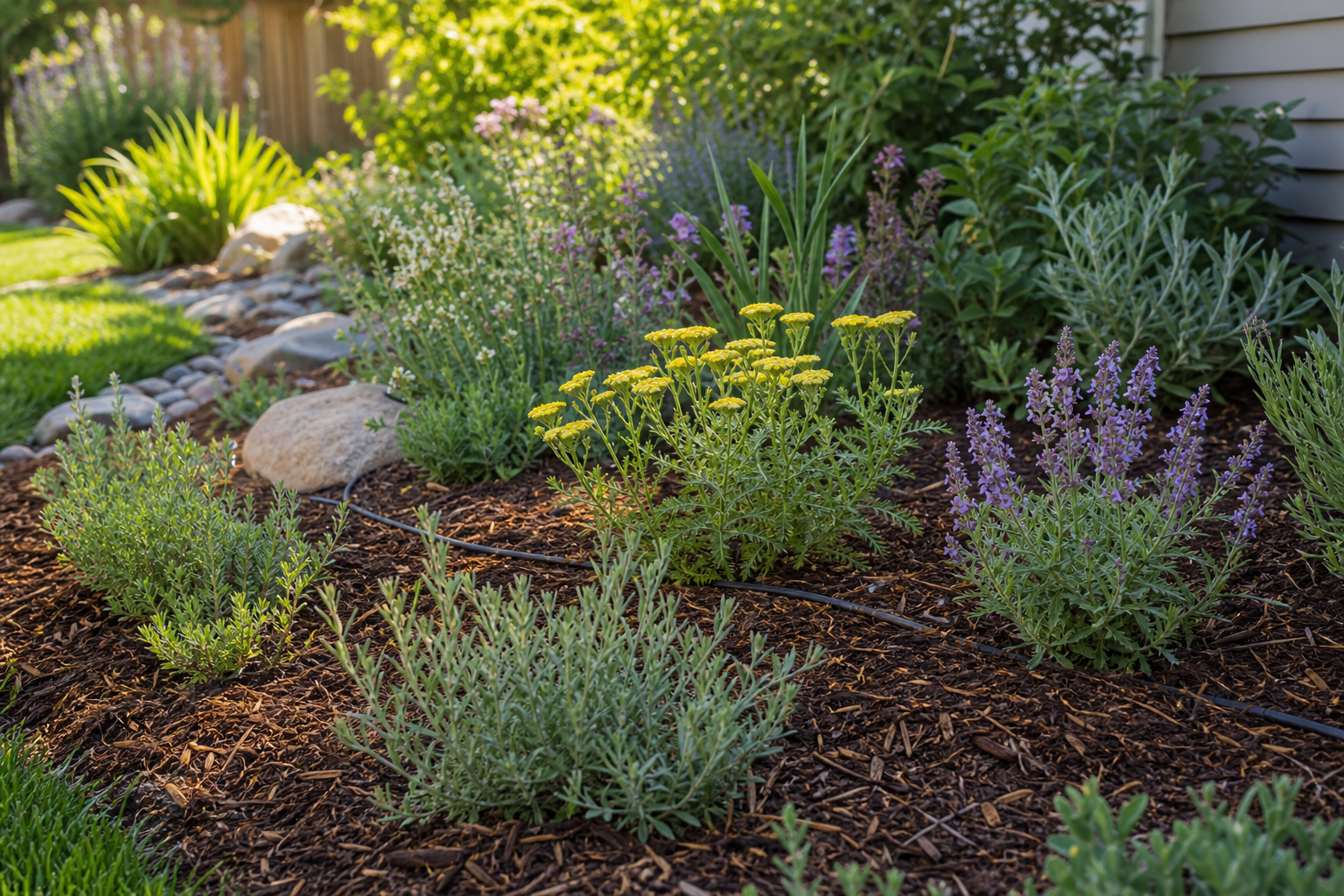
You do not have to rip out an entire garden to make it more drought tolerant. Most yards can become more resilient through better soil coverage, deeper watering, smarter grouping, and a few strategic plant changes over time.
Key Takeaways
- Covering soil is the fastest drought-resilience upgrade.
- Water deeply and less often once plants are established.
- Group thirsty plants instead of spreading them everywhere.
- Replace the worst-fit plants gradually rather than redoing the whole yard.
Quick Comparison
| Upgrade | Cost | Impact |
|---|---|---|
| Mulch bare soil | Low | High |
| Adjust watering timing | Low | Medium to high |
| Group plants by water need | Low to medium | High over time |
| Replace poor-fit plants | Medium | High but gradual |
Start with soil cover
Bare soil loses moisture quickly and heats up faster. Mulch, living ground covers, and dense planting all help protect the surface. This is usually the first change to make before buying new plants.
Compare surface options in Straw Mulch vs Wood Mulch vs Leaves.
Water for roots, not the surface
Frequent shallow watering trains roots to stay near the surface. Established plants usually do better with deeper, less frequent watering that reaches the root zone. New plants are the exception; they need closer attention while establishing.
For new plant care, use How to Water New Plants Until They Are Established.
Create water zones
Put plants with similar water needs together. This prevents one thirsty plant from making you overwater an entire bed. Over time, move or replace plants that constantly need special treatment.
Add shade and wind protection where practical
Temporary shade cloth, taller companion plants, shrubs, and fences can reduce stress in exposed beds. The goal is not to block all sun. It is to reduce the harshest heat and drying wind where plants struggle.
A Weekend Drought-Tolerance Reset
If the garden struggles every hot spell, start with a simple weekend reset. Pull weeds that compete for water, add mulch over bare soil, check that irrigation reaches the root zone, and move containers out of the harshest afternoon exposure.
- Mulch first, then water deeply.
- Group containers by water need.
- Move struggling plants before replacing them.
- Keep a short list of plants that need constant rescue.
What to Change Over the Next Season
After the immediate fixes, watch which plants wilt first, which beds dry fastest, and where water runs off instead of soaking in. Replace the worst-fit plants gradually with tougher choices instead of making the whole garden a one-time renovation.
FAQ
Can an existing garden become drought tolerant?
Yes. Mulch, watering changes, soil improvement, and gradual plant replacement can make a big difference.
Should I replace all thirsty plants at once?
Usually no. Start with the plants that need the most extra water or perform poorly every summer.
Is drip irrigation required?
No, but it can help. The bigger issue is watering deeply and matching water to plant needs.
Conclusion
Drought tolerance is a set of habits, not just a plant list. Protect the soil, water more intelligently, group plants by need, and edit the garden gradually.
Image Credits
- Featured image generated for Renewable Gardening as a custom editorial image for How to Make a Garden More Drought Tolerant Without Replanting Everything (media ID 570).