
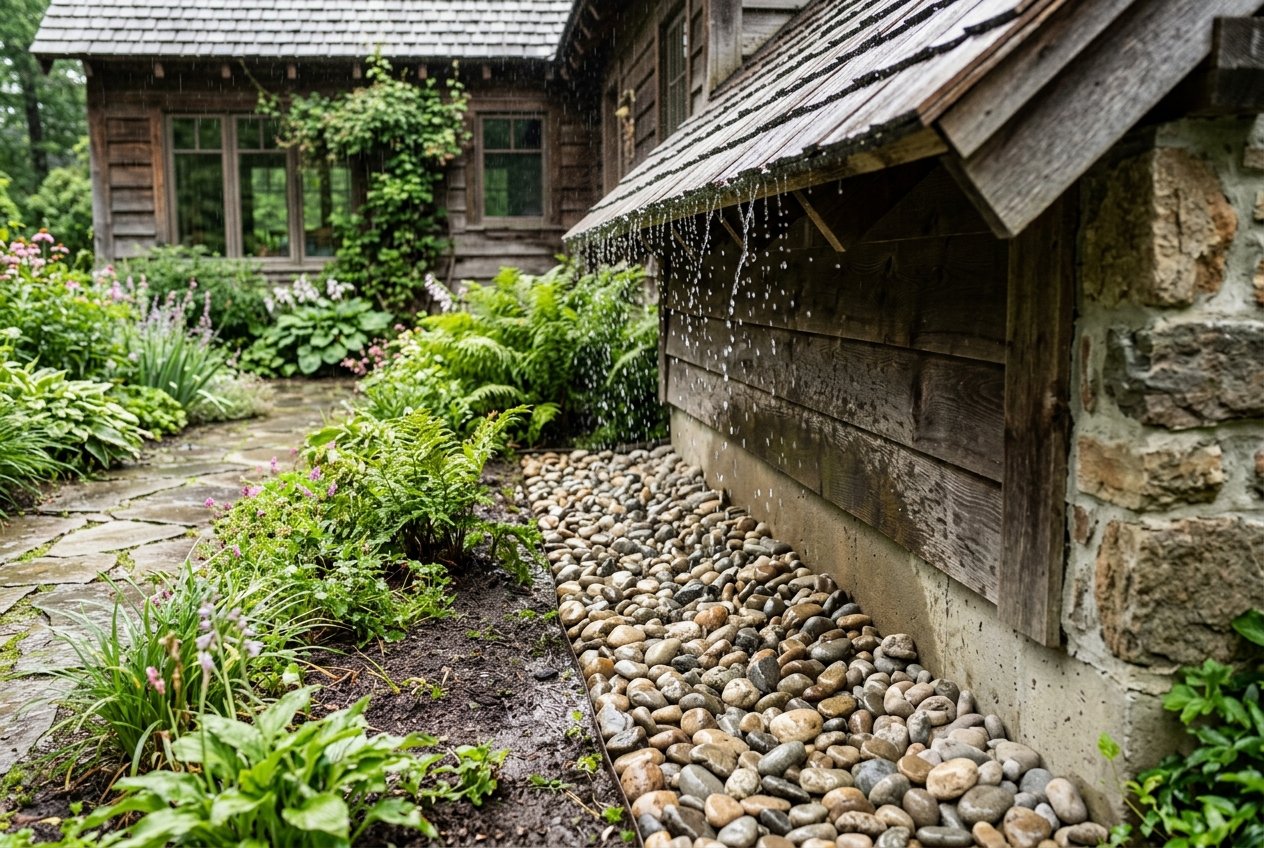
A gravel trench can help with drainage when the problem is splash, roof drip, or shallow surface flow. It gives water a defined path and protects soil from erosion.
It does not solve every wet yard problem. If water is coming from grading, compacted soil, high groundwater, or a foundation issue, a simple gravel trench may hide symptoms without fixing the cause.
Key Takeaways
- Use gravel trenches for surface water control, not mystery foundation problems.
- Slope the trench so water moves to a safe outlet.
- Line and size the trench based on soil and runoff volume.
- Consider planting, swales, or rain gardens when you want water to soak in on site.
Quick Comparison
| Drainage Problem | Gravel Trench Fit? | Better Companion |
|---|---|---|
| Roof drip splash | Good fit | Stone basin or drip trench |
| Small surface runoff path | Sometimes | Swale or planted strip |
| Standing water near foundation | Caution | Professional grading review |
| Compacted low spot | Limited | Soil improvement and planting |
Start by watching the water
Look during a real rain. Note where water lands, where it flows, and where it stops. A trench should follow observed water movement, not an imagined route.
If the wet area is already persistent, start with How to Fix Soggy Spots in a Yard Without Wasting Water.
What a gravel trench does well
A shallow stone trench under a roof drip line can reduce mud splash and erosion. A slightly sloped trench can also guide small surface flows toward a planted area, rain garden, or safe outlet.
For no-gutter runoff, compare How to Collect Rainwater Without Gutters.
Where gravel trenches fall short
Gravel does not make water disappear. If the trench has no outlet or infiltration area, it can simply hold water in a new place. Near foundations, that can be risky.
Avoid directing water onto a neighbor’s property, sidewalk ice zone, septic field, or foundation wall.
Combine stone with plants when possible
Stone can handle concentrated flow, while plants slow and absorb water over a larger area. A trench that feeds a rain garden or planted basin can be more useful than stone alone.
Use Rain Garden vs Swale vs Downspout Extension to decide whether a planted approach fits better.
FAQ
Will a gravel trench drain a wet yard?
Only if the problem is shallow surface water and the trench has a safe outlet or infiltration area.
Should I put fabric under a gravel trench?
Landscape fabric can slow soil mixing into gravel, but it can also clog over time. The right choice depends on soil and maintenance.
Can I put a gravel trench next to my foundation?
Use caution. Water near foundations can cause damage, so grading and outlet planning matter more than adding gravel.
Conclusion
A gravel trench is useful when it has a clear job: catch drip, reduce splash, or guide small surface flows. Watch the water first, give the trench a safe destination, and use plants where infiltration is the goal.
Image Credits
- Featured image generated with Nano Banana for Renewable Gardening as a custom, topic-specific editorial image for Gravel Trench for Drainage: When It Helps and When It Does Not (media ID 771).