
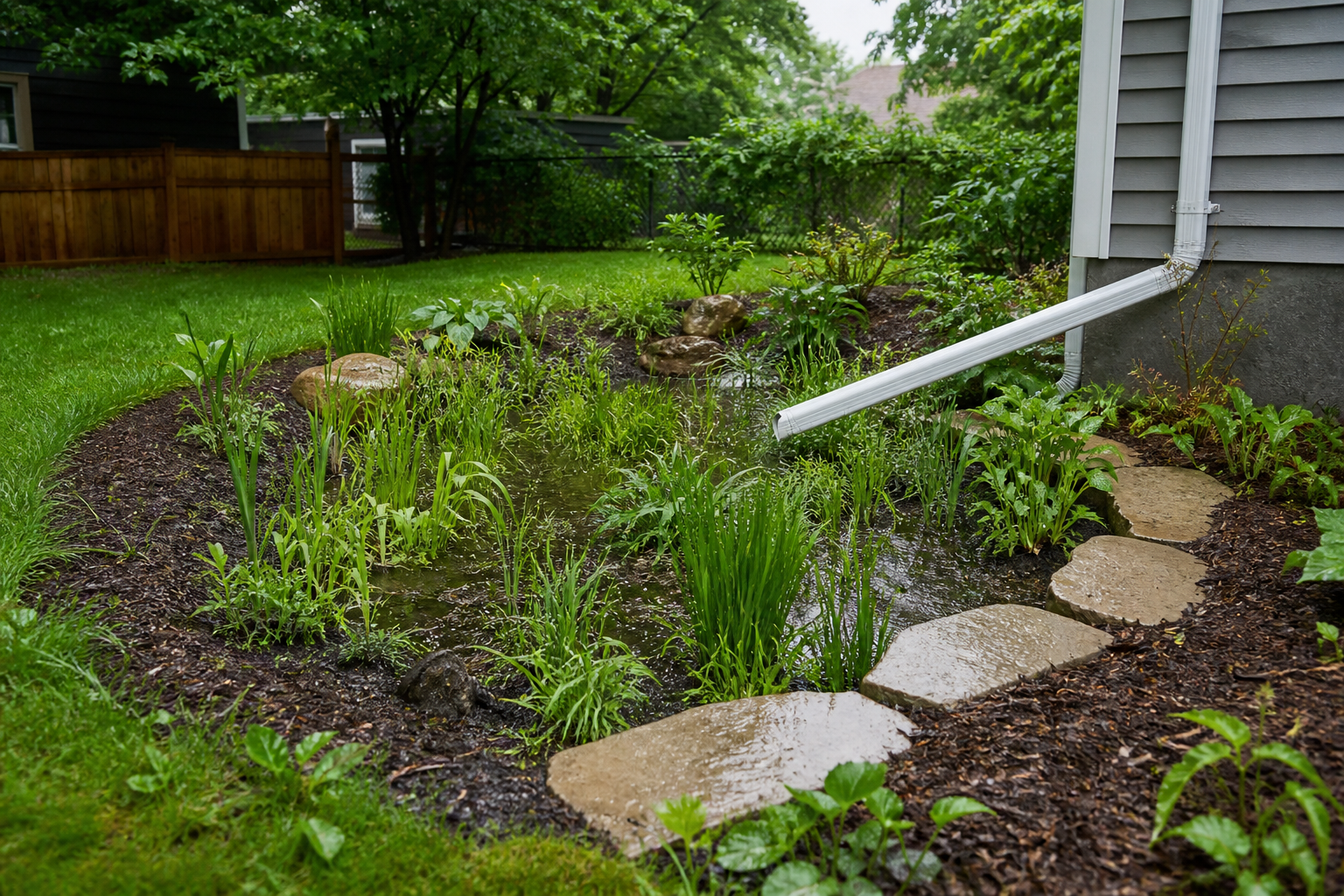
Soggy spots in a yard are not just annoying. They can compact soil, drown plants, create muddy paths, and send water toward places it should not go. The best fix is usually not to make the water disappear. It is to slow it down, spread it out, and send it somewhere useful.
Key Takeaways
- Start by finding where the water is coming from.
- Do not add soil over a wet problem until drainage is understood.
- Rain gardens, swales, mulch, and water-tolerant plants can turn runoff into a landscape asset.
- Simple downspout changes often solve more than expensive digging.
Quick Comparison
| Problem | Best First Fix | Avoid |
|---|---|---|
| Downspout water | Extend or redirect flow to a planted area | Sending water toward a neighbor or foundation |
| Low lawn spot | Improve soil and plant tolerance | Filling blindly with compacted soil |
| Path runoff | Slow water with mulch, edging, or a shallow swale | Hard surfaces that speed water up |
Find the water source first
Watch the area during a heavy rain. If water arrives from a downspout, patio, compacted path, neighbor slope, or roof valley, the fix should match that source. A low spot that collects rainwater needs a different solution than a downspout that dumps water in one place.
If you are deciding between drainage options, compare them with Rain Garden vs Swale vs Downspout Extension.
Use planted drainage instead of bare mud
A rain garden or planted low area can hold water briefly while giving it time to soak in. The planting does not need to be large. Even a modest bed near a downspout can reduce muddy splash and make the yard feel more intentional.
For plant placement near runoff, see What to Plant Near a Downspout or Rain Barrel.
Improve compacted soil gradually
Compacted soil sheds water and stays wet on top. Aerating, adding compost in moderation, keeping soil covered, and avoiding repeated foot traffic can help the area recover. Do not treat compost like a magic sponge; use it as part of a broader soil-care routine.
Pair this with Best Ways to Improve Garden Soil Naturally.
Choose plants that tolerate the real conditions
If the area stays damp after storms but dries later, choose plants that can handle periodic wetness. If it stays wet for days, solve the drainage problem before adding sensitive plants. A plant that fits the site is more sustainable than one that needs constant rescue.
FAQ
Should I fill a soggy yard spot with soil?
Only after you understand why the spot is wet. Filling can hide the problem temporarily and sometimes pushes water somewhere worse.
Are rain gardens good for soggy spots?
They can be, especially where runoff arrives briefly after storms. They are not a fix for permanently saturated soil without drainage planning.
Can mulch help a soggy area?
Mulch can reduce splash and protect soil, but it does not replace drainage. Use it with grading, planting, or runoff routing.
Conclusion
A soggy yard spot is usually a water-routing problem, not just a lawn problem. Start with the source, slow the flow, protect the soil, and use plants that fit the moisture pattern.
Image Credits
- Featured image generated for Renewable Gardening as a custom editorial image for How to Fix Soggy Spots in a Yard Without Wasting Water (media ID 562).