
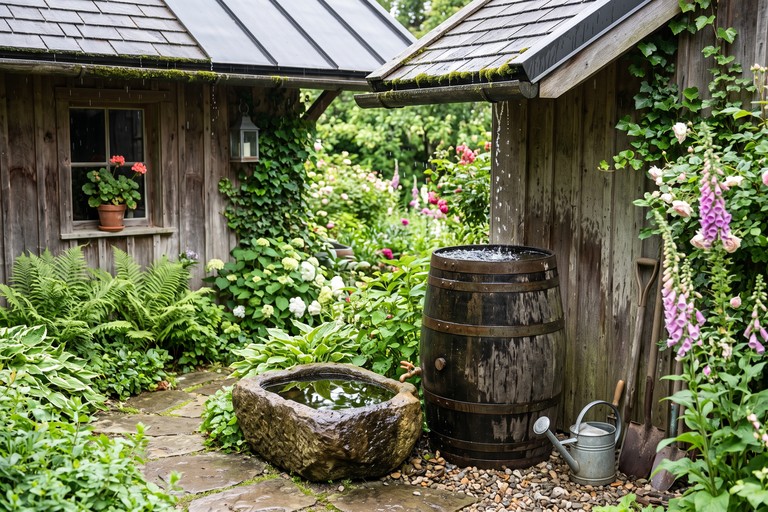
You can collect rainwater without gutters, but you need to control splash, overflow, and where the water goes next. A roof edge can shed a surprising amount of water in a short storm.
The safest setups use a stable collection point under an overhang, a screen or covered barrel, an overflow route, and a planted or gravel area that handles extra water.
Key Takeaways
- Watch the roof edge during rain before placing a barrel.
- Use a stable base and screened barrel opening.
- Plan overflow so water does not run toward a foundation.
- Consider redirecting rain into planted basins if storage is not practical.
Quick Comparison
| No-Gutter Method | Best For | Main Caution |
|---|---|---|
| Barrel under drip line | Small sheds or predictable roof valleys | Needs stable base and overflow |
| Rain chain from roof edge | Guiding water downward | Needs anchor and basin |
| Gravel drip trench | Splash control | Not drinking-water storage |
| Rain garden basin | Using runoff on site | Must be placed away from foundation |
Find the natural drip point
Before buying anything, watch the roof during a steady rain. Water may leave the roof in sheets, at corners, or at valleys. Put collection where water already concentrates, not where you hope it will go.
For sheds, chicken coops, pergolas, and small outbuildings, one drip point may be enough for a simple barrel setup.
Use a safe barrel setup
Place the barrel on a level, sturdy base that can hold its full weight. Add a screen or covered inlet to keep debris and mosquitoes out. Add an overflow hose or notch that sends extra water away from buildings.
If you are comparing rain storage with other water tools, see Rain Barrels for Beginners.
Redirect water when storage is not worth it
Sometimes the best no-gutter rainwater system is not a barrel. A gravel basin, dry creek, swale, or rain garden can slow water, reduce splash, and let soil absorb runoff.
Use Rain Garden vs Swale vs Downspout Extension to choose the right landscape move.
Avoid foundation and safety problems
Do not collect roof runoff in a way that leaves water ponding near the house. Keep barrels covered, secure, and easy to empty. Check local rules before storing larger amounts of rainwater.
If water already collects in a bad spot, start with How to Fix Soggy Spots in a Yard Without Wasting Water.
FAQ
Can I put a rain barrel under a roof edge without gutters?
Yes, if the drip point is predictable and the barrel has a stable base, screen, and overflow route.
Is roof runoff safe for vegetables?
Use caution. Roof material, debris, and contaminants matter. Many gardeners reserve collected roof water for ornamentals unless they know the roof is suitable.
How do I stop splash without gutters?
Use gravel, stones, a rain chain, a basin, or dense planting where water hits the ground.
Conclusion
Collecting rainwater without gutters can be useful when it is designed around real water movement. Watch the roof, stabilize the container, screen the inlet, and send overflow somewhere safe.
Image Credits
- Featured image generated with Nano Banana for Renewable Gardening as a custom, topic-specific editorial image for How to Collect Rainwater Without Gutters (media ID 755).