
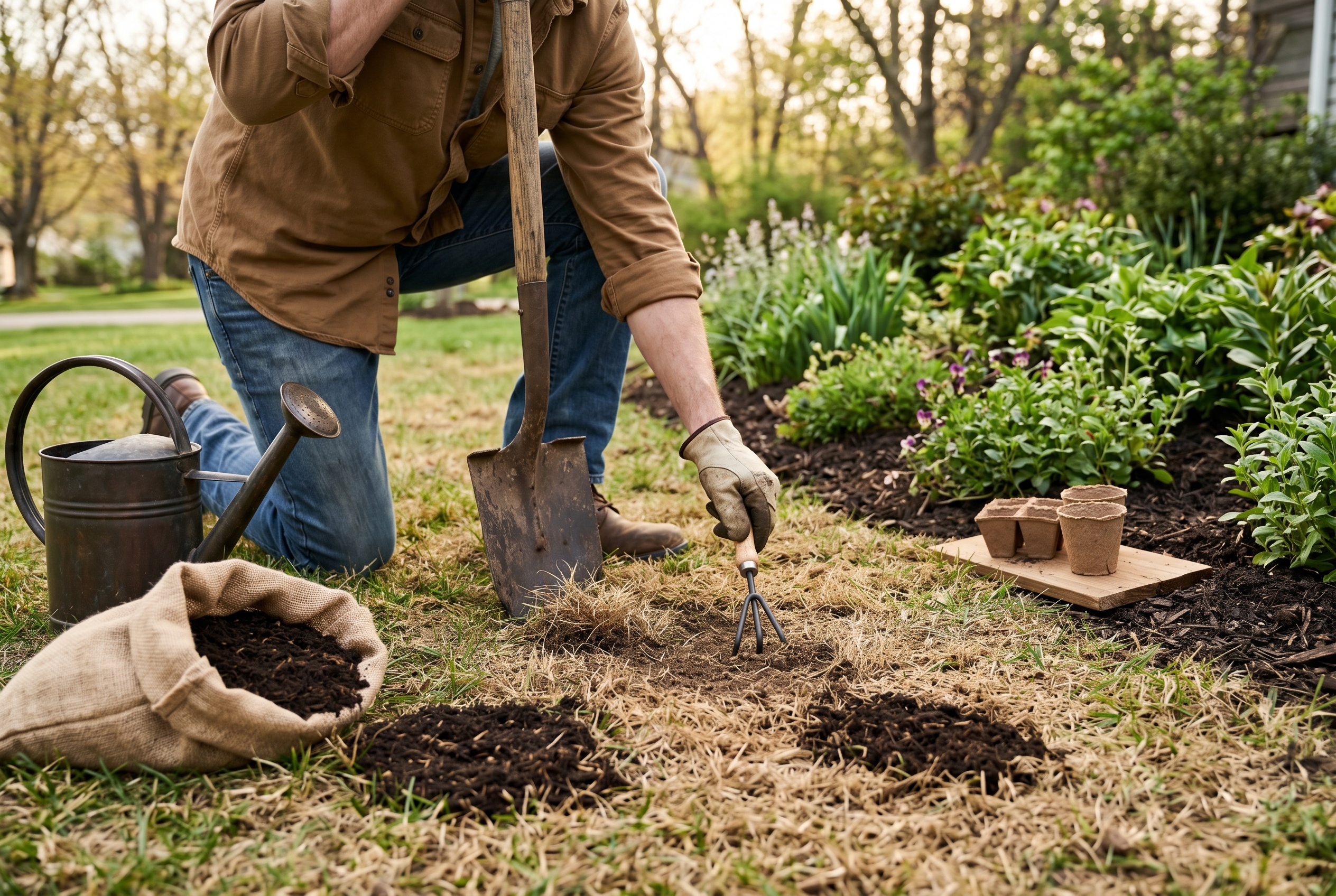
Brown spots in a lawn do not always mean the lawn needs reseeding. The real cause might be drought stress, compacted soil, pet urine, poor drainage, too much shade, or mower stress. A sustainable fix starts with diagnosis so you do not waste seed, water, and time.
Key Takeaways
- Identify the cause before adding seed or fertilizer.
- Compaction and shallow watering are common hidden problems.
- Some brown spots are better converted to planting beds than reseeded.
- Small repairs work best when paired with soil and water improvements.
Quick Comparison
| Brown Spot Pattern | Likely Cause | First Fix |
|---|---|---|
| Sunny dry patches | Drought or shallow roots | Water deeply and mow higher |
| Hard worn areas | Compaction or foot traffic | Aerate and redirect traffic |
| Wet low patches | Drainage issue | Route water or plant a wetter-tolerant area |
Check moisture before blaming the grass
Probe the soil a few inches down. If it is powdery dry, shallow watering or heat stress may be the issue. If it is wet and sour, reseeding will not solve the underlying drainage problem.
For wet areas, use How to Fix Soggy Spots in a Yard Without Wasting Water.
Look for compaction and traffic
Brown patches often appear where people, pets, wheels, or repeated mowing patterns compact the soil. Loosen the area, add a thin layer of compost, and change the traffic pattern if possible.
Mow and water for root health
Mowing too short exposes soil and stresses grass. Watering lightly every day can keep roots shallow. Mow higher during heat and water deeply when irrigation is needed.
These habits connect with Water-Wise Gardening at Home.
Decide whether lawn is still the best use
If the same spot fails repeatedly, consider whether it should remain lawn. A native bed, path, rain garden edge, or mulched planting may solve the problem with less input.
For conversion ideas, see How to Turn a Small Patch of Lawn Into a Native Garden Bed.
FAQ
Should I reseed every brown lawn spot?
No. Reseeding only helps when the cause is suitable for grass. Fix moisture, compaction, shade, or traffic first.
Can brown grass come back after drought?
Sometimes. Dormant grass may green up after rain or deep watering, but dead patches need repair or replacement.
What is the most sustainable fix for repeat brown spots?
If the spot fails every year, convert it to a better-suited planting, path, or water-wise feature instead of repeatedly reseeding.
Conclusion
Brown lawn spots are symptoms. Diagnose water, soil, traffic, and site fit first, then choose the lowest-waste fix: repair the grass where it makes sense or replace it where it does not.
Image Credits
- Featured image generated with Nano Banana for Renewable Gardening as a custom, topic-specific editorial image for Brown Spots in the Lawn? Sustainable Fixes Before You Reseed (media ID 622).