
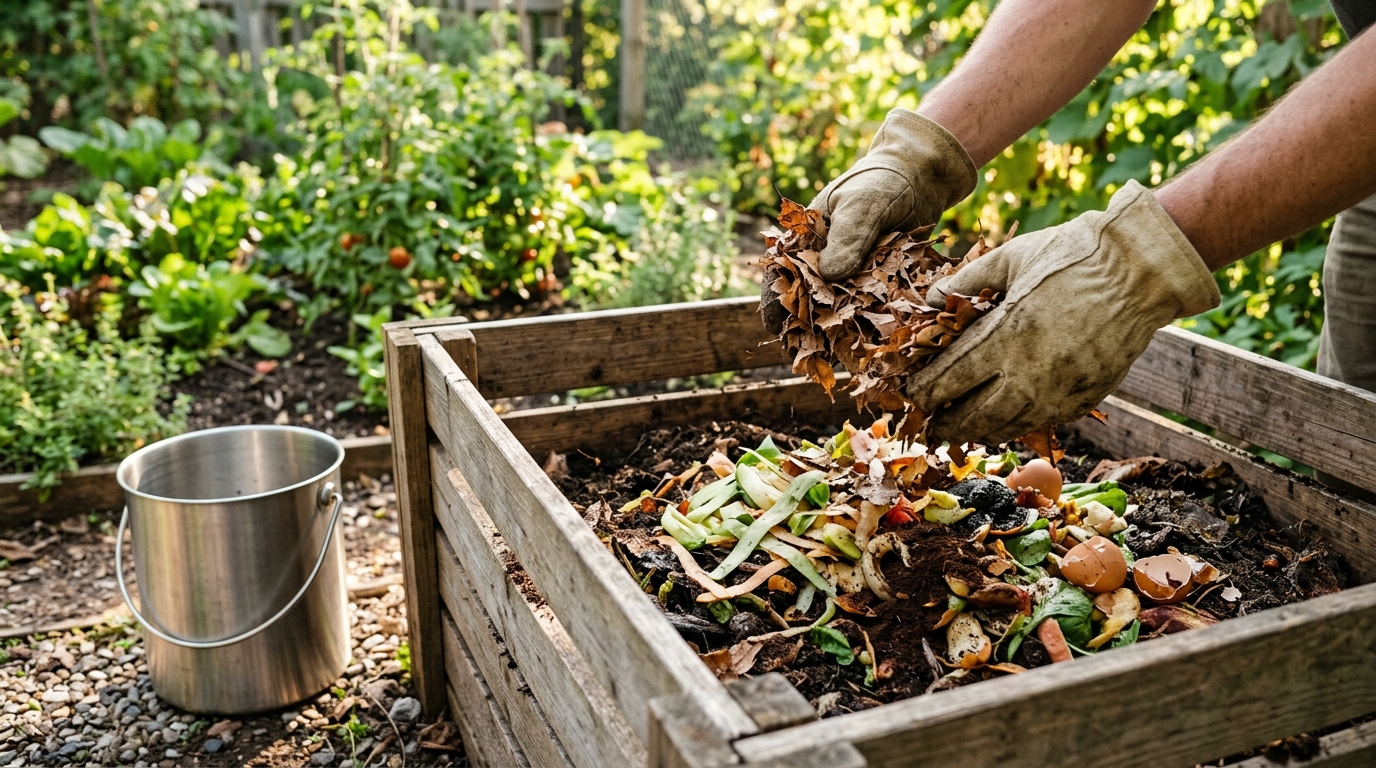
A small compost bin can go out of balance quickly because every kitchen pail, handful of leaves, and wet clump changes the whole mix. Too many greens can smell sour. Too many browns can sit dry and unchanged.
You do not need a perfect formula. The best small-bin routine is to use simple volume cues, watch moisture, and cover fresh food scraps with enough dry material that the bin stays earthy instead of wet or rotten.
Key Takeaways
- Use roughly two to three parts loose browns for each part fresh greens by volume.
- Cover every food-scrap addition with dry leaves, shredded cardboard, or plain paper.
- If the bin smells, add browns and open dense wet pockets.
- If the bin is dry and unchanged, add water and a small amount of fresh greens.
Quick Guide
| Bin Signal | Likely Balance | Best Fix |
|---|---|---|
| Sour or rotten smell | Too many wet greens | Add dry browns and mix lightly |
| Dry unchanged scraps | Too many dry browns | Moisten and add fresh greens |
| Fruit flies | Exposed food scraps | Bury scraps under browns |
| Earthy smell | Good balance | Keep the same rhythm |
Think in handfuls, not exact ratios
Small bins are easier to manage by volume than by weight. A bowl of wet vegetable scraps usually needs two or three loose handfuls of dry leaves, shredded paper, torn egg cartons, or small cardboard pieces.
Loose browns contain a lot of air, so the pile may look browner than expected. That is usually fine in a small bin because wet scraps need both carbon and space around them.
Cover fresh scraps every time
The simplest habit is to never leave food scraps exposed. Add scraps, spread them slightly, then cover with dry browns. This keeps odor down, discourages flies, and prevents a wet food layer from forming.
If your kitchen pail is the smelly part of the system, use How to Keep a Kitchen Compost Pail From Smelling in Summer.
Use moisture as the second check
Balanced compost should feel like a wrung-out sponge. If the bin drips, clumps, or smells swampy, add dry browns. If it is dusty and nothing is changing, add water slowly and mix just enough to distribute moisture.
For more troubleshooting, see What to Do When Compost Is Too Wet.
Do not overmix a tiny bin
A small bin needs air, but constant stirring can dry it out and break up the structure that lets air move. Mix when you see wet pockets, smells, or compacted layers, then let the bin work.
Summer timing is covered in How Often Should You Turn Compost in Summer?.
Keep backup browns nearby
Small compost systems work best when dry material is already available. Store a bag of shredded paper, dry leaves, torn cardboard, or paper bags near the kitchen or bin so every food-scrap addition can be covered right away.
FAQ
Are coffee grounds greens or browns in compost?
Coffee grounds count as greens because they are nitrogen-rich, even though they are brown in color.
Can I use shredded paper as compost browns?
Yes, if it is plain, uncoated paper without plastic, heavy gloss, or questionable residue. Tear or shred it so it does not mat.
What if I do not have leaves for compost browns?
Use torn plain cardboard, egg cartons, paper bags, straw, or shredded paper as backup browns.
Conclusion
A small compost bin stays healthy when each wet addition is matched with enough dry material and enough air. Cover scraps, watch moisture, keep browns handy, and adjust based on smell and texture instead of chasing a perfect ratio.
Image Credits
- Featured image generated with Nano Banana for Renewable Gardening as a custom, topic-specific editorial image for How to Balance Greens and Browns in a Small Compost Bin (media ID 667).