
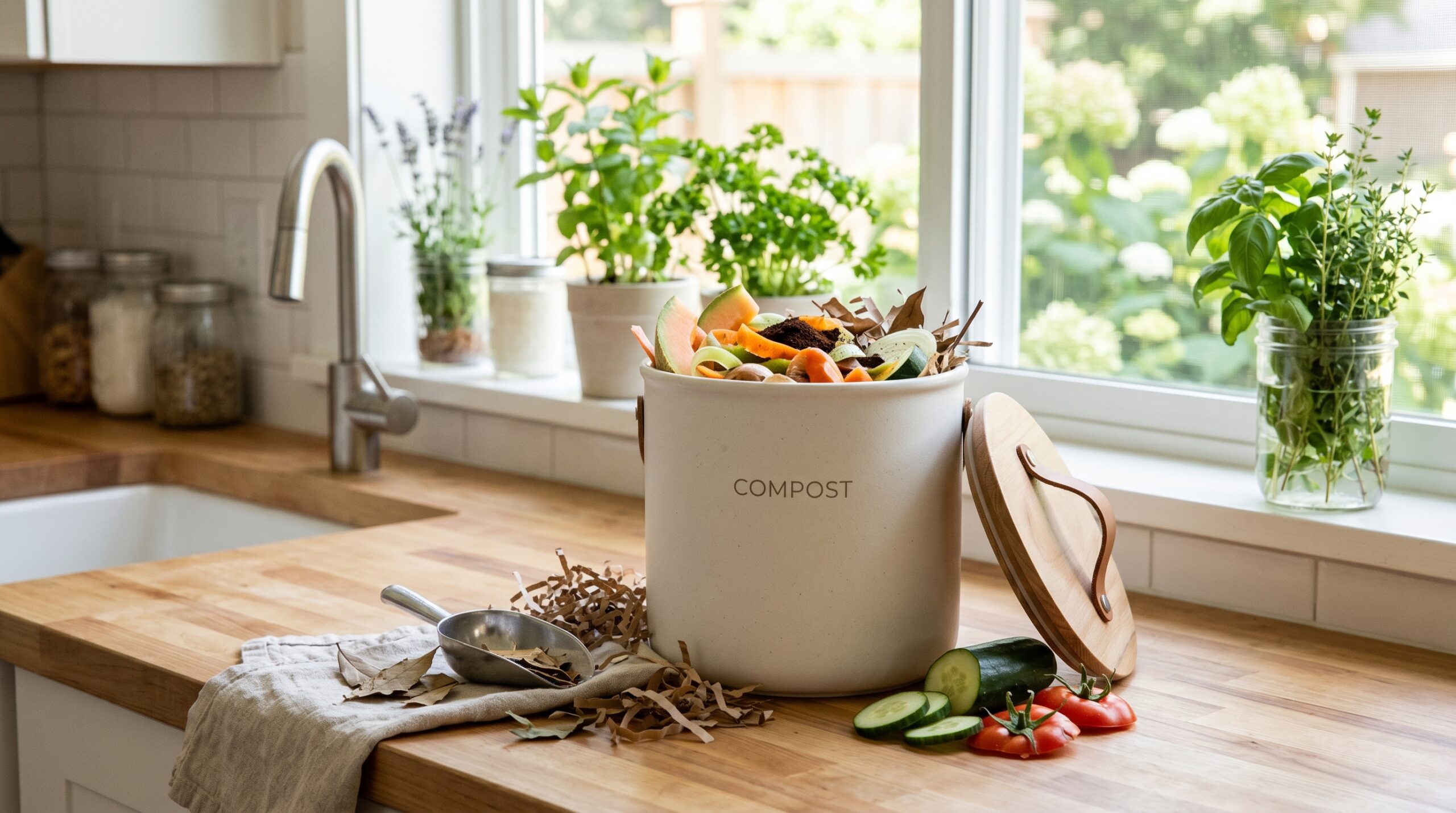
A kitchen compost pail can smell faster in summer because heat speeds up decomposition before scraps ever reach the outdoor bin. Fruit peels, coffee grounds, melon rinds, onion skins, and wet food scraps can turn sour quickly when they sit warm and uncovered.
The fix is not complicated. A low-odor kitchen pail needs less moisture, fewer exposed scraps, a cleaner container, and a realistic emptying rhythm during hot weather.
Key Takeaways
- Empty the pail more often in summer, especially after adding fruit, onions, or wet scraps.
- Add dry browns such as shredded paper, cardboard, or dry leaves to absorb moisture.
- Keep scraps covered, chilled, or frozen if you cannot empty the pail quickly.
- Wash the pail regularly and let it dry before adding new scraps.
Quick Guide
| Smell Problem | Likely Cause | Best Fix |
|---|---|---|
| Sour fruit smell | Warm, wet scraps sitting too long | Empty sooner or freeze scraps |
| Rotten odor | Too little dry material | Add shredded paper or leaves |
| Persistent container smell | Residue in lid or corners | Wash and dry the pail |
Start by reducing moisture
Most kitchen compost pail smells begin with excess moisture. Wet scraps break down quickly in a warm container, especially when they sit in a sealed liner or collect liquid at the bottom.
Add a small handful of dry browns after wet scraps. Shredded plain paper, torn egg cartons, small pieces of uncoated cardboard, or dry leaves all help absorb liquid before it becomes odor.
Cover scraps instead of leaving them exposed
A thin layer of dry material over each addition makes a big difference. It blocks fruit flies, reduces surface odor, and keeps the pail from becoming a wet pile of exposed food.
If your outdoor compost is also wet, use What to Do When Compost Is Too Wet before adding more soggy kitchen waste.
Empty the pail on a summer schedule
In cool weather, a kitchen pail may be fine for several days. In summer, it may need to be emptied every day or two, especially if it contains fruit, cooked vegetables, coffee grounds, or anything very wet.
Choose a routine tied to something you already do: after dinner cleanup, morning garden watering, or taking out trash. A predictable habit prevents the pail from becoming a forgotten problem.
Use the freezer for high-odor scraps
If you compost from an apartment, have a small household, or cannot reach the outdoor bin daily, freeze scraps in a container or reused bag. Freezing stops odor and fruit flies until you are ready to empty the batch.
This is especially useful for melon rinds, banana peels, onion scraps, and other summer materials that turn strong quickly.
Clean the pail before odor builds up
Even a good compost routine can leave residue under the lid, around the handle, or in corners. Wash the pail with hot soapy water, rinse well, and let it dry completely before refilling.
For the broader kitchen-scrap routine, pair this with Beginner’s Guide to Composting Kitchen Scraps for the Garden.
FAQ
Why does my kitchen compost pail smell worse in summer?
Heat speeds up decomposition and moisture makes scraps turn sour faster. Summer pails usually need more dry material and more frequent emptying.
Should a kitchen compost pail have air holes?
Some airflow can help, but exposed scraps can attract fruit flies. The best setup depends on your routine; moisture control and frequent emptying matter more.
Can I put paper towels in a kitchen compost pail?
Plain paper towels used for safe food messes can help absorb moisture. Avoid towels with cleaners, grease, or questionable residue. See Can You Compost Paper Towels? for details.
Conclusion
A summer compost pail stays fresher when wet scraps do not sit warm and exposed. Add dry browns, cover each addition, empty the pail often, freeze problem scraps when needed, and clean the container before odor settles in.
Image Credits
- Featured image generated with Nano Banana for Renewable Gardening as a custom, topic-specific editorial image for How to Keep a Kitchen Compost Pail From Smelling in Summer (media ID 645).