
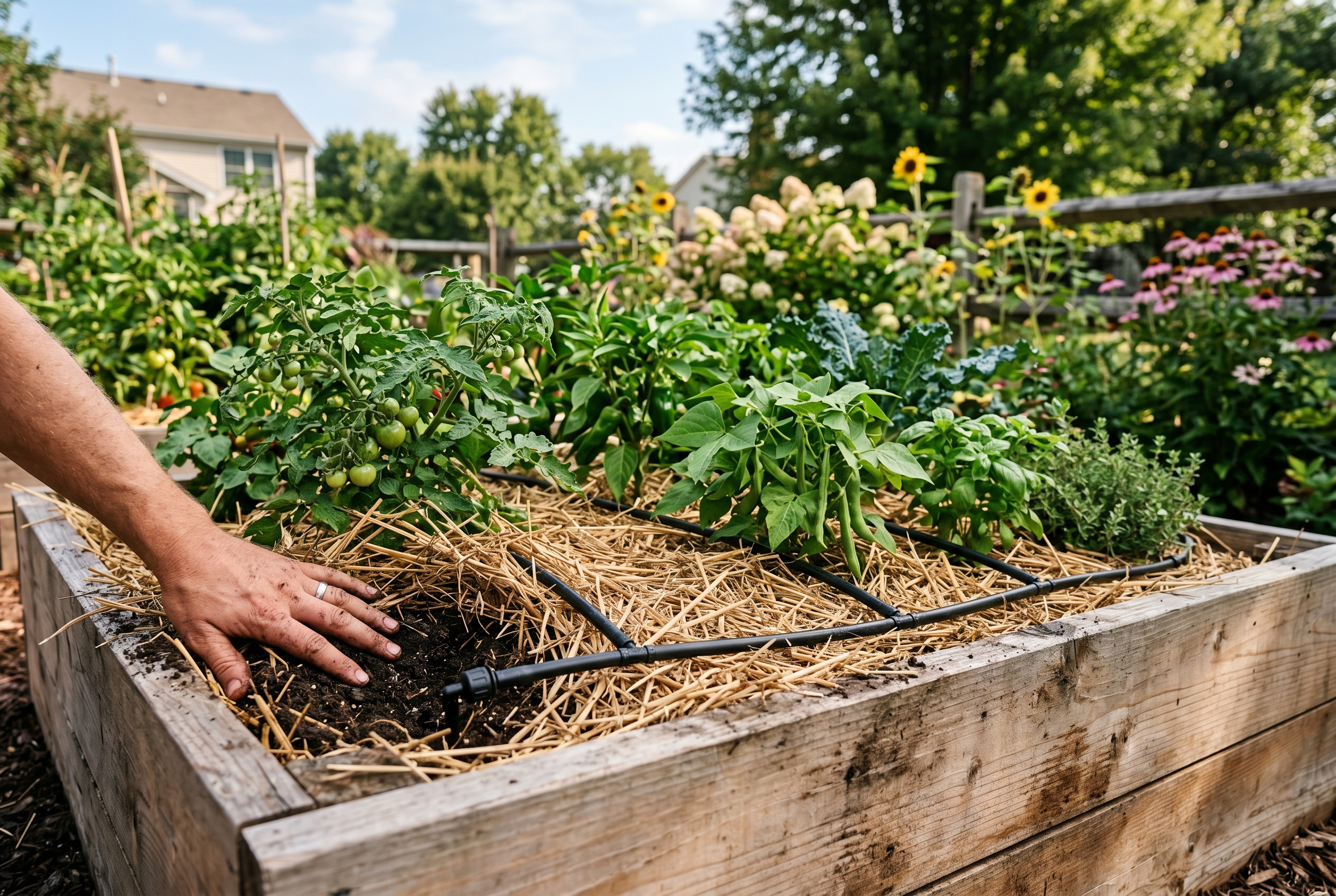
Raised beds warm quickly, drain well, and make planting easier, but those same strengths can make them dry out faster than in-ground beds. The fix is usually not more frantic watering. It is a better soil surface, deeper watering, and a bed setup that holds moisture without becoming soggy.
Key Takeaways
- Mulch is the fastest way to slow moisture loss from a raised bed.
- Water deeply enough to reach the root zone instead of only wetting the surface.
- Avoid fluffy, peat-heavy mixes that dry out and resist rewetting.
- Group plants by water need so one thirsty crop does not dictate the whole bed.
Quick Comparison
| Problem | Likely Cause | Best Fix |
|---|---|---|
| Surface dries daily | Bare soil and sun exposure | Add 2 to 3 inches of organic mulch |
| Water runs through quickly | Light or overly coarse mix | Add compost and mineral soil gradually |
| Plants wilt by afternoon | Shallow roots or heat stress | Water deeply and add temporary shade |
Cover the soil before changing everything else
Bare raised-bed soil loses moisture fast. A layer of straw, shredded leaves, fine wood mulch, or composted leaf mold protects the surface, keeps roots cooler, and reduces crusting after watering.
If you are choosing between mulch materials, use Straw Mulch vs Wood Mulch vs Leaves as a companion guide.
Water for depth, not just frequency
A quick daily sprinkle often wets only the top inch. Push moisture deeper so roots grow down instead of hovering near the surface. Check with a finger, trowel, or soil probe after watering; the bed should be moist several inches down.
For system choices, compare Drip Irrigation vs Soaker Hose vs Hand Watering.
Improve the soil mix over time
Some bagged raised-bed mixes drain so freely that they struggle in hot weather. Mix in finished compost moderately, avoid relying on pure compost, and add mineral soil where appropriate so the bed has more moisture-holding structure.
For the base layers, see What to Put in the Bottom of a Raised Garden Bed.
Use shade and spacing as seasonal tools
Temporary shade cloth, taller companion plants, or afternoon protection can reduce stress during heat waves. Good spacing also matters: overcrowding increases water demand, but too much bare space exposes soil to sun.
FAQ
Why do raised beds dry out faster?
They usually drain more freely, sit above ground level, and warm faster than in-ground beds. That combination increases evaporation and root-zone drying.
Should I water raised beds every day?
Not automatically. Water when the root zone needs it. In hot weather, that may be frequent, but deep watering and mulch reduce the need.
Can too much compost make a raised bed dry out?
A bed made mostly from loose organic material can dry unevenly. Use compost as part of a balanced mix, not the entire growing medium.
Conclusion
A dry raised bed is usually a design and watering problem, not a reason to abandon raised-bed gardening. Cover the soil, water deeply, improve the mix gradually, and protect plants during the hottest stretches.
Image Credits
- Featured image generated with Nano Banana for Renewable Gardening as a custom, topic-specific editorial image for How to Keep Raised Beds From Drying Out Too Fast (media ID 612).