
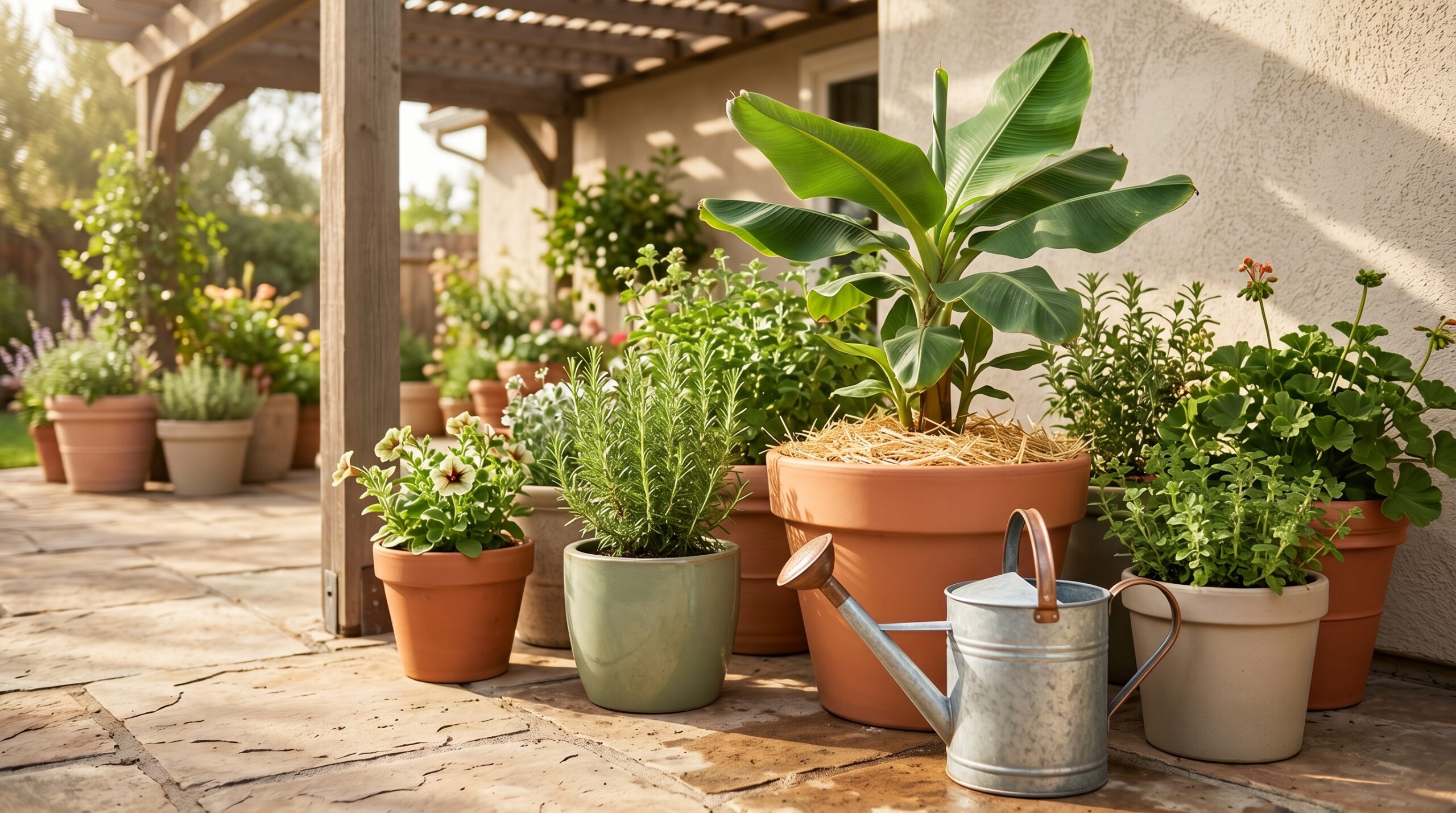
Container plants dry out faster than garden beds because their roots are surrounded by a limited amount of potting mix. In hot weather, that small root zone can heat up, dry out, and stress plants quickly.
Good summer watering is not just about watering more often. It is about soaking the whole root ball, reducing evaporation, choosing the right time of day, and keeping containers from overheating.
Key Takeaways
- Check container moisture daily during heat waves, especially small pots and hanging baskets.
- Water deeply until moisture reaches the full root zone and drains from the bottom.
- Morning watering is usually best because plants enter the hottest part of the day hydrated.
- Mulch, shade, and larger containers can reduce stress and water demand.
Quick Guide
| Container Issue | What It Means | Best Response |
|---|---|---|
| Water runs straight through | Mix is too dry or pulled from pot edges | Rehydrate slowly in stages |
| Plant wilts by afternoon | Heat and root-zone stress | Deep morning soak plus temporary shade |
| Soil surface dries fast | Sun and wind exposure | Add light mulch and group pots |
Water the whole root ball
A quick splash can wet the surface while the lower root zone stays dry. Water slowly until liquid drains from the bottom, pause, and water again if the mix was very dry.
If water immediately runs down the inside edge of the pot, the mix may have shrunk away from the container. Rehydrate gradually so water can soak in instead of escaping around the sides.
Use morning as your default watering window
Morning watering gives plants moisture before the hottest hours arrive. It also lets leaves dry during the day if they get splashed.
Evening watering can work during extreme heat, but avoid leaving foliage wet overnight when disease pressure is high.
Protect pots from overheating
Dark containers, small pots, concrete patios, and reflected heat can make roots much hotter than the air temperature suggests. Move sensitive pots where they get afternoon shade during heat waves.
Grouping containers together can also reduce wind exposure and slow drying.
Mulch the pot surface lightly
A thin layer of shredded leaves, straw, fine bark, or compost can shade the potting mix and slow evaporation. Keep mulch away from plant stems so moisture does not sit against them.
Many of the same principles apply in raised beds. See How to Keep Raised Beds From Drying Out Too Fast.
Use saucers carefully
A saucer can help a thirsty container reabsorb water, but standing water can also suffocate roots or attract mosquitoes. Let plants drink briefly, then empty excess water unless the plant is one that likes consistently wet conditions.
For broader water-saving habits, read How to Reduce Water Use in Your Garden Without Sacrificing Healthy Plants.
FAQ
Should I water container plants every day in hot weather?
Often, but not automatically. Small pots may need daily watering, while larger containers may not. Check the mix below the surface.
Is it bad to water plants in the afternoon?
It is not ideal, but a thirsty container plant should not wait if it is wilting badly. Water the soil directly and avoid soaking hot foliage.
Why does water run straight through my pot?
The potting mix may be very dry, compacted, or pulled away from the pot edge. Water slowly in rounds so it has time to rehydrate.
Conclusion
Hot-weather container watering works best when you treat the pot as a small root environment. Soak deeply, check often, protect pots from heat, mulch lightly, and adjust the routine before plants reach crisis wilt.
Image Credits
- Featured image generated with Nano Banana for Renewable Gardening as a custom, topic-specific editorial image for How to Water Container Plants During Hot Weather (media ID 647).