Grass clippings can be useful garden material, but they can also mat, smell, heat up, or introduce unwanted residues when used carelessly. The best approach is simple: use thin layers, let clippings dry when possible, and keep questionable lawn material out of food beds.
Key Takeaways
- Thin layers are safer than thick piles of fresh clippings.
- Dry clippings are easier to use as mulch than wet clumps.
- Fresh grass is a compost green and needs browns for balance.
- Avoid clippings from lawns treated with persistent herbicides.
Quick Comparison
| Use | How to Do It | Watch For |
|---|---|---|
| Mulch | Apply thin dry layers | Matting and sour smells |
| Compost | Mix with dry browns | Too much nitrogen at once |
| Leave on lawn | Mow frequently and let clippings fall | Clumps after overgrown mowing |
Use thin layers as mulch
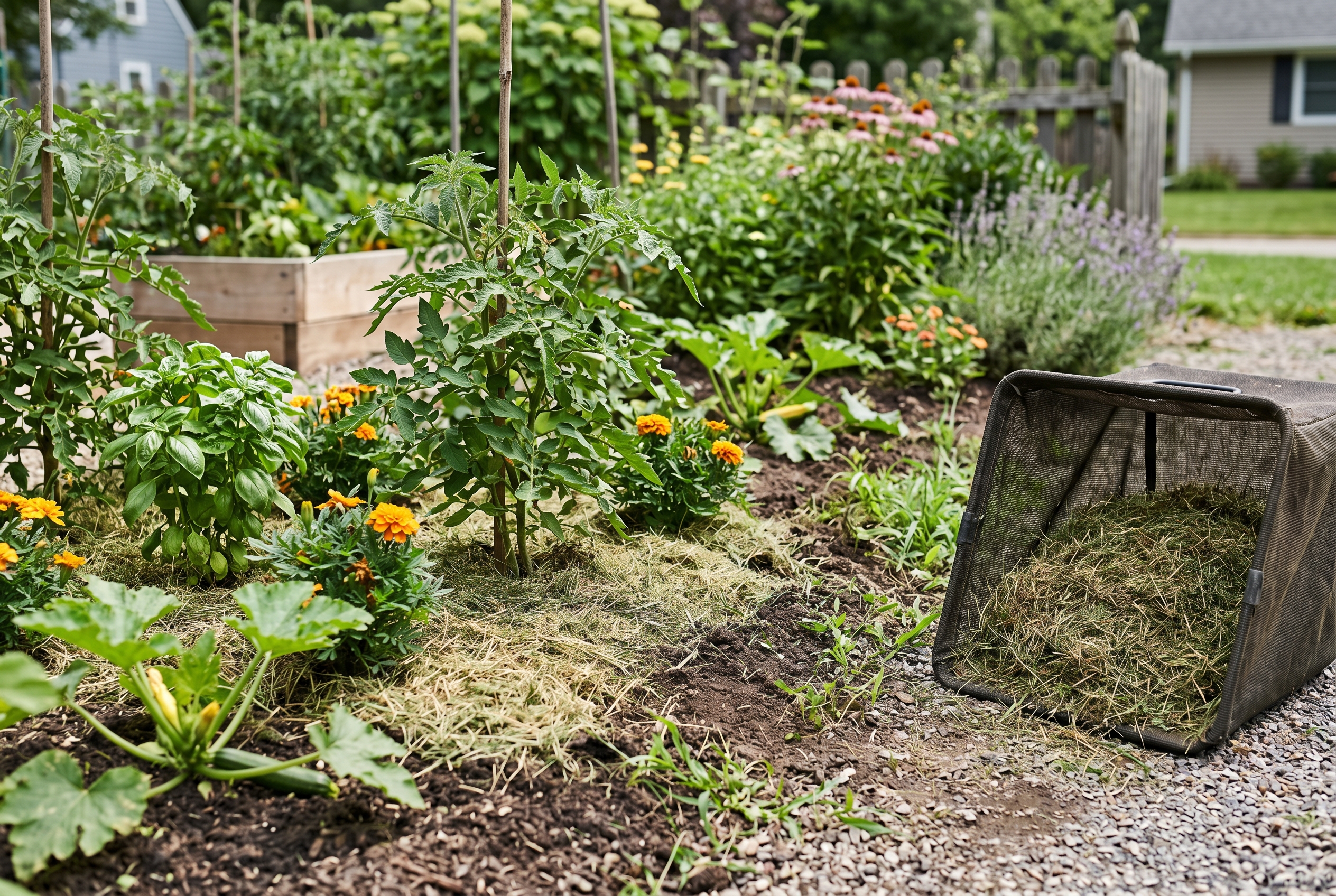
A light layer of dried grass clippings can shade soil and reduce moisture loss. Thick wet piles can mat together, block water, and smell. Build up gradually instead of dumping a mower bag around plants.
For mulch comparisons, see Best Mulch Options for Different Garden Areas.
Balance fresh clippings in compost
Fresh grass clippings are nitrogen-rich greens. Mix them with dry leaves, shredded cardboard, straw, or other browns so the compost does not turn wet and sour.
If the pile gets wet, use What to Do When Compost Is Too Wet.
Be cautious with treated lawns
Do not use clippings from lawns treated with herbicides unless you know the product is safe for that use and the waiting period has passed. Persistent herbicides can damage garden plants even after clippings move into compost or mulch.
Use clippings as part of a low-waste yard routine
Often the easiest option is grasscycling: mow before grass gets too tall and leave short clippings on the lawn. Use collected clippings only where they solve a real garden need.
For the broader system, see Low-Waste Yard Care.
FAQ
Can I put fresh grass clippings around plants?
Yes, but only in thin layers. Thick wet clippings can mat, heat, and smell.
Are grass clippings green or brown compost material?
Fresh grass clippings are greens. Balance them with dry browns such as leaves or shredded cardboard.
Can herbicide-treated grass clippings go in compost?
Avoid them unless you know the product and label allow it. Persistent residues can harm sensitive plants.
Conclusion
Grass clippings are useful when handled lightly. Keep layers thin, balance them in compost, avoid questionable treated material, and use them as one part of a low-waste yard system.
Image Credits
- Featured image generated with Nano Banana for Renewable Gardening as a custom, topic-specific editorial image for How to Use Grass Clippings in the Garden Without Causing Problems (media ID 620).