
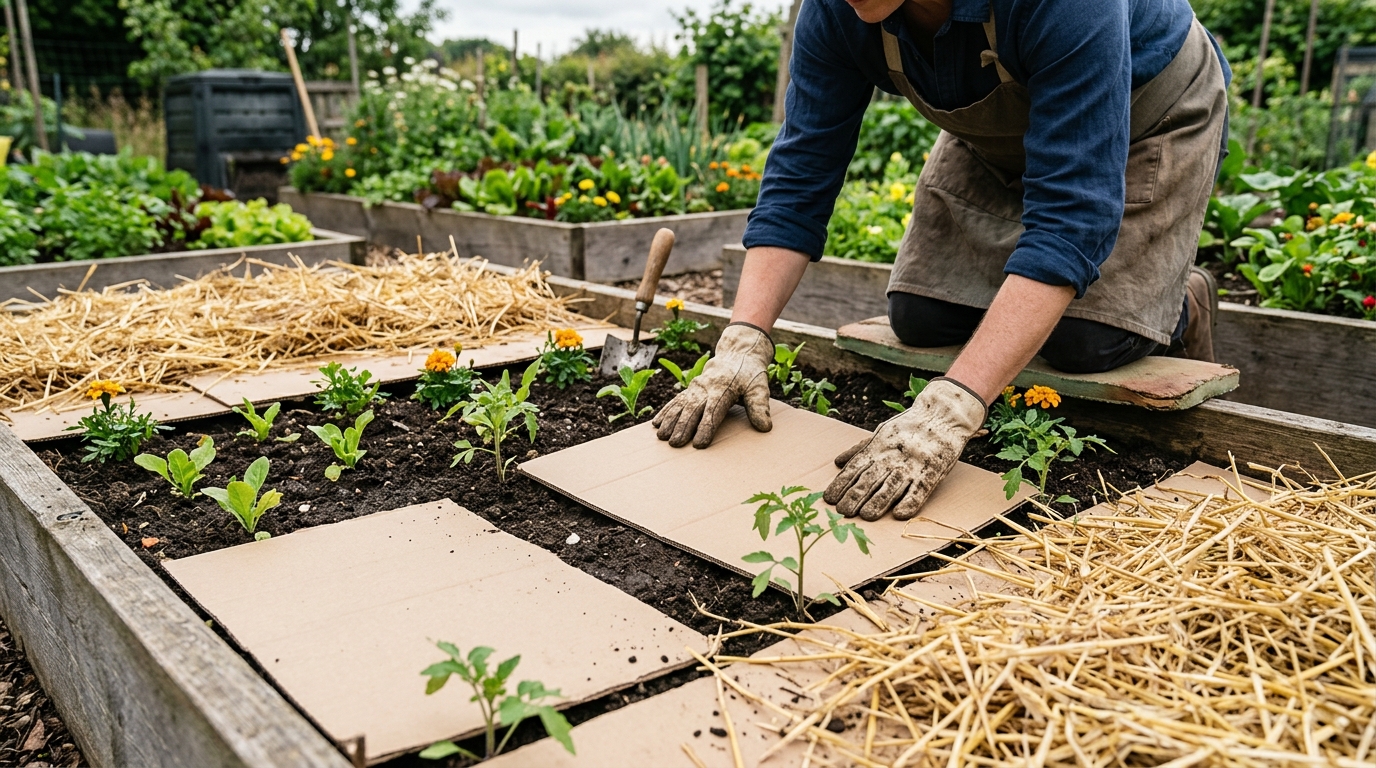
Cardboard under mulch can suppress weeds and reuse a common household material, but it works best when used lightly and thoughtfully. Thick, dry, glossy, or plastic-coated layers can create problems instead of solving them.
The goal is a temporary weed barrier that softens, breaks down, and feeds soil organisms over time. That means choosing plain cardboard, removing contaminants, wetting it well, and covering it with real mulch.
Key Takeaways
- Use plain brown cardboard with tape, labels, staples, and glossy coatings removed.
- Wet cardboard thoroughly before covering it with mulch.
- Use one overlapping layer, not a thick sealed stack.
- Keep cardboard away from plant crowns and avoid waterlogged soils.
Quick Guide
| Cardboard Choice | Use It? | Reason |
|---|---|---|
| Plain brown boxes | Yes | Break down reasonably well |
| Glossy coated boxes | Skip | May shed coatings or resist breakdown |
| Tape and labels | Remove | Plastic and adhesive do not belong in soil |
| Thick stacked layers | Avoid | Can block water and air |
Start with plain cardboard
Use simple brown cardboard whenever possible. Remove tape, shipping labels, staples, plastic windows, glossy pieces, and anything with heavy coatings.
For broader cardboard reuse, see How to Reuse Cardboard in the Garden Without Problems.
Use one overlapping layer
Overlap edges enough to block weed gaps, but do not build a thick stack. One layer is usually enough under mulch for paths, bed edges, or new planting areas.
Too much cardboard can slow water movement, reduce air exchange, and make it harder for roots and soil organisms to move through the layer.
Wet it before mulching
Dry cardboard can shed water at first or blow around while you work. Soak it well, let it settle against the soil, then cover it with straw, leaves, wood chips, or another mulch.
Compare mulch materials in Straw Mulch vs Wood Mulch vs Leaves.
Leave breathing room around plants
Do not wrap cardboard tightly around stems, crowns, or trunks. Leave a small open ring so moisture does not sit against plant tissue and so water can move into the root zone.
This is especially important around young vegetables, perennials, shrubs, and anything already under stress.
Avoid problem spots
Skip cardboard where soil is already waterlogged, compacted, or poorly drained. In those places, improving structure and drainage matters more than adding a sheet barrier.
If the cardboard stays intact and slimy for a long time, pull it back, loosen the area, and use a lighter mulch-only approach.
FAQ
Can cardboard under mulch attract termites?
Cardboard can attract decomposers, including insects, especially near structures. Keep sheet mulching away from house foundations and wooden building parts.
How long does cardboard take to break down under mulch?
It depends on moisture, soil life, thickness, and temperature. Plain wet cardboard may soften within weeks and break down over a season or longer.
Can roots grow through cardboard?
Roots can grow through softened cardboard, but thick dry stacks can slow them down. Use one wet layer and avoid tight planting holes.
Conclusion
Cardboard under mulch is useful when it behaves like a temporary weed barrier, not a buried plastic sheet. Choose plain cardboard, remove contaminants, wet it well, use a single layer, and keep soil breathing.
Image Credits
- Featured image generated with Nano Banana for Renewable Gardening as a custom, topic-specific editorial image for How to Use Cardboard Under Mulch Without Harming Soil (media ID 671).