
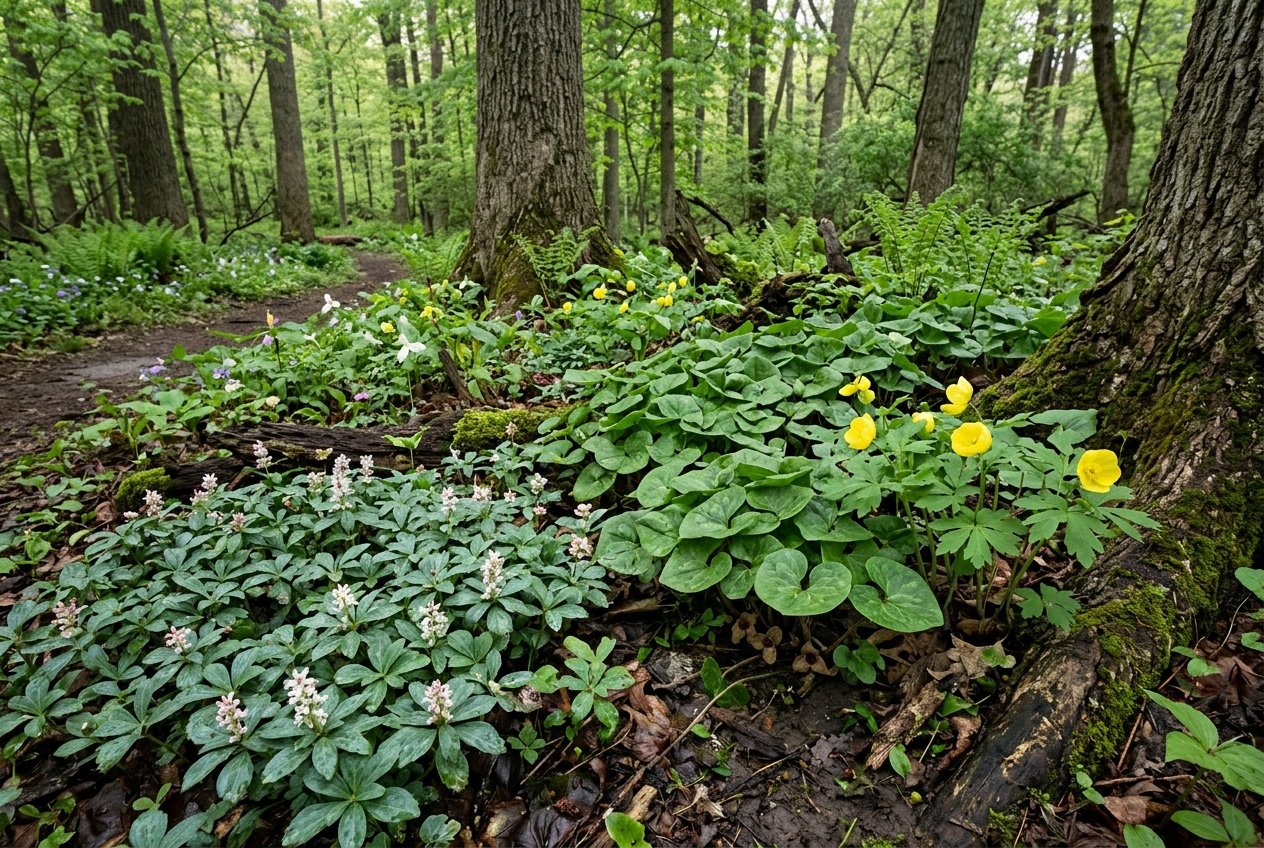
The best ground cover for clay soil depends on whether that clay is wet, average, dry, sunny, or shaded. Clay is not one condition. It is a soil texture that behaves differently from yard to yard.
In a sustainable garden, the goal is to cover bare soil with plants that can handle the site long term. Native sedges, spreading perennials, and locally adapted groundcovers often work better than constantly amending the soil for plants that do not want to be there.
Key Takeaways
- Choose ground covers by moisture and light, not clay alone.
- Native sedges and spreading perennials can stabilize clay soil gently.
- Avoid smothering tree roots or planting into wet, smeared clay.
- Mulch lightly while ground covers fill in.
Quick Comparison
| Clay Site | Good Ground Cover Strategy | Avoid |
|---|---|---|
| Wet clay | Moisture-tolerant sedges and wet-meadow natives | Dry-site plants |
| Dry clay | Tough prairie or savanna groundcovers after establishment | Shallow-rooted thirsty plants |
| Shade clay | Woodland sedges and low perennials | Full-sun flowering mixes |
| Walked-on edges | Dense, durable plants plus stepping stones | Fragile groundcovers alone |
Start with drainage and light
Check the spot after rain and again during dry weather. Clay under a downspout is a different planting problem from clay under a maple tree. A good ground cover list only helps after you know the site’s moisture and sun pattern.
For clay-specific native planting basics, see Best Native Plants for Clay Soil in Home Gardens.
Use native groundcovers where possible
Regionally native groundcovers can support local insects, cover soil, and handle local weather swings. Depending on your area, look at sedges, violets, wild ginger, foamflower, woodland phlox, asters, and other local low-growing plants.
For small-yard examples, use Native Ground Covers for Small Yards and Garden Edges.
Plant clay without compacting it
Do not work clay when it is saturated. Digging wet clay smears the sides of planting holes and makes root growth harder. Plant when soil is moist but crumbly, roughen the hole edges, and water new plants deeply during establishment.
The watering rhythm in How to Water New Plants Until They Are Established applies to groundcovers too.
Mulch lightly until plants close the gap
A thin layer of shredded leaves or fine mulch protects bare clay from crusting while plants spread. Keep mulch off crowns and avoid piling it deeply over low groundcovers.
Once the planting fills in, living foliage becomes the main soil cover and you can reduce mulch inputs.
FAQ
What ground cover grows best in clay soil?
The best choice depends on moisture and light. Native sedges and clay-tolerant spreading perennials are often strong starting points.
Should I amend clay before planting ground cover?
Add compost modestly if needed, but avoid replacing the whole soil profile. Matching plants to clay is usually more durable.
Can ground covers improve clay soil?
Over time, roots and organic matter can improve structure near the surface, especially when soil is protected from compaction.
Conclusion
Clay soil can support attractive, useful groundcovers when the plant fits the actual site. Match moisture, light, and traffic, then plant gently and let roots do the long-term work.
Image Credits
- Featured image generated with Nano Banana for Renewable Gardening as a custom, topic-specific editorial image for Best Ground Covers for Clay Soil in Sustainable Gardens (media ID 765).