
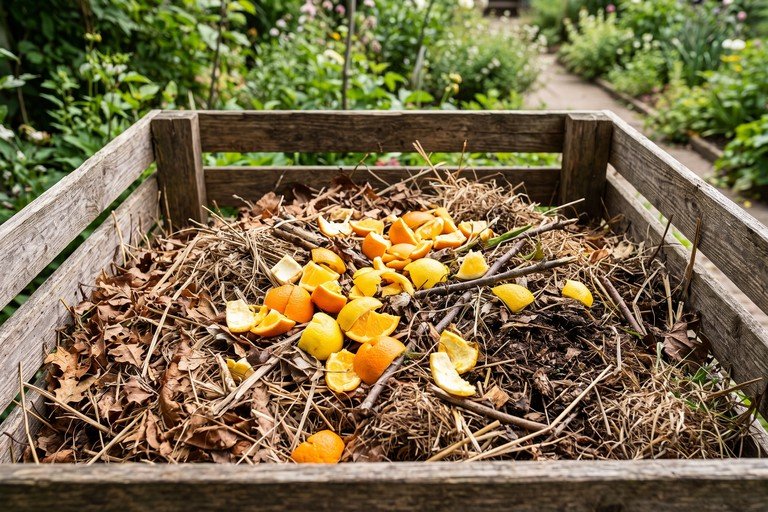
Many gardeners believe that citrus peels—like orange, lemon, lime, and grapefruit skins—should never go into a compost bin because of their acidity or natural oils. While too much citrus can slow down composting organisms, you can absolutely compost citrus peels in moderation.
The secret is proper sizing and keeping your pile balanced. When chopped finely and paired with dry browns, citrus peels break down efficiently and add excellent nutrients to your compost.
Key Takeaways
- Chop citrus peels into small pieces to speed up decomposition.
- Mix citrus peels with extra dry carbon materials to offset moisture and acid.
- Citrus peels add nitrogen, potassium, and phosphorus to your finished compost.
- Avoid adding massive quantities to small worm bins, as worms are sensitive to citrus oils.
Quick Guide
| Compost Type | Citrus Compatibility | Precaution |
|---|---|---|
| Standard Backyard Pile | High | Chop peels and mix well with browns |
| Small Tumbler Bin | Moderate | Limit volume to under 15% of total pile |
| Worm Composting (Vermicompost) | Low | Avoid or add only very small amounts |
| Bokashi Composting | High | Ferments citrus peels easily |
Acidity and compost bacteria: The real story
A common concern is that citrus peels will make finished compost too acidic. In reality, as compost microbes break down organic materials, the pH naturally buffers toward neutral.
A standard compost pile contains millions of acid-tolerant bacteria and fungi that handle citrus peels easily, provided they are mixed into a diverse heap.
Speed up breakdown by chopping peels
Citrus peels have a thick, waxy outer skin that resists water and microorganisms. If left whole, orange or grapefruit peels can take many months to degrade.
Always chop or shred peels into pieces under an inch in size. This breaks the waxy barrier and exposes the soft white pith, allowing microbes to colonize the material rapidly.
Watch out for mold on citrus
Citrus fruits are prone to green and blue molds (Penicillium species). While these molds are natural decomposers, you do not want them dominating a small home bin.
Mix moldy peels deep into the center of a hot compost pile where heat can sanitize the spores, or balance them with plenty of dry leaves.
Citrus and worm composting: A sensitive mix
Red wiggler worms have sensitive skin and do not like the d-limonene found in citrus oils, which can act as a natural pesticide in high concentrations.
Keep citrus peels out of your worm bins, or limit them to a single small piece occasionally. Save your citrus peels for your backyard heap instead.
Use citrus to deter garden pests
While worms dislike citrus, so do many common pests! The strong scent of citrus can mask the smell of sweet food scraps, discouraging rodents and flies from visiting your bin.
If you are struggling with kitchen pail odors, see How to Keep a Kitchen Compost Pail From Smelling in Summer.
FAQ
Do citrus peels repel beneficial garden insects?
No, once citrus peels break down in a compost pile, they do not harm beneficial insects in your garden soil.
Can I compost whole lemons or limes?
It is best to cut them up. Whole fruits hold moisture and take much longer to decompose than chopped pieces.
How much citrus is too much in a compost bin?
In a standard backyard bin, citrus peels should make up no more than 10-15% of the total pile volume.
Conclusion
Citrus peels do not need to go to the landfill. By chopping them small, keeping them in standard backyard bins, and balancing them with plenty of carbon-rich browns, you can safely turn orange and lemon peels into rich, fragrant compost.
Image Credits
- Featured image generated with Nano Banana for Renewable Gardening as a custom, topic-specific editorial image for Can You Compost Citrus Peels? Preparation and Balance Tips (media ID 747).