
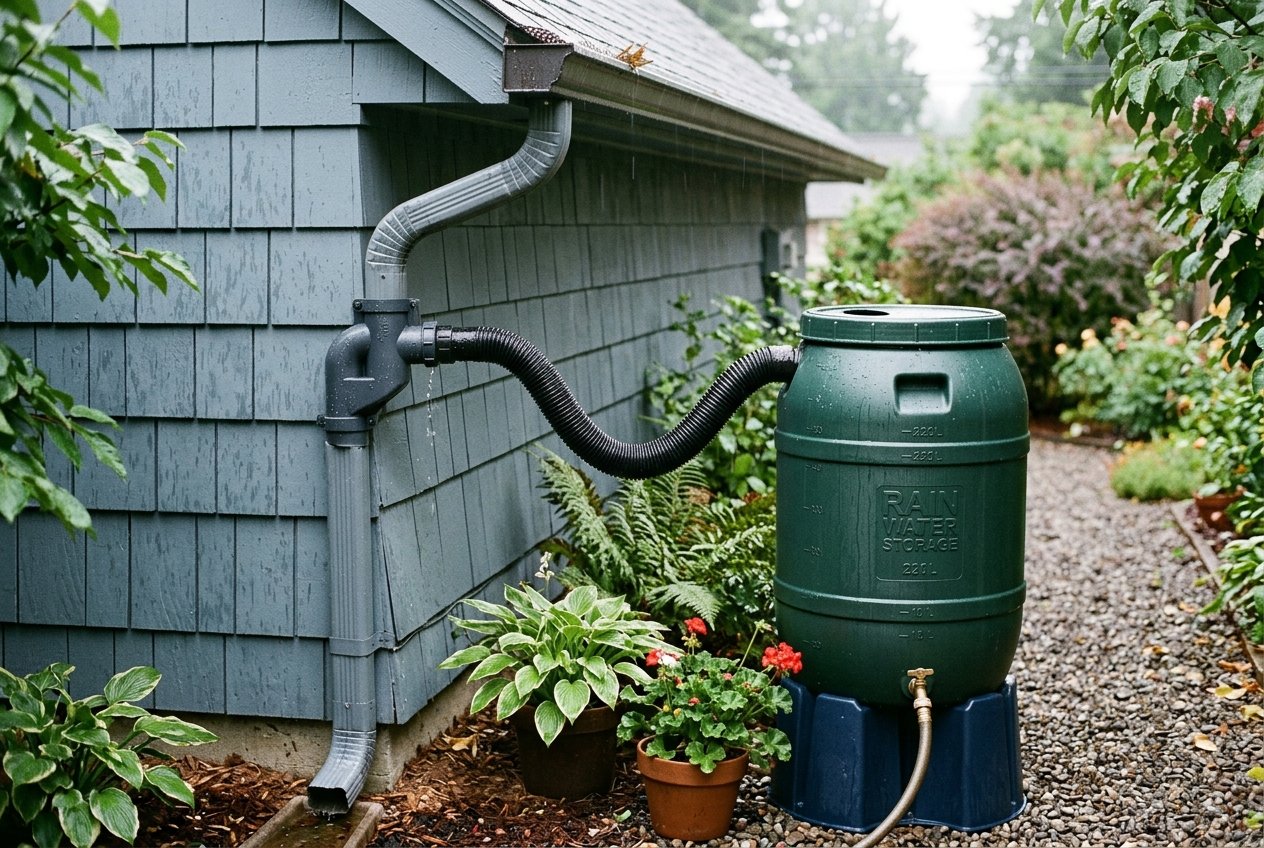
A rain barrel diverter kit connects a downspout to a storage barrel so roof runoff can fill the barrel without removing the entire downspout. Many kits also send overflow back down the original drainage path.
That makes diverters useful for homeowners who want a cleaner, more controlled rain barrel setup. The key is matching the kit to your downspout, barrel height, overflow plan, and winter maintenance needs.
Key Takeaways
- Diverter kits are best when you have an existing gutter and downspout.
- The barrel inlet height must align with the diverter outlet.
- Overflow should return to a safe drainage path, not the foundation.
- Most systems need seasonal cleaning and winter shutoff in freezing climates.
Quick Comparison
| Setup | Diverter Kit Fit? | Main Caution |
|---|---|---|
| Standard downspout and barrel | Good fit | Measure before cutting |
| No gutters | Poor fit | Use a drip-line method instead |
| Foundation drainage concerns | Useful if overflow returns safely | Do not trap water near house |
| Freezing winters | Still possible | Disconnect or bypass before freezes |
How a diverter kit works
Most diverters insert into the downspout and send some water through a hose into the barrel. When the barrel fills, water can back up to the diverter level and continue down the downspout.
This is cleaner than an open downspout dumping directly into a barrel because it can reduce splash, debris, and uncontrolled overflow.
Measure before you cut
Check downspout shape, downspout size, barrel inlet height, and hose route. The diverter should sit at the right height so water can flow into the barrel and overflow can behave as designed.
For basic rain barrel pros and cons, see Rain Barrels for Beginners.
Plan overflow and safety
A full barrel is heavy and a full system still needs somewhere for stormwater to go. Keep the barrel on a stable base, cover openings, and route overflow away from the foundation.
If runoff is causing wet spots, compare options in Rain Garden vs Swale vs Downspout Extension.
When a diverter is not the right tool
A diverter kit is not helpful if you do not have gutters or a downspout. It also may be overkill for a tiny shed, a temporary barrel, or a spot where overflow cannot be managed safely.
For gutterless collection ideas, see How to Collect Rainwater Without Gutters.
FAQ
Do rain barrel diverters prevent overflow?
They can manage overflow if installed correctly, but you still need a safe drainage route.
Can I install a diverter without cutting the downspout?
Most kits require a hole or cut in the downspout. Follow the kit instructions and measure carefully.
Do I need a first flush diverter?
For ornamental garden watering, many homeowners use simple diverters. For edible use or cleaner storage, roof material and water quality need more caution.
Conclusion
A rain barrel diverter kit is worth considering when you want a neater connection between a downspout and barrel. Measure carefully, protect the foundation, and make overflow part of the design from the beginning.
Image Credits
- Featured image generated with Nano Banana for Renewable Gardening as a custom, topic-specific editorial image for Rain Barrel Diverter Kits: How They Work and When to Use One (media ID 769).