
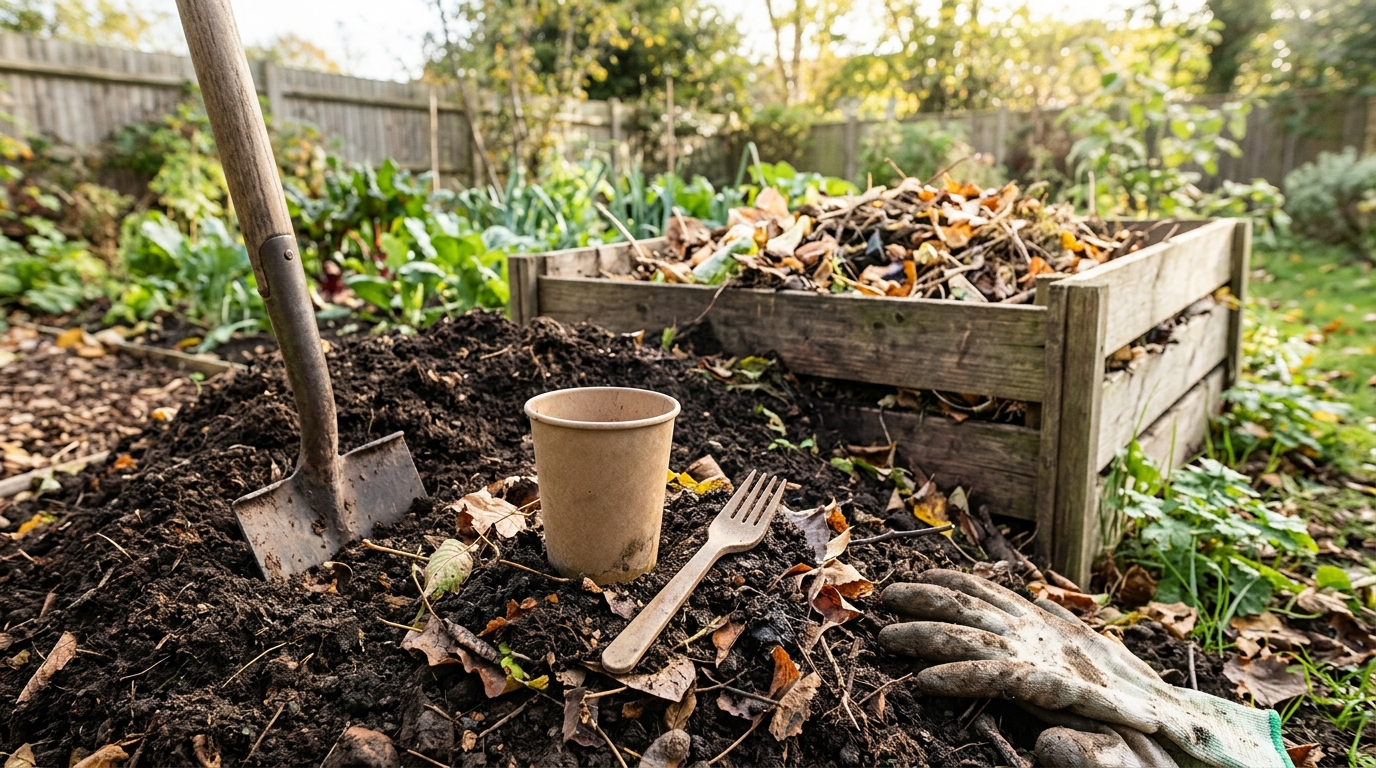
Compostable cups can sound like an easy win, but many are designed for commercial composting facilities rather than backyard piles. A home compost bin may never provide the sustained heat, moisture, and processing that those materials need.
Before putting compostable cups in home compost, read the claim carefully. The words on the package matter, and local composting rules matter even more.
Key Takeaways
- Many compostable cups do not reliably break down in home compost.
- Industrial compostable and home compostable are different claims.
- Remove lids, labels, and non-compostable parts before any test.
- When in doubt, keep cups out of backyard compost and follow local rules.
Quick Guide
| Product Claim | Likely Meaning | Home Compost Action |
|---|---|---|
| Compostable | May need industrial conditions | Do not assume it belongs |
| Commercially compostable | Facility conditions expected | Use accepted programs only |
| Home compostable | Designed for lower-temp breakdown | Test cautiously |
| Biodegradable | Too vague by itself | Keep out of compost |
Most home piles are not industrial facilities
Commercial composting can maintain higher heat, controlled moisture, and active processing. A backyard bin often cools, dries, or sits unevenly, especially in a small garden.
The same issue applies to bags. See Do Compostable Trash Bags Break Down in Backyard Compost?.
Read the exact claim
Look for specific home-compostability language if you are considering backyard compost. A general compostable claim is not enough, and biodegradable is even less helpful.
If the cup is lined, coated, or paired with a plastic lid, treat each part separately. One compostable component does not make the whole item suitable.
Follow local program rules
If you use municipal food-scrap collection, follow its accepted-material list. Some programs accept certified cups. Others reject them because they look like conventional plastic or do not fit the facility process.
For broader product decisions, read Are Compostable Plates and Cups Actually Compostable at Home?.
Run a small backyard test only if the label supports it
If a product is clearly marked home compostable, test one small piece before adding more. Bury it in an active part of the pile, keep the pile balanced, and check after a few months.
If the piece remains shiny, tough, or fragmented, stop adding that product to your home compost.
Choose reusable cups when possible
The lowest-waste answer is often reuse, not a better disposable. Compostable products can be useful in the right collection system, but they are not a free pass for a backyard bin.
FAQ
Can I put compostable coffee cups in backyard compost?
Usually not unless they are clearly labeled home compostable and you test them cautiously. Many cups need industrial composting.
Are compostable cups better than plastic cups?
They can be better in a composting system that accepts them, but they can become contamination if placed in the wrong bin.
What should I do with compostable cups if my city does not accept them?
Follow local disposal guidance. Do not put them in backyard compost unless the product is specifically home compostable and breaks down in your test.
Conclusion
Compostable cups are not automatically home-compostable. Check the exact claim, follow local rules, test only products made for home systems, and keep questionable cups out of your backyard compost.
Image Credits
- Featured image generated with Nano Banana for Renewable Gardening as a custom, topic-specific editorial image for Do Compostable Cups Break Down in Home Compost? (media ID 677).