
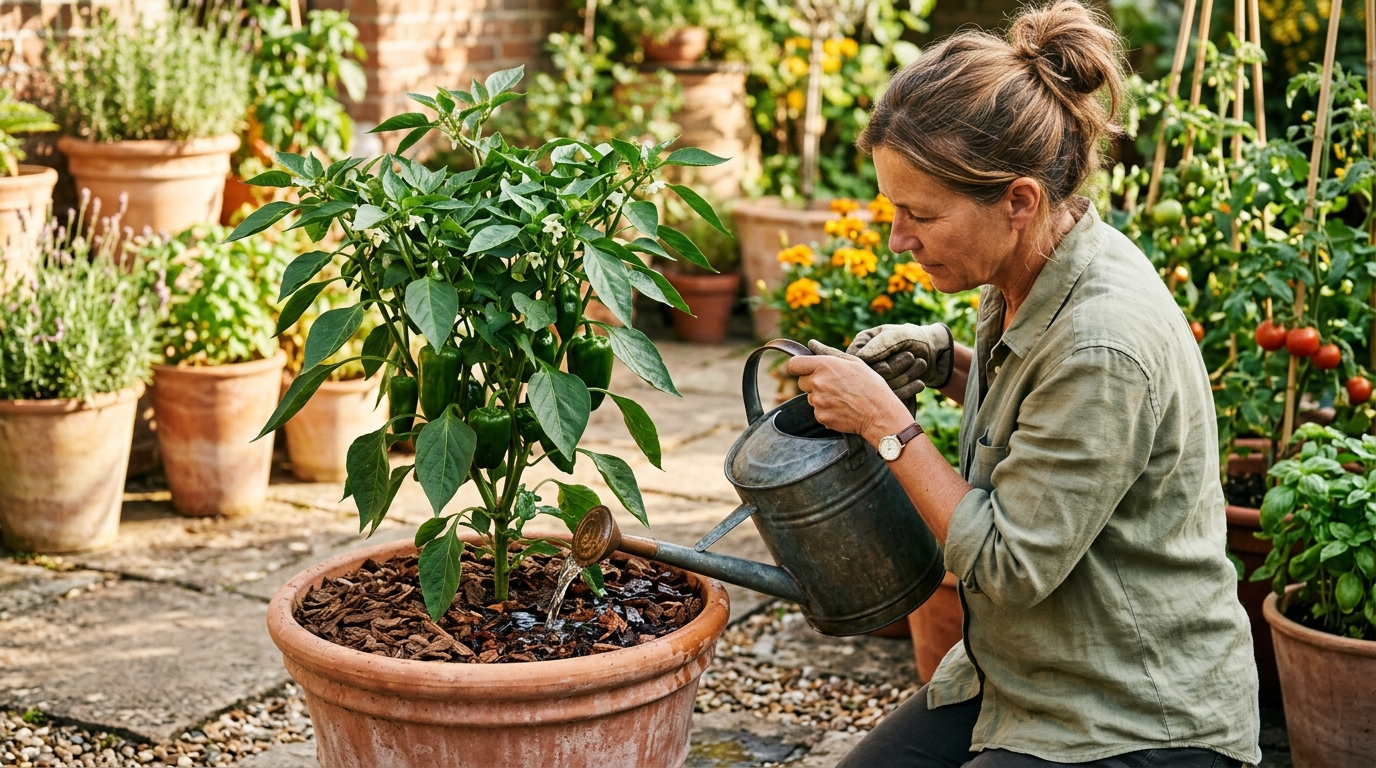
Container vegetables need deep watering because their root zone is limited. A quick splash may wet the surface while the lower potting mix stays dry, especially during hot weather.
Deep watering does not mean dumping water until it runs everywhere. It means watering slowly enough that the whole root ball absorbs moisture, then using mulch and drainage checks so water supports plants instead of being wasted.
Key Takeaways
- Water slowly at soil level until the root ball is evenly moist.
- If water runs straight through, pause and water again in rounds.
- Mulch the surface lightly to reduce evaporation.
- Empty saucers after plants have a short chance to reabsorb water.
Quick Guide
| Watering Problem | What Is Happening | Better Move |
|---|---|---|
| Water runs out instantly | Dry mix is repelling water | Water in stages |
| Surface wet, plant wilting | Lower root zone may be dry | Soak more slowly |
| Pot stays soggy | Poor drainage or oversized saucer | Improve drainage |
| Daily crusting | Sun and wind exposure | Add light mulch |
Slow the first pour
Start with a gentle pour around the base of the plant. Let the potting mix absorb water instead of flooding the surface. A narrow-spout watering can, hose wand on a soft setting, or drip emitter helps.
When the mix is very dry, a slow first pass gives water time to move inward instead of escaping down the sides of the container.
Water in two rounds during heat
In hot weather, water once, wait a few minutes, then water again. The first round opens the dry mix. The second round reaches more of the root zone.
For general heat routines, pair this with How to Water Container Plants During Hot Weather.
Use drainage as feedback
A little drainage tells you water reached the bottom. A flood of instant runoff may mean the mix is too dry, compacted, or pulled away from the pot edge. No drainage at all may mean the pot is clogged or water is not reaching the lower mix.
Check the hole, lift the pot if possible, and feel the mix below the surface before assuming the plant needs more water.
Mulch container vegetables lightly
A thin layer of shredded leaves, clean straw, or fine bark helps shade the potting mix and slow evaporation. Keep mulch away from stems so the crown does not stay wet.
See Best Mulch for Container Vegetables in Hot Weather for material choices.
Do not let saucers become small ponds
A saucer can catch water long enough for a thirsty pot to reabsorb some of it. After a short period, empty standing water unless the plant specifically likes wet feet.
Standing water can stress roots and invite mosquitoes, so it should be a temporary tool rather than the default state.
FAQ
How do I know if a container vegetable is watered deeply enough?
The mix should be moist below the surface and a small amount of water should drain from the bottom after a slow soak.
Should I water container vegetables every day?
Small pots may need daily water in heat, but check moisture first. Larger containers may hold water longer.
Why is my potting mix hard to rewet?
Very dry peat-based or compacted mixes can repel water. Rehydrate slowly in rounds instead of one fast pour.
Conclusion
Deep watering container vegetables is mostly about pace. Water slowly, pause when the mix is dry, check drainage, mulch lightly, and keep the whole root ball hydrated without leaving pots soggy.
Image Credits
- Featured image generated with Nano Banana for Renewable Gardening as a custom, topic-specific editorial image for How to Deep Water Container Vegetables Without Wasting Water (media ID 669).