
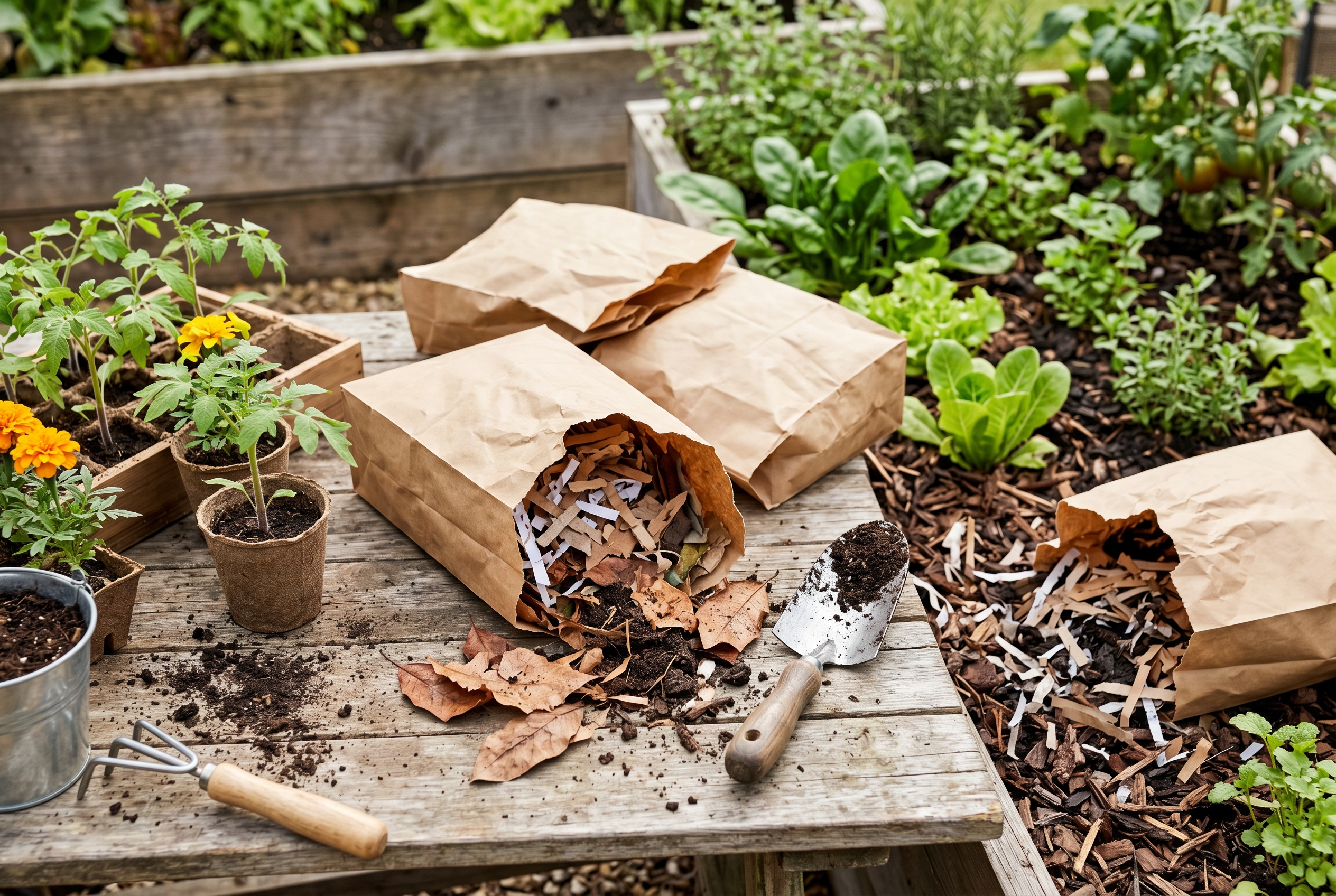
Plain paper bags are one of the easiest household items to reuse in a garden. They can suppress small weeds, add carbon to compost, carry harvests, line a temporary scrap pail, or protect surfaces during messy potting jobs.
The key is using clean, simple paper and skipping bags with heavy coatings, plastic windows, glossy finishes, or unknown residues.
Key Takeaways
- Use plain paper bags as compost browns, temporary weed barriers, or harvest helpers.
- Remove handles, stickers, tape, and plastic windows before composting or mulching.
- Wet paper bags break down faster but can tear when used for food scraps.
- Avoid glossy, coated, greasy, or chemically contaminated bags.
Quick Guide
| Garden Use | Works Best When | Avoid |
|---|---|---|
| Compost browns | Bags are torn into pieces | Glossy or coated paper |
| Weed barrier | Used under mulch | Thick stacked layers |
| Harvest bag | Dry produce and short trips | Wet or heavy loads |
| Potting cleanup | Used as disposable work surface | Soil with disease concerns |
Tear paper bags for compost browns
Paper bags are carbon-rich, so they can help balance wet kitchen scraps. Tear them into small pieces before adding them to compost so they do not mat into a dense sheet.
This is especially useful with wet scraps from moldy food composting or summer kitchen pails.
Use bags as short-term weed suppression
A plain paper bag can work like a small sheet-mulch layer under leaves, straw, or wood chips. Wet it thoroughly so it settles against the soil, then cover it with mulch.
Do not use thick stacks of paper bags where water needs to move easily. A temporary barrier should break down, not seal the soil.
Reuse bags for harvests and storage
Dry paper bags are handy for carrying herbs, beans, seed heads, or small harvests. They also work for short-term storage of dry seed pods before cleaning.
For wet produce, use a sturdier container so the bag does not tear.
Know which bags to skip
Avoid bags with glossy coatings, plastic windows, heavy ink coverage, grease, cleaning chemicals, or mystery residues. If you would not want the residue in your soil, keep it out of the compost and mulch.
For a related material comparison, see Compostable Bags vs Paper Bags for Food Scraps.
FAQ
Can paper grocery bags go in compost?
Plain paper grocery bags usually can. Remove handles, stickers, tape, and any plastic before tearing them up.
Are printed paper bags safe for garden use?
Light printing is usually less concerning than glossy coatings or heavy ink. When in doubt, use them for non-compost tasks instead.
Can paper bags replace cardboard under mulch?
They can for small areas, but they are thinner and break down faster. Use them where temporary weed suppression is enough.
Conclusion
Paper bags are useful garden material when they are plain, clean, and used modestly. Tear them for compost, tuck them under mulch, carry dry harvests, and skip anything coated, greasy, or contaminated.
Image Credits
- Featured image generated with Nano Banana for Renewable Gardening as a custom, topic-specific editorial image for How to Reuse Paper Bags in the Garden (media ID 661).