
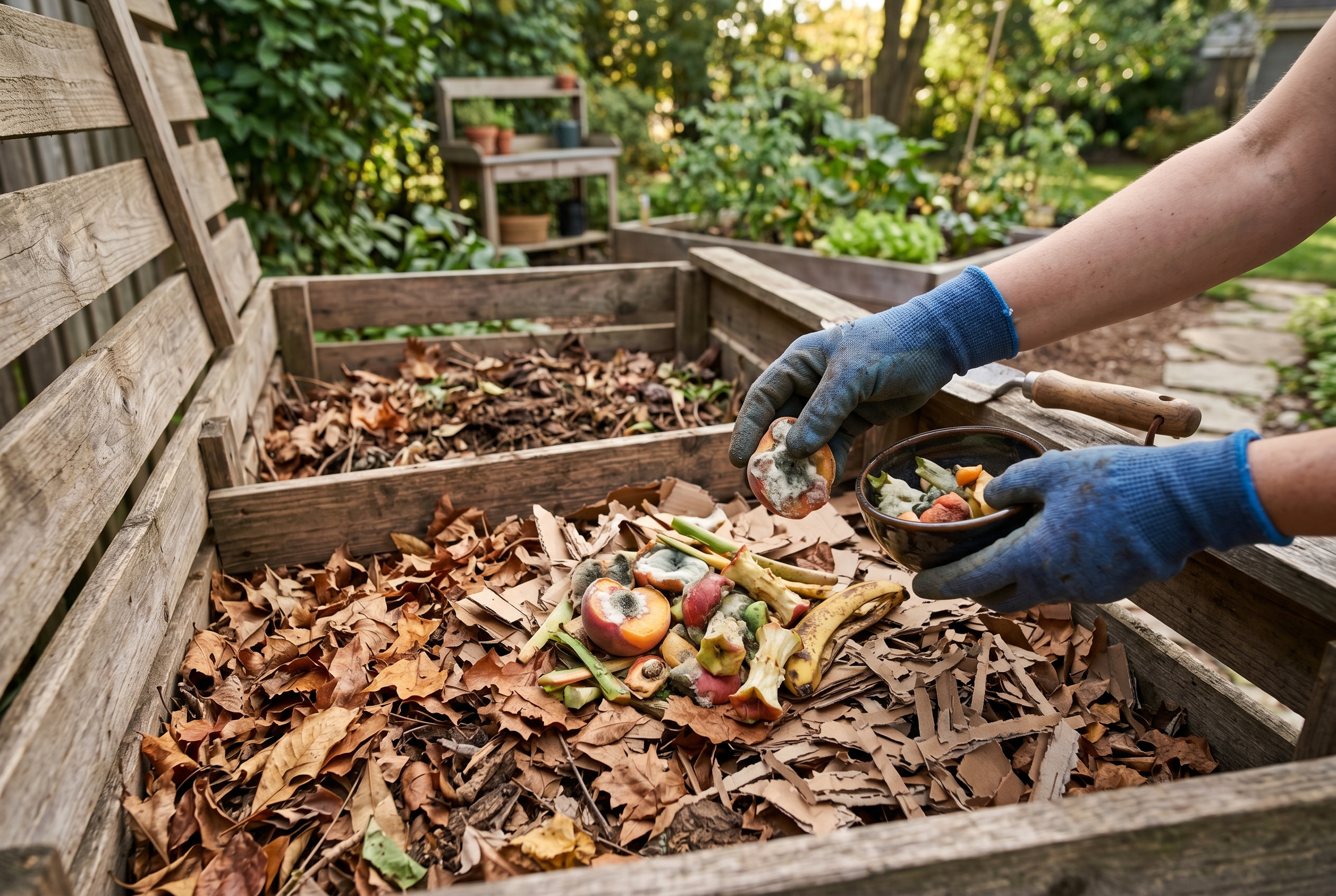
Moldy food is not automatically a composting mistake. Compost is full of fungi, bacteria, and other decomposers, so a little mold on fruit, bread, or vegetables can usually be handled by an active pile.
The main issue is not the mold itself. It is whether the food is likely to smell, attract pests, contain unsafe ingredients, or overwhelm a small bin.
Key Takeaways
- Most moldy fruits and vegetables can be composted in a healthy outdoor pile.
- Bury moldy scraps and cover them with dry browns to reduce odor and pests.
- Avoid moldy meat, dairy-heavy foods, oily foods, and anything chemically contaminated.
- Small indoor worm bins need more caution than outdoor compost bins.
Quick Guide
| Moldy Food | Compost It? | How |
|---|---|---|
| Fruit and vegetables | Usually yes | Bury with dry leaves or cardboard |
| Bread or grains | Small amounts | Cover deeply to avoid pests |
| Meat or dairy | Usually no | Avoid in home compost |
| Chemically treated food | No | Keep out of compost |
Outdoor compost can handle ordinary mold
Mold on produce is part of decomposition. In an outdoor pile with enough browns and airflow, moldy fruit or vegetables usually break down like other kitchen scraps.
Add small amounts at a time, especially in summer when spoiled food can smell quickly.
Bury scraps instead of leaving them on top
Open a pocket in the pile, add the moldy food, then cover it with older compost and dry browns. This reduces flies, odors, and visible food that can attract pests.
For kitchen collection habits, see Beginner’s Guide to Composting Kitchen Scraps.
Use extra browns for wet or spoiled food
Spoiled food is often wet and nitrogen-rich. Balance it with shredded cardboard, dry leaves, torn paper bags, or other carbon-rich material.
If the bin turns sour, follow Compost Smells Bad? How to Fix a Stinky Bin.
Be cautious with small indoor systems
Worm bins and countertop systems can be overwhelmed by moldy food more easily than an outdoor pile. Add very small amounts, avoid strong-smelling scraps, and remove anything that causes persistent odor.
FAQ
Is mold in compost dangerous?
Ordinary food mold is usually not a problem in an outdoor compost pile. Avoid inhaling dusty mold clouds and wash your hands after handling scraps.
Can moldy bread go in compost?
Small amounts can, but bread can attract pests. Bury it deeply and balance it with dry browns.
Can I compost moldy food in a worm bin?
Use caution. Worm bins are smaller and can sour quickly, so add only tiny amounts and avoid strong or oily foods.
Conclusion
Moldy food can usually be composted when it is ordinary plant-based kitchen waste and your outdoor pile is balanced. Keep portions modest, bury scraps, add browns, and avoid high-risk foods that do not belong in home compost.
Image Credits
- Featured image generated with Nano Banana for Renewable Gardening as a custom, topic-specific editorial image for Can You Compost Moldy Food Safely? (media ID 659).