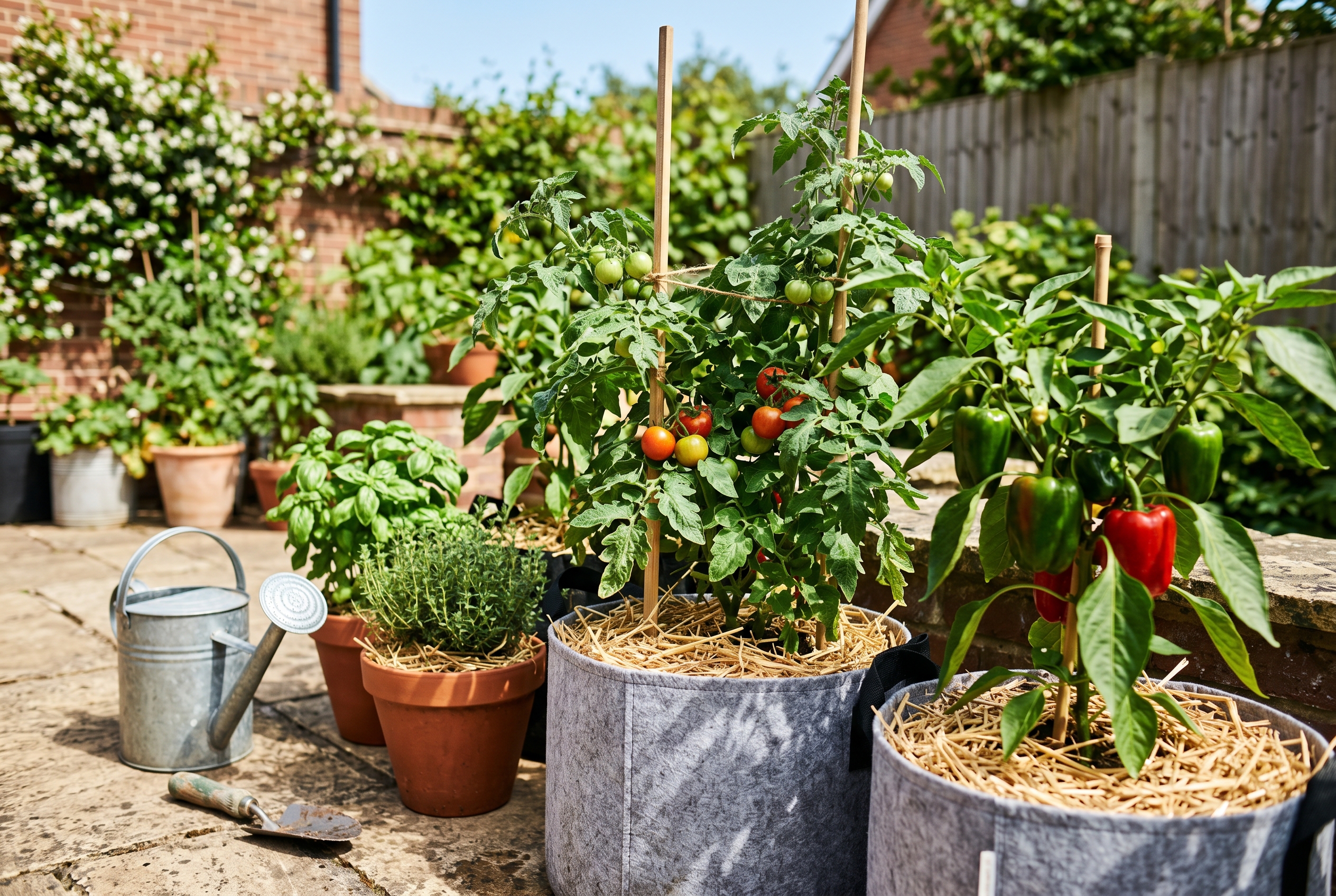
Container vegetables dry out quickly in hot weather because the root zone is small and exposed. A thin mulch layer can shade the potting mix, reduce evaporation, and keep roots from swinging between soaked and bone dry.
The best mulch for containers is light, clean, and easy to manage. It should protect the surface without smothering stems, holding too much water, or turning the pot into a soggy mess.
Key Takeaways
- Shredded leaves, clean straw, and fine bark are usually good container mulch options.
- Use a thin layer so water can still reach the potting mix.
- Keep mulch pulled back from stems to reduce rot and pest problems.
- Skip heavy mulch on tiny pots, seedlings, or containers that already stay wet.
Quick Guide
| Mulch | Best Use | Caution |
|---|---|---|
| Shredded leaves | Tomatoes, peppers, herbs | Can mat if applied too thickly |
| Clean straw | Larger vegetable pots | May blow around on balconies |
| Fine bark | Longer-lasting containers | Use lightly around annual vegetables |
| Compost | Thin nutrient topdress | Not a deep mulch layer |
Start with a thin layer
Most container vegetables only need about half an inch to one inch of mulch. That is enough to shade the surface while still allowing water and air to move.
A thick layer in a small pot can stay wet against stems or make it harder to see when the potting mix actually needs water.
Choose mulch that matches the container
Shredded leaves are easy to tuck around tomatoes, peppers, and herbs. Clean straw works well for bigger patio containers. Fine bark can last longer, but it should not be piled deeply around annual vegetables.
For broader mulch comparisons, see Straw Mulch vs Wood Mulch vs Leaves.
Do not bury the crown or stems
Keep mulch slightly away from plant stems. This small gap helps prevent constant moisture against tender tissue and makes it easier to spot pests.
The goal is to cover the potting mix, not the plant.
Pair mulch with better watering
Mulch helps, but it does not replace deep watering. In heat, water slowly until moisture reaches the root zone and drains from the bottom.
Use How to Water Container Plants During Hot Weather as the companion routine.
FAQ
Can I use grass clippings as mulch in containers?
Only in a very thin, dry layer. Fresh clippings can mat, smell, and hold too much moisture in a small pot.
Should I mulch seedling containers?
Usually wait until seedlings are established. Tiny plants need airflow and visible soil moisture cues.
Is compost a mulch for container vegetables?
Compost can be a light topdress, but it is not the best deep mulch because it can crust or stay too wet.
Conclusion
The best container vegetable mulch is modest and practical. Use a light layer, keep stems clear, water deeply, and adjust if the pot starts staying wet instead of drying too fast.
Image Credits
- Featured image generated with Nano Banana for Renewable Gardening as a custom, topic-specific editorial image for Best Mulch for Container Vegetables in Hot Weather (media ID 657).