
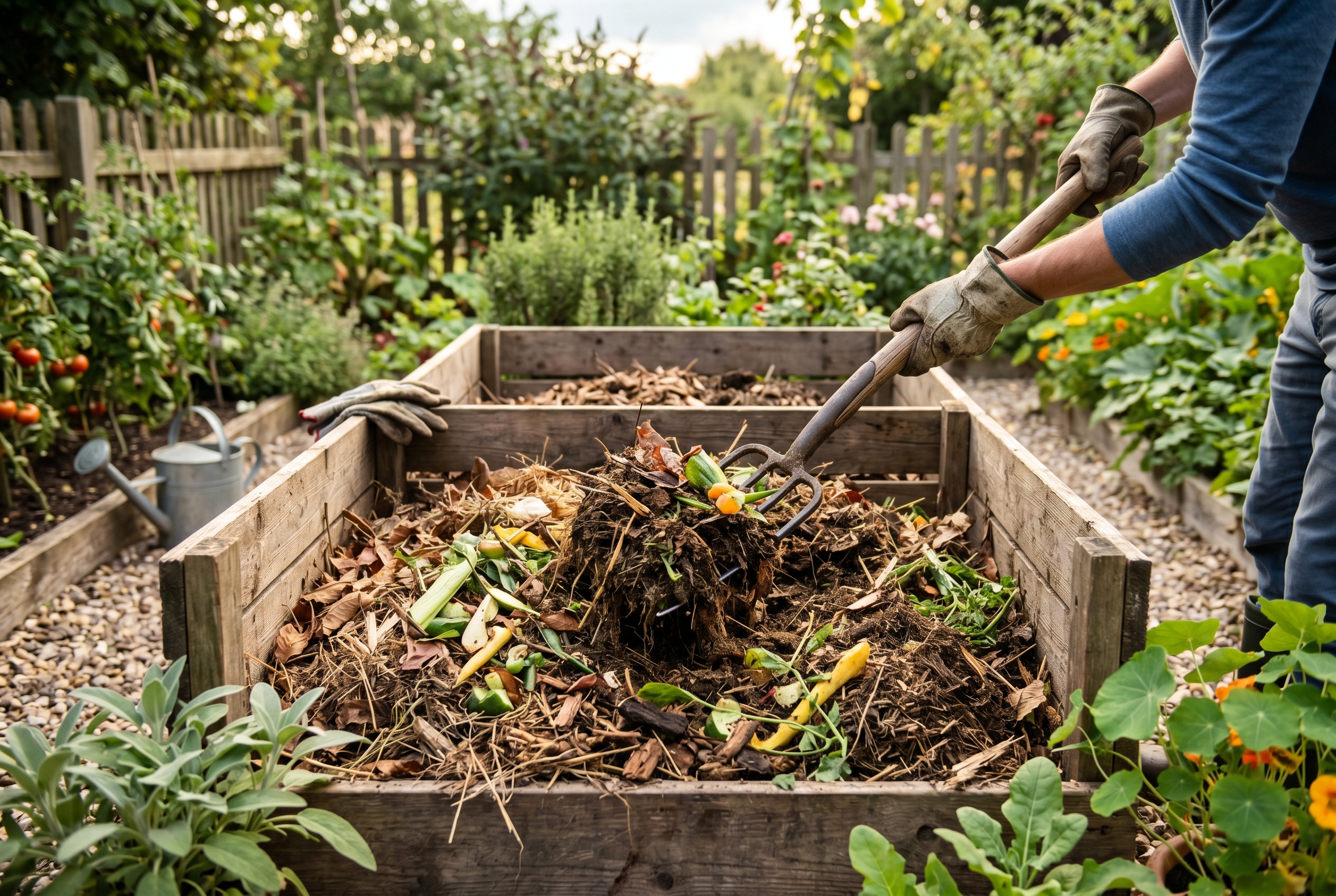
Summer can make compost feel more urgent because heat speeds everything up. A pile that was quiet in spring may suddenly smell, dry out, attract flies, or collapse into a dense wet layer if it is not balanced.
Turning helps, but more turning is not always better. The right summer schedule depends on whether you want fast compost, low-effort compost, or simply a bin that stays healthy and odor-free.
Key Takeaways
- For active hot compost, turn every 3 to 7 days when the pile is heating and moist.
- For low-effort backyard compost, turning every 2 to 4 weeks is often enough.
- Turn sooner if the pile smells rotten, looks matted, or has wet food pockets.
- Do not turn constantly if the pile is dry, tiny, or mostly finished.
Quick Guide
| Compost Goal | Summer Turning Rhythm | What to Watch |
|---|---|---|
| Fast hot compost | Every 3 to 7 days | Heat, moisture, airflow |
| Steady backyard bin | Every 2 to 4 weeks | Odor and wet pockets |
| Cold compost pile | Monthly or less | Dryness and slow breakdown |
Turn more often when the pile is active
An active summer pile with enough greens, browns, moisture, and volume can heat quickly. Turning every few days moves outer material into the center, adds oxygen, and keeps the process even.
If the pile cools after several turns, that is normal. It may be running out of fresh nitrogen-rich material or simply moving into a slower curing stage.
Use smell as a timing signal
A rotten or sour smell usually means the pile is too wet, too dense, or too heavy on greens. Turn it with a generous amount of dry leaves, shredded cardboard, or plain paper so the wet pockets open up.
If odor is the main problem, use Compost Smells Bad? How to Fix a Stinky Bin before adding more scraps.
Do not turn a dry pile without watering
Turning dry compost only moves dry material around. If the pile is dusty, brittle, or full of undecomposed leaves, add water slowly as you turn so the material feels like a wrung-out sponge.
For hot-weather moisture habits, pair this with What to Do When Compost Is Too Wet so you can recognize both extremes.
Let finished compost cure
Once compost looks dark, crumbly, and mostly uniform, frequent turning is no longer useful. Let it cure so the material stabilizes before you use it around plants.
When it is ready, see What to Do With Finished Compost in a Small Garden.
FAQ
Can you turn compost too much in summer?
Yes. Constant turning can dry the pile, interrupt heat buildup, and create extra work. Turn based on temperature, smell, moisture, and your composting goal.
Should compost be turned during a heat wave?
Only if it needs air or balancing. If it is already dry, water it first or wait until conditions are easier to manage.
What if I never turn my compost?
It can still break down, but more slowly. Keep scraps covered with browns and expect a longer timeline.
Conclusion
In summer, compost turning should solve a real problem: adding oxygen, evening out heat, mixing wet scraps with browns, or restoring moisture. Let the pile tell you whether it needs weekly attention or a slower monthly rhythm.
Image Credits
- Featured image generated with Nano Banana for Renewable Gardening as a custom, topic-specific editorial image for How Often Should You Turn Compost in Summer? (media ID 655).