
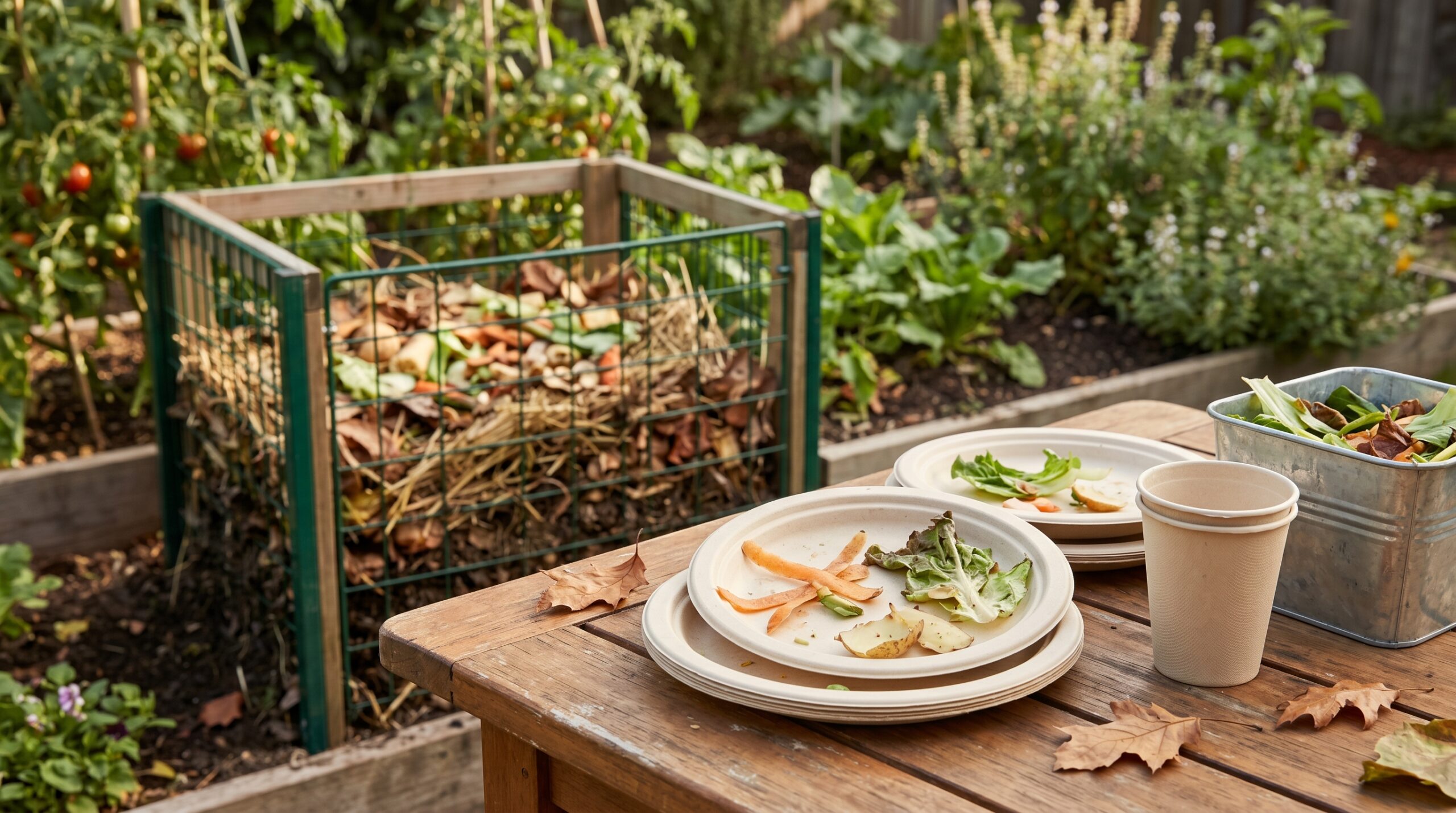
Compostable plates and cups sound like an easy swap for parties, picnics, and cookouts. The problem is that many products labeled compostable are designed for industrial composting facilities, not a backyard pile.
At home, some fiber-based plates may break down slowly if they are clean enough and torn up. Many cups, coated plates, and bioplastic items will not disappear in a typical compost bin.
Key Takeaways
- Compostable does not automatically mean home-compostable.
- Many compostable cups and coated plates need industrial composting conditions.
- Food-soiled fiber plates may break down at home, but only if the material is suitable and the pile is active.
- Reusable dishes are usually the lowest-waste option when practical.
Quick Guide
| Product | Home Compost? | Better Choice |
|---|---|---|
| Plain uncoated paper plate | Sometimes | Tear up and compost only if lightly food-soiled |
| PLA-lined cup | Usually no | Use accepted commercial composting or landfill |
| Molded fiber plate | Maybe | Check home-compostable certification and break into pieces |
| Reusable plate or cup | Best when practical | Wash and reuse |
Read the label carefully
Look for the difference between industrial compostable and home compostable. Industrial compostable products often need higher heat, controlled moisture, and active management that most backyard piles do not provide.
If the product does not clearly say it is suitable for home composting, assume it needs a commercial facility.
Understand why cups are especially difficult
Many compostable cups use PLA or another plant-based plastic. That material may be compostable under the right facility conditions, but it often stays intact in a backyard bin.
A cup that looks like clear plastic is a warning sign. Plant-based plastic is still not the same as leaves, cardboard, or vegetable scraps in home compost.
Fiber plates are more plausible but not automatic
Uncoated paper or molded fiber plates have a better chance of breaking down at home, especially if torn into pieces and mixed with other compost materials. Greasy, heavily coated, or glossy plates are poor candidates.
For a related household paper decision, read Can You Compost Paper Towels?.
Food residue matters
A plate with a few vegetable scraps is different from a plate soaked in meat grease, cheese, or oily dressing. Heavy grease can smell, attract pests, and slow down a home pile.
Scrape food scraps into compost if they are suitable, then decide whether the plate or cup itself belongs there.
Plan events around the actual disposal route
For a small gathering, reusable dishes may be easiest. For a larger event, compostable serviceware only helps if guests can sort it correctly and there is a facility that accepts it.
To keep the household system simple, pair product choices with How to Start Composting at Home.
FAQ
Can compostable cups go in backyard compost?
Usually no. Many compostable cups need industrial composting and may not break down in a home pile.
Can paper plates go in compost?
Plain, uncoated, lightly food-soiled paper plates may be compostable at home if torn up. Avoid glossy, coated, greasy, or plastic-lined plates.
What should I do if my city does not accept compostable products?
Use reusables when practical, reduce disposables, and follow local waste rules. Do not add products to compost if they are unlikely to break down.
Conclusion
Compostable plates and cups are not automatically compostable at home. Check the product, the coating, the food residue, and the disposal route. When there is no accepted composting path, reusable dishes are usually the cleaner sustainability choice.
Image Credits
- Featured image generated with Nano Banana for Renewable Gardening as a custom, topic-specific editorial image for Are Compostable Plates and Cups Actually Compostable at Home? (media ID 651).