
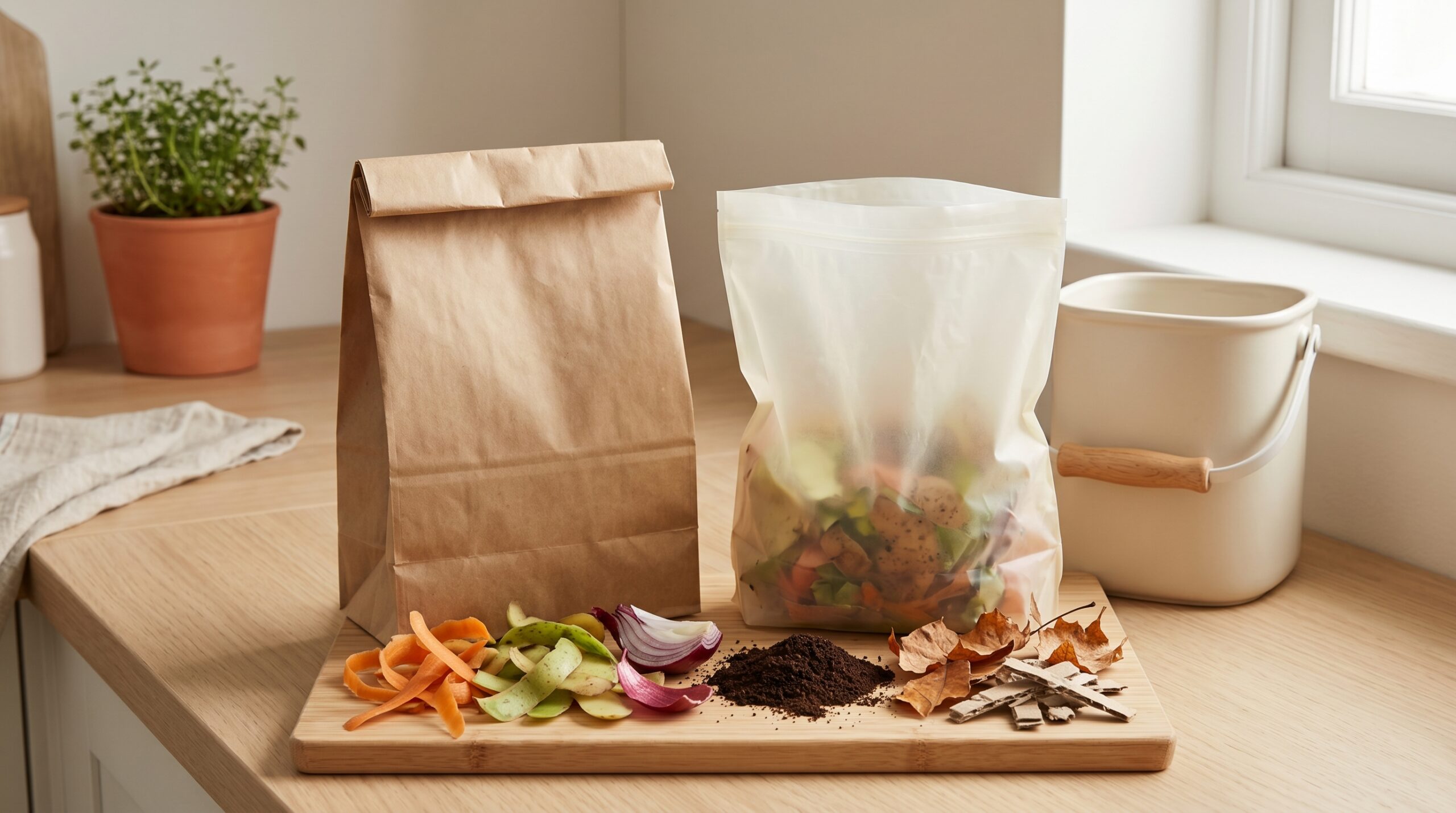
Food scraps are easier to collect when the container is not messy, leaky, or smelly. That is why many households compare compostable bags and paper bags before setting up a kitchen pail.
Both options can work, but they solve different problems. Compostable bags are tidy and leak-resistant, while paper bags are breathable, simple, and often easier for compost systems to handle.
Key Takeaways
- Paper bags usually breathe better and can help food scraps dry slightly.
- Compostable bags are cleaner for transport but may not break down in home compost.
- Municipal compost rules matter more than packaging claims.
- For backyard composting, loose scraps plus dry browns often work better than any bag.
Quick Guide
| Option | Best For | Watch Out For |
|---|---|---|
| Paper bag | Breathability and simple food scrap collection | Leaks if scraps are very wet |
| Compostable bag | Clean pail liners and curbside programs | May require industrial composting |
| No liner | Backyard compost with dry browns | More pail cleaning |
Start with where the scraps will go
If scraps go to a municipal food-waste program, follow that program’s rules first. Some accept only certified compostable bags. Others prefer paper bags. Some do not allow any liner at all.
If scraps go to a backyard bin, start with How to Start Composting at Home and choose the collection method that keeps your bin balanced.
Paper bags are simple and breathable
Paper bags can absorb a little moisture and allow some airflow, which helps reduce the sealed, sour smell that happens when wet scraps sit in plastic-like liners. They can also be torn up and mixed into compost more easily than many bioplastic bags.
The downside is leakage. If you collect wet scraps, coffee grounds, melon rinds, or thawed frozen scraps, a paper bag may weaken quickly.
Compostable bags are cleaner but more conditional
Compostable bags are convenient because they line the pail and make transport cleaner. They are especially useful for curbside pickup, shared bins, or households that need a low-mess routine.
But compostable does not always mean backyard-compostable. Many bags need higher heat and managed conditions. In a small home pile, they may linger as stretchy fragments for a long time.
Home compost bins usually prefer less liner
For a backyard bin, the best routine is often loose scraps covered with dry browns. A liner can make kitchen cleanup easier, but the outdoor pile still needs leaves, shredded cardboard, or other carbon-rich material for balance.
For bin choices, see Compost Bin vs Tumbler vs Pile.
Use odor and mess as practical signals
If your paper bag leaks before you empty it, use a smaller bag, empty more often, or freeze wet scraps. If compostable bags keep showing up intact in finished compost, stop adding them to the backyard pile and use them only where accepted.
For summer odor control, read How to Keep a Kitchen Compost Pail From Smelling in Summer.
FAQ
Are compostable bags better than paper bags?
Not always. Compostable bags are cleaner and more leak-resistant, but paper bags are more breathable and often easier for home compost systems.
Can compostable bags go in backyard compost?
Only some are suitable for home composting. Many need industrial composting conditions, so check the label and your actual compost results.
Do paper bags break down in compost?
Plain paper bags usually break down when torn up and mixed well, but they can mat or leak if added wet and whole.
Conclusion
Choose the liner based on the destination. Paper bags are usually simpler for home composting, compostable bags are useful where accepted by a municipal program, and loose scraps plus dry browns often make the best backyard routine.
Image Credits
- Featured image generated with Nano Banana for Renewable Gardening as a custom, topic-specific editorial image for Compostable Bags vs Paper Bags for Food Scraps: Which Works Better? (media ID 649).