
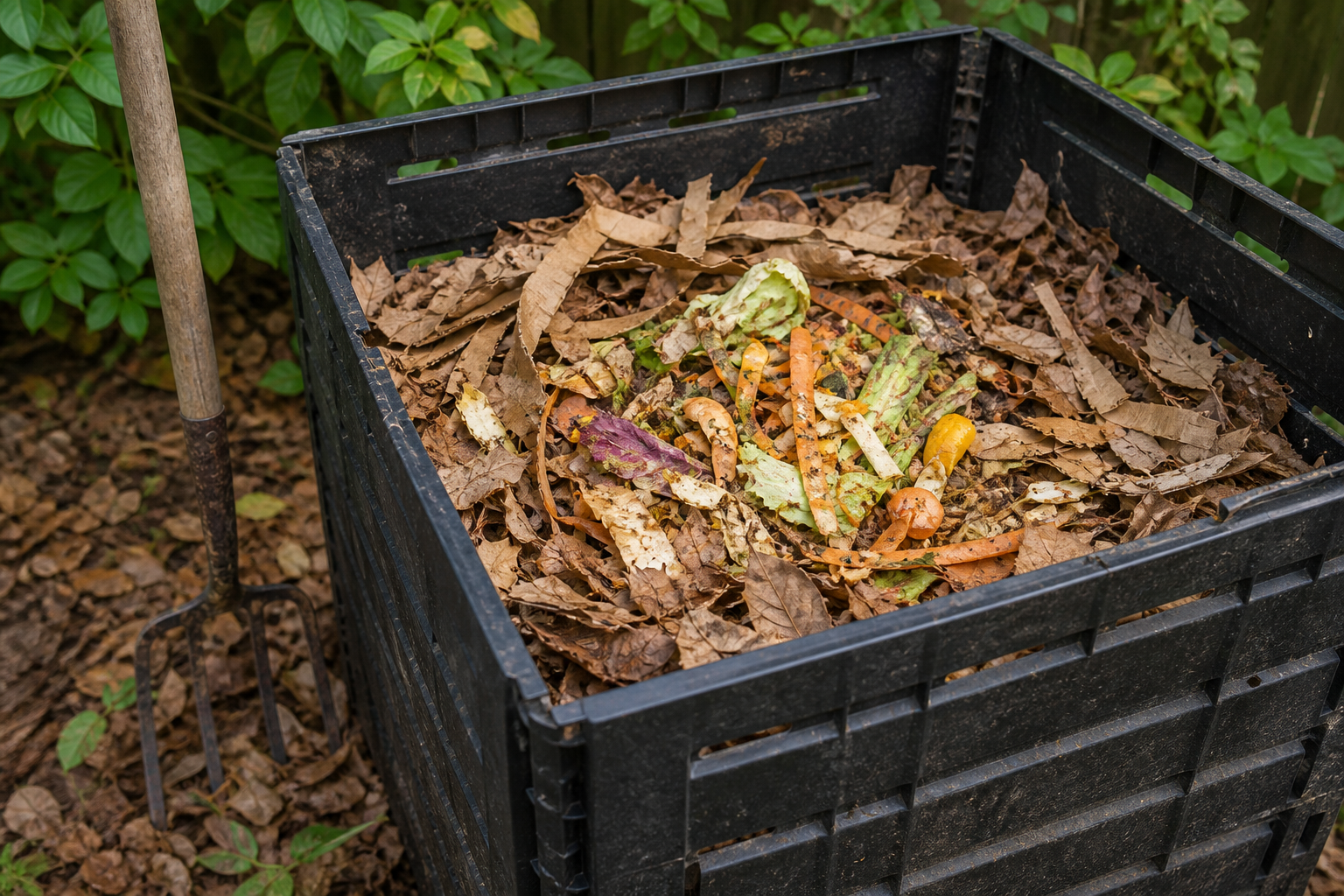
Compost should smell earthy, not rotten. If a compost bin smells bad, the pile is usually too wet, too packed, too heavy on food scraps, or short on dry brown material. The fix is usually simple once you know what the smell is telling you.
Key Takeaways
- Rotten smells usually mean too much moisture or too little air.
- Ammonia smells often mean too many nitrogen-rich greens.
- Dry leaves, shredded paper, and cardboard are the fastest beginner fixes.
- Turning helps, but balancing the mix matters more than constant stirring.
Quick Comparison
| Smell | Likely Cause | Fast Fix |
|---|---|---|
| Rotten or sour | Too wet or compacted | Add dry browns and open air pockets |
| Ammonia | Too many greens | Mix in carbon-rich material |
| Garbage-like | Exposed food scraps | Bury scraps and avoid problem foods |
Add dry browns first
Dry leaves, shredded plain cardboard, sawdust from untreated wood, and torn paper help absorb moisture and rebalance a food-heavy bin. Add more than you think you need, then mix gently so the wet pockets open up.
Check moisture and airflow
A compost pile should feel like a wrung-out sponge. If material clumps, drips, or looks slimy, it needs dry browns and air. If it is dusty and inactive, it may need water and fresher greens.
For setup basics, start with Simple Compost Bin Setups for Small Backyards.
Bury kitchen scraps
Food scraps left on top smell faster and invite pests. Open a pocket, add scraps, then cover them with older compost or dry browns. Smaller pieces break down more evenly than whole rinds or large scraps.
Kitchen-scrap habits are covered in Beginner’s Guide to Composting Kitchen Scraps.
Avoid adding more wet material until it recovers
When a bin already smells, pause on melon rinds, big piles of fresh grass, and wet kitchen scraps. Let the bin rebalance before treating it like a daily dumping spot again.
Common Mistakes That Keep Compost Smelly
Most smelly-bin problems come back when the same habits continue. The biggest mistake is treating every food scrap as equal. Wet fruit, cooked leftovers, and large pieces all behave differently from dry leaves or chopped vegetable trimmings.
- Keep a covered container of dry browns next to the bin.
- Chop large scraps before adding them.
- Cover every food layer with browns or older compost.
- Leave the lid open briefly after heavy rain if the bin is too wet.
A Simple 10-Minute Reset
If the bin smells today, remove any obvious problem scraps from the surface, add two or three handfuls of dry leaves or shredded cardboard, open a few air channels with a garden fork, and cover the top with a dry carbon layer. Recheck it in two days before adding more scraps.
FAQ
Is smelly compost ruined?
Usually no. Most smelly compost can recover with dry browns, airflow, and better food-scrap coverage.
Should I turn compost if it smells?
Yes, but add dry browns first if the pile is wet. Turning a soggy pile without adding carbon may spread the smell without fixing it.
Can I keep adding scraps to a stinky bin?
Pause or reduce scraps until the bin smells earthy again. Cover any new scraps deeply with dry material.
Conclusion
A stinky compost bin is feedback, not failure. Add dry browns, open the pile, manage moisture, and bury scraps so the system can return to slow, earthy decomposition.
Image Credits
- Featured image generated for Renewable Gardening as a custom editorial image for Compost Smells Bad? How to Fix a Stinky Compost Bin (media ID 566).