
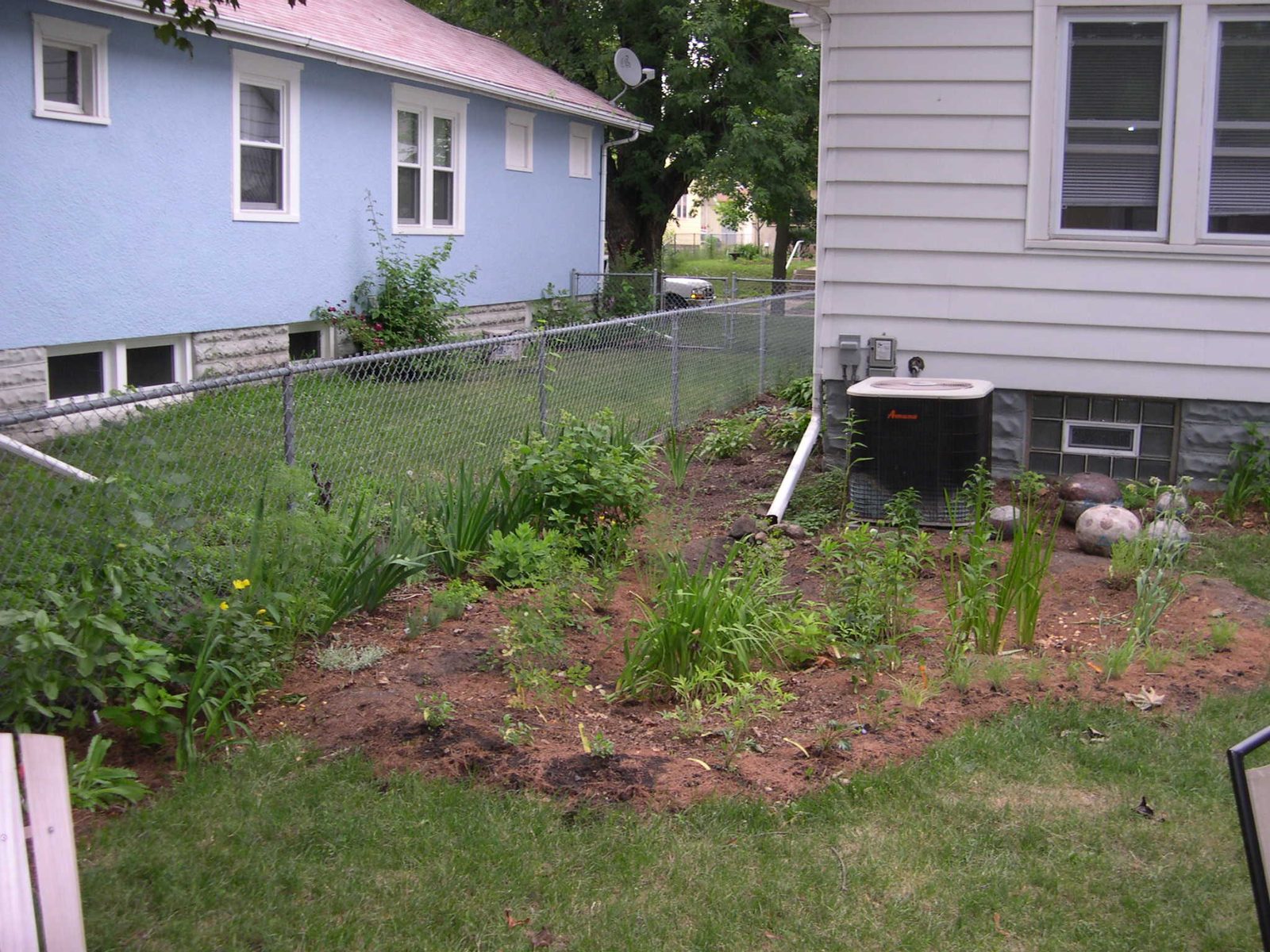
The area near a downspout or rain barrel is not always wet, and it is not always safe to treat as a rain garden. It may swing from dry soil to a short rush of water during storms. Good planting starts by watching where water goes and protecting the house first.
Key Takeaways
- Observe water flow before choosing plants.
- Keep foundations, siding, access, and overflow routes clear.
- Choose plants that tolerate wet-dry swings unless the site is a true rain garden.
- Use stone, mulch, or shaping to reduce erosion at splash points.
- Native plants can make stormwater features look intentional while supporting habitat.
Watch Water Before Planting
Go outside during rain and notice where water lands, how fast it moves, and how long it sits. A downspout splash zone is different from a shaped rain garden basin.
If water is collecting against the foundation, fix drainage before planting. Plants should not be used to hide a gutter or grading problem.
Leave Working Room
Rain barrels need access for the spigot, screen, lid, overflow, and seasonal maintenance. Downspouts need inspection. Choose compact plants and leave space to work.
Avoid large shrubs directly against the house. Good airflow and clear access are part of a sustainable setup.
Choose for Moisture Swings
Many downspout beds are dry between storms. Look for regionally appropriate plants that tolerate brief moisture and ordinary garden soil rather than plants that require constant wetness.
Sedges, compact grasses, deep-rooted flowering perennials, and small shrubs can all work when matched to light, soil, and distance from the house.
When a Rain Garden Fits
A rain garden may make sense when runoff can be directed away from the foundation into an open, level area with an overflow route. Plant the lowest zone with species that tolerate temporary pooling and the edges with plants that handle drier soil.
Do not place rain gardens where they conflict with utilities, septic areas, steep slopes, or basement moisture concerns.
Make It Look Designed
Repeat a few plant types, keep a clean edge, and use mulch or stone where water enters the bed. A utility area can become attractive when the working parts remain visible and accessible.
Common Mistakes to Avoid
Do not plant first and solve drainage later. Water movement is the design driver.
Do not assume water-loving plants are best. Many sites are only briefly wet.
Do not block barrel access with large plants or dense growth.
FAQ
Can I plant directly under a downspout?
It is usually better to slow and spread the water first so flow does not erode soil or damage small plants.
Are rain garden plants wetland plants?
Not necessarily. Many rain garden plants tolerate temporary pooling but do not want constantly saturated soil.
Should I use native plants here?
Native plants can be excellent when they match your region, light, soil, and moisture pattern.
How close should plants be to the house?
Leave enough clearance for airflow, inspection, and maintenance. Avoid large plants pressed against siding or foundations.
Will plants prevent mosquitoes in a rain barrel?
No. Use a screened, sealed barrel and prevent standing water in saucers or clogged areas.
Related Reading
For the water-system side, read Rain Barrels for Beginners and Drought-Tolerant Gardening Tips for Home Landscapes.
Conclusion
Planting near a downspout or rain barrel works best when water flow comes first. Protect the house, slow runoff, choose plants for real moisture patterns, and keep the working parts accessible.
External References
- University extension rain garden plant selection guidance
- EPA green infrastructure and rain garden guidance
- USDA/NRCS residential stormwater landscape principles
Explore this topic
For more practical guidance around sustainable home, visit the Sustainable Home hub.
- How to Reduce Yard Waste With Smarter Garden Practices
- Rain Barrels for Beginners: Are They Worth It for Home Gardens?
Image Credits
- Featured image: Rain barrels and downspouts can guide where nearby planting needs to tolerate changing moisture. Photo by U.S. Department of Agriculture via Wikimedia Commons, licensed Public domain.
- Featured image: Rain gardens and downspouts can guide where nearby planting needs to tolerate changing moisture. Photo by Montgomery County Planning Commission via Wikimedia Commons, licensed CC BY-SA 2.0.