
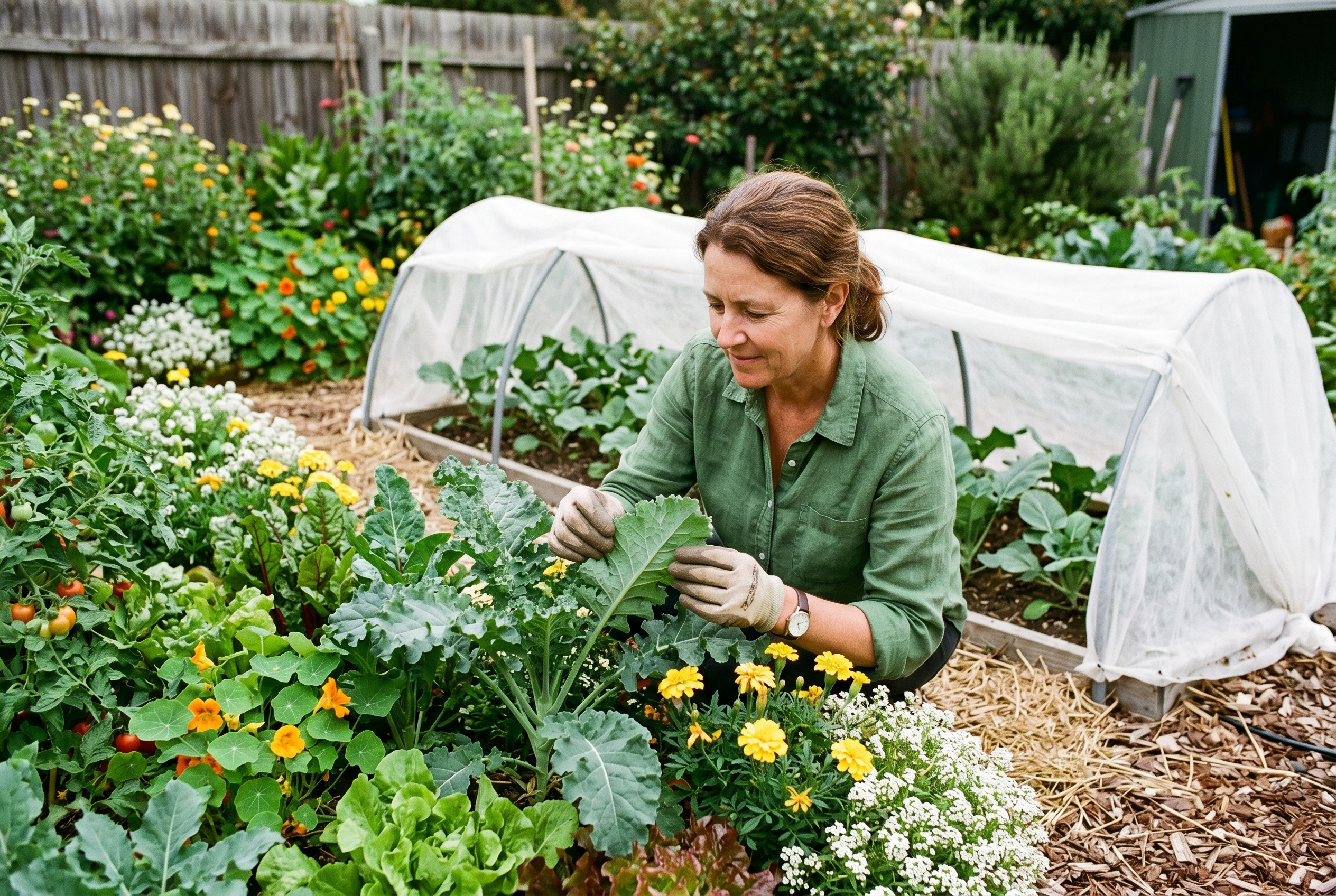
A no-spray pest plan does not mean ignoring pests. It means checking plants early, supporting beneficial insects, using physical controls first, and accepting that a few chewed leaves are part of a living garden.
Key Takeaways
- Look for pest trends before damage gets severe.
- Healthy, well-watered plants tolerate minor pest pressure better.
- Flowers, habitat, and low disturbance help beneficial insects stay nearby.
- Barriers and hand removal often solve small problems without sprays.
Quick Comparison
| Pest Pressure | No-Spray Response | Goal |
|---|---|---|
| A few insects | Monitor and identify | Avoid overreacting |
| Localized damage | Remove by hand or prune affected leaves | Stop spread early |
| Recurring issue | Use barriers and improve plant diversity | Reduce repeat outbreaks |
Inspect before you intervene
Check leaf undersides, new growth, stems, and stressed plants once or twice a week during active growth. Identify the insect before acting; many insects in the garden are harmless or helpful.
Grow habitat for helpers
Small flowers, native plants, undisturbed edges, and diverse bloom times support predatory insects and pollinators. A sterile garden gives helpful insects fewer reasons to stay.
For the habitat side, see How to Build a Garden That Supports Beneficial Insects.
Use physical controls first
Hand-pick visible pests, rinse aphids with water, prune badly affected leaves, or use row cover at the right time. These approaches are targeted and do not broadly disrupt the garden.
Reduce stress that makes pests worse
Plants under drought, crowding, or nutrient stress often struggle more with pests. Water appropriately, avoid overfertilizing soft growth, and improve spacing so leaves dry after rain.
Pair this with Sustainable Garden Habits That Save Time and Resources.
FAQ
Does no-spray gardening mean no pest control?
No. It means using observation, prevention, habitat, barriers, and targeted physical controls before considering sprays.
Are all garden sprays harmful?
Different sprays have different risks, but even many organic sprays can affect beneficial insects if used broadly or at the wrong time.
How much pest damage is acceptable?
Minor cosmetic damage is usually acceptable. Act when damage is spreading, weakening plants, or threatening a crop you depend on.
Conclusion
A no-spray pest plan works best as a routine, not a rescue mission. Monitor early, grow habitat, keep plants resilient, and use targeted physical controls when pest pressure crosses your threshold.
Image Credits
- Featured image generated with Nano Banana for Renewable Gardening as a custom, topic-specific editorial image for How to Start a No-Spray Garden Pest Plan (media ID 618).