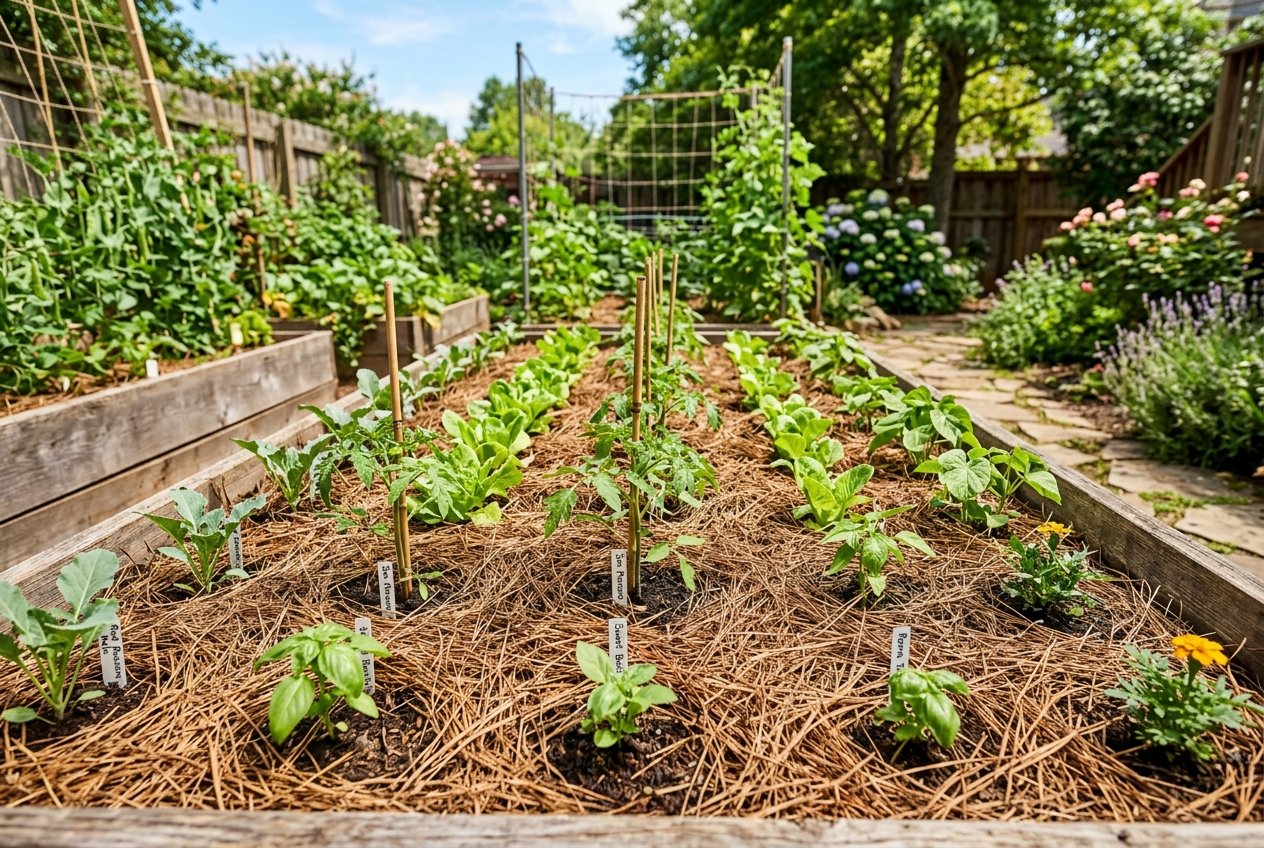
Pine needles can work as mulch in a vegetable garden. They are light, slow to mat when used correctly, and useful for protecting soil from heat and evaporation.
The common fear is that pine needles will make soil too acidic. In normal mulch use, that effect is usually overstated. The bigger risks are piling them too deeply, letting them touch tender stems, or using them where they blow away before settling.
Key Takeaways
- Use dry pine needles as a thin, loose mulch layer.
- Keep needles a little away from plant stems and crowns.
- Do not rely on pine needles to acidify soil quickly.
- Combine with compost or other organic matter when soil needs feeding.
Quick Comparison
| Use Case | Pine Needles Fit? | Notes |
|---|---|---|
| Tomato and pepper beds | Yes | Use a loose layer after soil warms |
| Seed rows | Use caution | Wait until seedlings are established |
| Windy exposed beds | Maybe | Wet lightly or mix with heavier mulch |
| Soil improvement alone | Limited | Mulch protects more than it feeds |
Why pine needles can be useful mulch
A loose pine needle layer shades soil, reduces splash, and slows evaporation. It can be especially helpful in summer beds where bare soil dries and crusts quickly.
For more summer mulch context, compare Best Mulch for Container Vegetables in Hot Weather.
Use the right depth
Spread pine needles thinly around established plants, usually about one to two inches deep. Keep the layer airy rather than packed. Pull mulch back from stems so moisture does not sit against tender tissue.
If seedlings are tiny, wait until they have enough height before mulching close to them.
Do pine needles acidify vegetable soil?
Fresh pine needles are acidic, but they do not usually change garden soil pH dramatically when used as surface mulch. Soil chemistry is buffered by minerals, organic matter, and watering patterns.
If you need to change pH, use a soil test and targeted amendments. Do not use pine needles as a precise pH tool.
Pair pine needles with compost
Pine needles protect the surface, but they are not a complete fertility plan. Add compost where needed, then mulch over it lightly. For compost application, see How to Use Compost in Your Garden Without Overdoing It.
For other mulch choices, see Straw Mulch vs Wood Mulch vs Leaves.
FAQ
Are pine needles bad for vegetable gardens?
No, not when used as a loose surface mulch around established plants.
Will pine needles make soil too acidic?
A normal mulch layer is unlikely to dramatically acidify soil. Use a soil test for real pH decisions.
Can I compost pine needles first?
Yes, but they break down slowly. Chopping or mixing them with other materials helps.
Conclusion
Pine needles are a practical vegetable garden mulch when used lightly and sensibly. Let them protect soil moisture, keep them off stems, and rely on compost or soil testing for fertility decisions.
Image Credits
- Featured image generated with Nano Banana for Renewable Gardening as a custom, topic-specific editorial image for Pine Needles as Mulch in a Vegetable Garden: Safe Uses and Limits (media ID 767).