
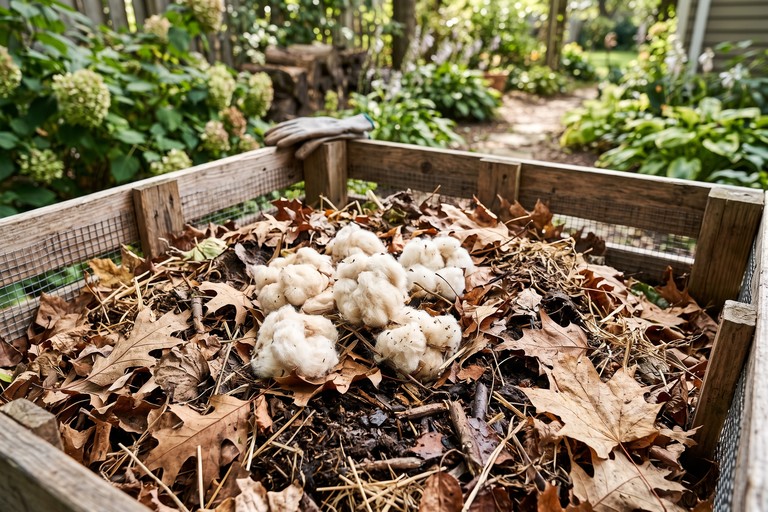
Many household items look like they should go into the compost bin, but hide synthetic ingredients. Cotton balls are a common example. While natural cotton is completely compostable, many modern cotton balls are actually made from synthetic polyester blends.
To compost cotton balls safely, you must make sure they are made from 100% pure cotton, and understand what substances they have touched before adding them to your organic pile.
Key Takeaways
- Only compost 100% pure cotton balls; skip synthetic polyester blends.
- Do not compost cotton balls that have touched chemical cosmetics, nail polish remover, or heavy oils.
- Cotton balls compost as carbon-rich browns and break down reasonably fast.
- Tear or fluff them up before composting to increase surface area and speed decomposition.
Quick Guide
| Cotton Ball Status | Can You Compost? | Why |
|---|---|---|
| 100% Pure Organic Cotton | Yes | Pure cellulose that feeds soil microbes |
| Polyester / Synthetic Blend | No | Contains plastic fibers that will not decompose |
| Touched with organic soap/water | Yes | Safe, clean organic materials |
| Touched with nail polish remover or makeup | No | Chemical contaminants harm soil biology |
The difference between cotton and synthetic blends
Pure cotton is made of cellulose, the same organic material found in wood and leaves. Microorganisms in your compost pile can digest cellulose easily.
However, cheap cosmetic rounds or cotton balls often contain polyester, nylon, or other petroleum-based fibers. If composted, these synthetic fibers will remain in your soil forever as microplastics.
What has the cotton ball touched?
Even if a cotton ball is 100% pure, what it has absorbed matters. Cotton balls used to apply clean water, organic face washes, or witch hazel are perfectly safe for compost.
Never compost cotton balls that have touched synthetic perfume, makeup, nail polish remover, isopropyl alcohol, or motor oil. These chemicals are toxic to compost bacteria and worms.
How to compost cotton balls step-by-step
Before throwing cotton balls into your bin, pull them apart or fluff them up to increase their surface area. Clumped cotton balls can mat and dry out, slowing down decomposition.
Bury them in the middle of your compost pile where moisture and microbial activity are highest.
Balance cotton with wet green materials
Cotton balls act as carbon-rich browns. To help them break down, make sure they are mixed with wet, nitrogen-rich green scraps.
For help balancing your bin, see How to Balance Greens and Browns in a Small Compost Bin.
Household composting alternatives
Cotton is just one of many common household items that can go into your compost pile rather than the trash can.
To learn about composting paper items, read Can You Compost Paper Towels?.
FAQ
How long do 100% cotton balls take to compost?
In a warm, active compost pile, fluffed cotton balls will fully decompose within 4 to 6 weeks.
Can I compost cotton swabs (Q-tips)?
Only if the stick is made of paper or wood, not plastic, and the cotton tips are 100% pure and untouched by toxic chemicals.
What happens if synthetic polyester fibers get into my compost?
They do not break down. They break into smaller pieces of microplastic that contaminate your garden soil and food crops.
Conclusion
Composting 100% pure cotton balls is a great way to reduce household waste. Just ensure they are free of synthetic fibers and toxic chemicals, fluff them up, and mix them into your pile to return natural cellulose back to the earth.
Image Credits
- Featured image generated with Nano Banana for Renewable Gardening as a custom, topic-specific editorial image for Can You Compost Cotton Balls? Pure Cotton Composting Rules (media ID 757).