Clay soil is not automatically bad soil. It can hold nutrients and moisture well, but it can also stay wet, compact easily, and frustrate plants that need sharp drainage.
The best native plants for clay soil are usually species with tough root systems and tolerance for heavier ground. Match the plant to your clay’s actual moisture pattern before buying anything.
Key Takeaways
- Do not choose clay plants from a list until you know whether the site is wet, average, or dry clay.
- Native grasses and deep-rooted perennials can help improve soil structure over time.
- Avoid planting into smeared, wet clay holes.
- Mulch and patience usually work better than replacing the whole bed with imported soil.
Quick Comparison
| Clay Condition | Good Native Plant Type | Avoid |
|---|---|---|
| Wet clay | Moisture-tolerant sedges, rushes, and wet-meadow perennials | Dry prairie plants |
| Average clay | Deep-rooted flowering perennials and grasses | Shallow-rooted drought divas |
| Dry compacted clay | Tough prairie or savanna species after establishment | Plants that need rich loose soil |
| Part-shade clay | Woodland-edge natives that tolerate heavier soil | Full-sun meadow mixes |
Start with moisture, not just soil texture
Clay can be wet in one yard and dry as brick in another. Check the site after rain, during a dry spell, and at planting depth. A plant labeled clay-tolerant may still fail if the moisture pattern is wrong.
For broader selection habits, see How to Choose Native Plants for Your Yard.
Use roots to improve clay gradually
Native grasses, sedges, and deep-rooted perennials can open small channels as roots grow and decay. That process is slower than replacing soil, but it builds a bed that fits the site instead of depending on constant amendment.
If you are converting lawn, How to Turn a Small Patch of Lawn Into a Native Garden Bed gives a practical starting point.
Plant clay soil gently
Do not dig wet clay into glossy, compacted sides. Plant when the soil is workable, roughen the hole edges, and set plants slightly high if the site drains slowly. Water deeply during establishment, then reduce help as roots spread.
A light mulch layer protects the surface from crusting and temperature swings.
Examples of clay-tolerant native plant groups
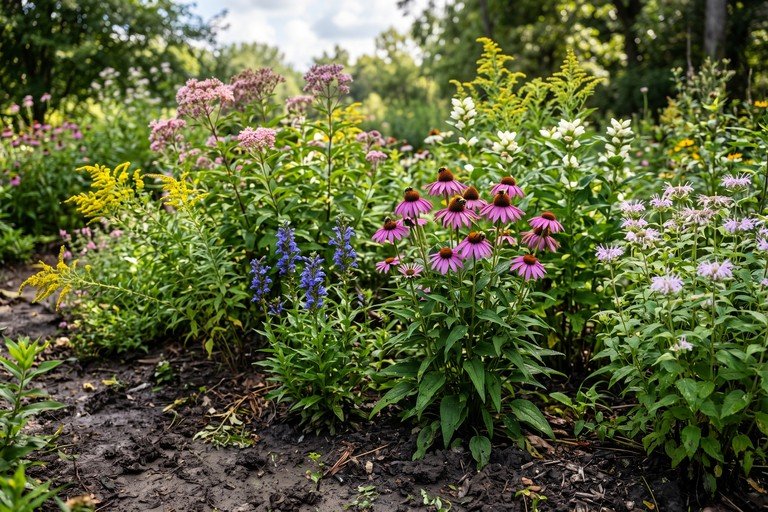
Depending on region, look for locally appropriate asters, goldenrods, coneflowers, bee balms, milkweeds, switchgrass, little bluestem, sedges, and wet-meadow species. Local native plant societies and extension lists are better than a national one-size list.
For slope or erosion-prone clay, also see Native Plants for Slopes.
FAQ
Should I add sand to clay soil before planting natives?
Usually no. Sand can make clay worse unless used in very specific proportions. Organic matter, mulch, and plant roots are safer.
Are native plants good for clay soil?
Many are, especially species adapted to prairies, meadows, wetlands, or woodland edges with heavier soil.
Can I plant native flowers directly into clay?
Yes, if the site is not waterlogged and the chosen species matches the moisture and light conditions.
Conclusion
Clay soil becomes easier when you stop treating it as a defect and start choosing plants that can live there. Match moisture, plant carefully, mulch the surface, and let native roots improve structure over time.
Image Credits
- Featured image generated with Nano Banana for Renewable Gardening as a custom, topic-specific editorial image for Best Native Plants for Clay Soil in Home Gardens (media ID 749).