
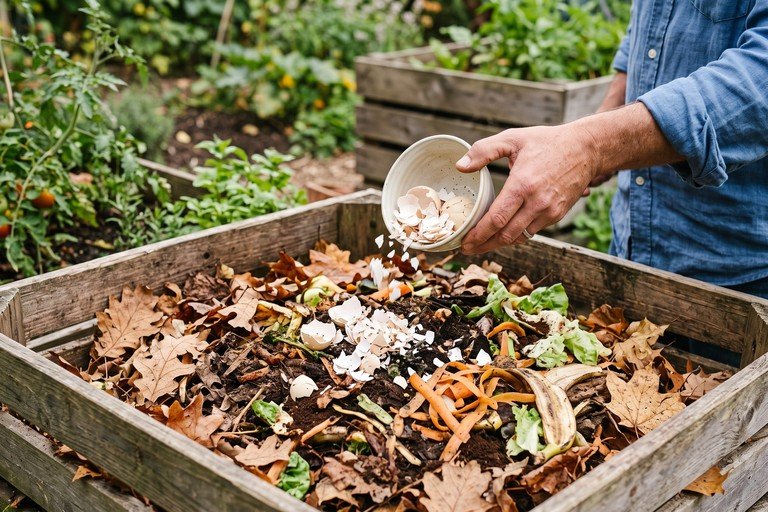
Eggshells are a fantastic source of calcium and other nutrients for your garden soil, but adding them to your compost pile requires a small amount of preparation. If you throw whole eggshells into your compost bin, they can take years to break down and may attract unwanted pests.
The good news is that with a few simple steps, you can turn eggshells into a valuable soil amendment. By crushing them properly and balancing them with other compostable materials, you can speed up decomposition and support a healthy soil food web.
Key Takeaways
- Eggshells must be crushed into tiny fragments to speed up decomposition.
- Rinse eggshells before composting to prevent odors and discourage pests.
- Eggshells supply calcium, which is vital for preventing blossom end rot in tomatoes and peppers.
- They count as neutral or slow-release grit rather than wet greens or dry browns.
Quick Guide
| Composting Method | Preparation Required | Decomposition Speed |
|---|---|---|
| Whole eggshells | None | Very slow (years) |
| Coarsely crushed eggshells | Crush by hand | Moderate (months) |
| Finely powdered eggshells | Grind in blender or pestle | Fast (weeks) |
| Rinsed vs unrinsed | Rinse and dry | Prevents unwanted pests and smells |
Why eggshells are great for garden soil
Eggshells are made almost entirely of calcium carbonate, a compound that strengthens plant cell walls and regulates soil acidity. This makes them especially beneficial for calcium-loving crops like tomatoes, peppers, eggplants, and squash.
When eggshells break down in the soil, they release calcium gradually, ensuring that plants have a steady supply throughout the growing season.
Rinse and dry before crushing
Before throwing eggshells into your compost bin, give them a quick rinse with warm water to remove any residual egg white. This prevents the shells from smelling sour and attracting flies or rodents.
Let the shells dry completely on a windowsill or counter for a day or two. Dry eggshells are much easier to crush into fine particles.
How to crush eggshells for maximum surface area
The speed at which eggshells decompose depends entirely on their surface area. Whole eggshells can survive in finished compost for years.
Put dry eggshells in a bag and roll over them with a rolling pin, or use a food processor or coffee grinder to turn them into a fine powder. Finely powdered eggshells are absorbed by soil organisms almost immediately.
Myth busting: Do eggshells deter pests?
Some gardeners spread crushed eggshells around plants to deter slugs, believing the sharp edges will repel them. However, practical tests show that slugs can easily crawl over crushed shells.
Use eggshells as a nutritious soil addition and compost builder rather than relying on them as a physical barrier for pests.
Keep your compost bin balanced
While eggshells are an excellent addition, they should always be matched with plenty of dry browns to keep the compost balanced.
For more details on balancing your pile, check out How to Balance Greens and Browns in a Small Compost Bin.
FAQ
Can I put eggshells directly in garden soil without composting?
Yes, but they will take a very long time to release nutrients unless they are ground into a fine powder first.
Should I bake eggshells before composting?
Baking is not necessary for composting, but a light bake (200°F for 10 minutes) drys them out completely and makes crushing them much easier.
Do eggshells change soil pH?
Yes, but very slowly and mildly. They act as a slow-release liming agent that helps buffer acidic soils over time.
Conclusion
Composting eggshells is an easy, eco-friendly way to recycle valuable nutrients back into your garden. Just rinse, dry, crush them finely, and mix them into your balanced bin to give your plants a natural calcium boost.
Image Credits
- Featured image generated with Nano Banana for Renewable Gardening as a custom, topic-specific editorial image for Can You Compost Eggshells? How to Prepare Them Safely (media ID 745).