
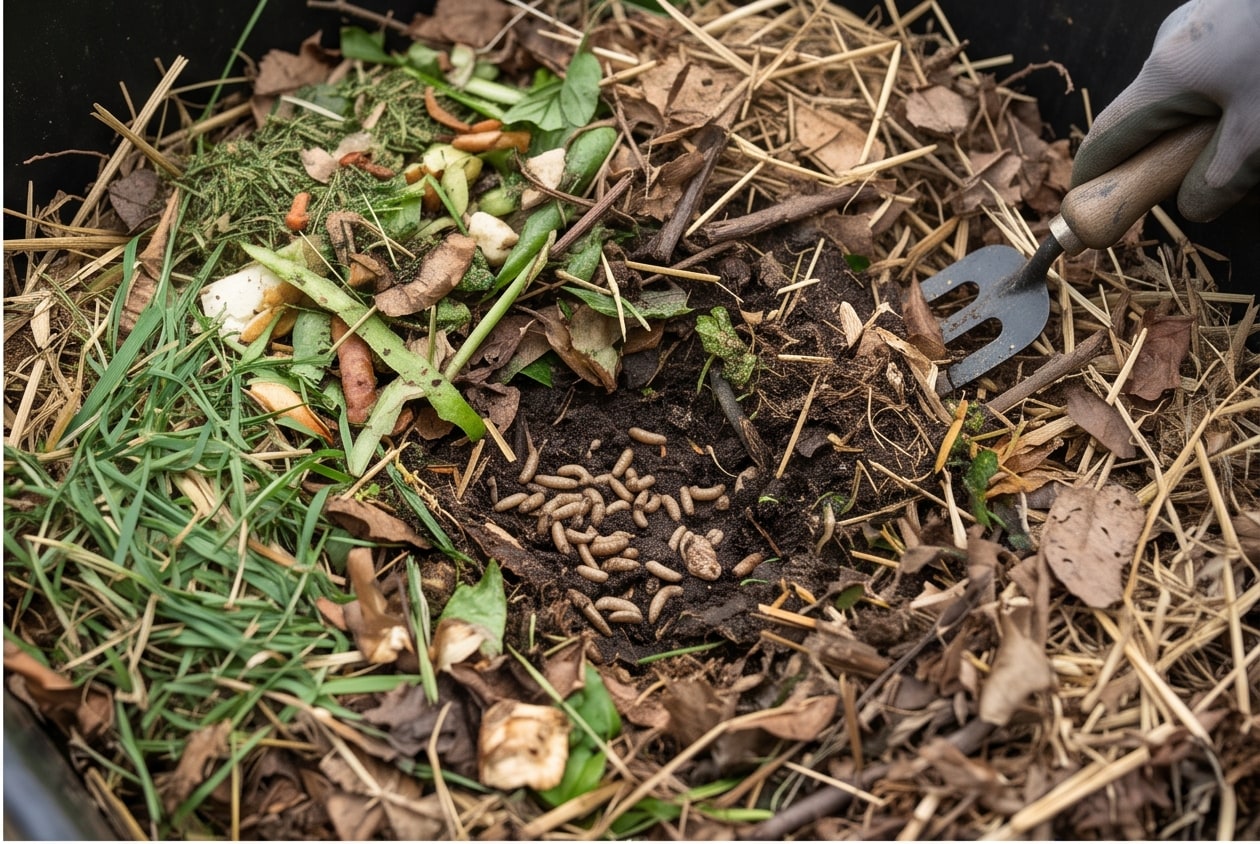
Finding maggots in compost can feel alarming, but it does not automatically mean the bin is ruined. Larvae often appear when moist food scraps are breaking down near the surface.
The practical question is whether the bin still smells earthy and balanced. If it smells rotten, looks soggy, or has exposed scraps, the larvae are a clue that the system needs more browns, air, and food coverage.
Key Takeaways
- Maggots are usually a sign of wet, food-rich compost rather than a disaster.
- If the bin smells bad, add dry browns and bury fresh scraps.
- Do not add meat, dairy, or oily foods to a backyard bin.
- A healthy bin can recover quickly once moisture and coverage improve.
Quick Guide
| What You See | What It Means | What To Do |
|---|---|---|
| A few larvae in food scraps | Normal decomposition activity | Bury scraps better |
| Many larvae plus sour smell | Too wet and food-heavy | Add browns and mix lightly |
| Larvae around meat or dairy | Wrong materials for home bin | Remove problem material |
| Earthy bin with larvae low down | Likely harmless | Keep managing balance |
Do not panic first
Larvae are decomposers. They are breaking down material that was already attractive to insects. In many bins, they come and go without causing a lasting problem.
The bigger issue is what brought them there: wet food, poor coverage, or a bin that has become too rich in greens.
Rebalance wet food-heavy compost
Add dry leaves, shredded plain cardboard, straw, or torn paper. Open dense pockets gently so air can move, then cover fresh food scraps with a dry layer.
If the bin also smells bad, follow Compost Smells Bad? How to Fix a Stinky Compost Bin.
Remove the wrong materials
Backyard compost bins should usually skip meat, dairy, oils, and greasy foods. Those materials attract pests and can create odor problems that are harder to manage in a small home system.
Prevent the next outbreak
Keep a browns container nearby so every kitchen-scrap addition can be covered immediately. In warm weather, add scraps in smaller batches and avoid leaving soft food exposed.
For summer timing, see How Often Should You Turn Compost in Summer?.
FAQ
Should I remove maggots from compost?
Usually no. Fix the bin conditions instead. Remove only problem materials such as meat, dairy, or greasy food.
Do maggots mean compost is unsafe?
Not by themselves. A rotten smell, pest activity, or wrong food materials matter more than larvae alone.
How do I prevent maggots in compost?
Bury scraps, cover with dry browns, avoid meat and dairy, and keep the bin from staying soggy.
Conclusion
Compost maggots are unpleasant but often manageable. Treat them as feedback: the bin needs better food coverage, more dry browns, and less wet material near the surface.
Image Credits
- Featured image generated with Nano Banana for Renewable Gardening as a custom, topic-specific editorial image for Compost Maggots: Are They Bad for Your Bin? (media ID 684).