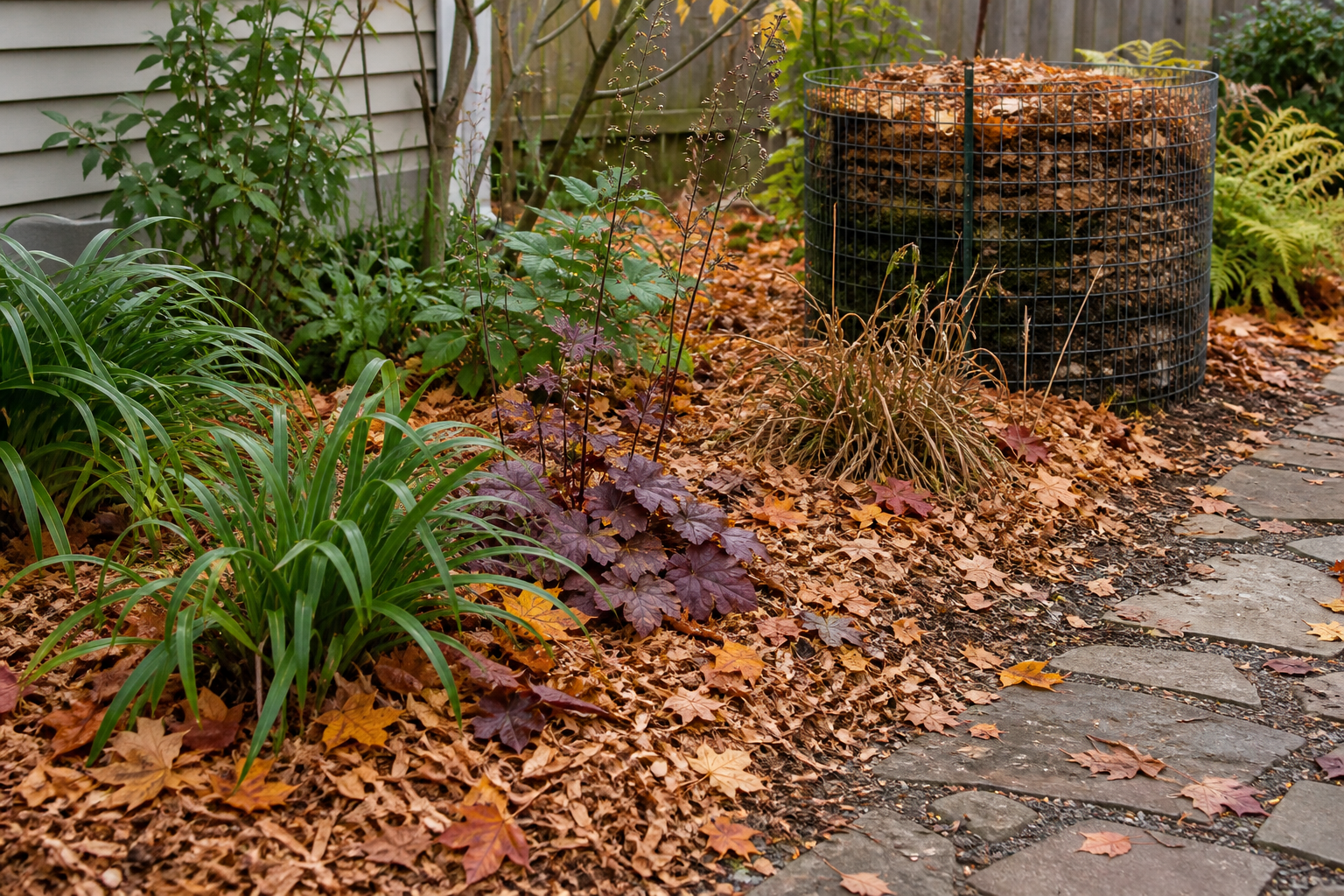
Fall leaves are not automatically yard waste. In a small yard, they can become mulch, compost browns, leaf mold, path material, or habitat. The trick is using them in the right places instead of leaving one smothering layer across everything.
Key Takeaways
- Shredded leaves make better mulch than thick whole-leaf mats.
- Dry leaves are valuable browns for compost bins.
- Leaf piles can support wildlife when placed intentionally.
- Small yards need sorting: keep some leaves, move some leaves, and remove only what you cannot use.
Quick Comparison
| Use | Best Place | Tip |
|---|---|---|
| Leaf mulch | Garden beds | Shred or use thin layers |
| Compost browns | Near bin | Store dry bags for winter scraps |
| Leaf mold | Contained pile | Let leaves break down slowly |
| Habitat | Quiet corners | Avoid smothering lawn or paths |
Shred leaves for garden beds
Whole leaves can mat together, especially on small beds. Shredded leaves settle more evenly and break down faster. Use a thin layer around plants and keep leaves away from crowns and stems.
Save dry leaves for compost
A small compost bin often gets too many wet kitchen scraps and not enough browns. Bag or bin dry leaves in fall so you have carbon-rich material ready all winter.
If your bin gets smelly, use Compost Smells Bad? as the troubleshooting guide.
Make leaf mold in a contained corner
Leaf mold is simply leaves broken down slowly by fungi. It does not need much attention. A wire ring, breathable bag, or tucked-away corner can turn extra leaves into a useful soil conditioner.
Keep habitat without letting the yard look neglected
Leaving leaves can help insects and soil life, but that does not mean every surface needs a thick layer. Move leaves off sidewalks, drains, and delicate lawn areas, then keep useful leaves in beds and quiet edges.
For broader cleanup planning, see How to Plan a Low-Waste Garden Cleanup Weekend.
A Small-Yard Leaf Sorting System
Small yards work best with a simple sorting habit. Keep clean dry leaves for compost browns, shred leaves for garden beds, move leaves away from drains and paths, and leave a small habitat layer only where it will not smother plants or look abandoned.
- One bag or bin for dry compost browns.
- One thin shredded layer for beds.
- One quiet corner for habitat.
- One cleanup pass for sidewalks, drains, and lawn mats.
What Not to Do With Leaves
Do not pile thick wet leaves against plant crowns, leave heavy mats on small lawns all winter, or blow everything into the street. Those habits waste useful organic matter and can create drainage or neighborhood problems.
FAQ
Should I leave leaves on the lawn?
A thin shredded layer can be fine, but thick mats can smother grass. Move excess leaves into beds, compost storage, or leaf mold piles.
Are leaves good for compost?
Yes. Dry leaves are one of the best brown materials for balancing kitchen scraps and grass clippings.
Can I use whole leaves as mulch?
Use whole leaves carefully and thinly. Shredded leaves are usually easier to manage in small beds.
Conclusion
In a small yard, fall leaves are best treated as a resource to sort. Keep useful leaves in beds, compost systems, and quiet habitat corners, then remove only the excess you truly cannot use.
Image Credits
- Featured image generated for Renewable Gardening as a custom editorial image for What to Do With Fall Leaves in a Small Yard (media ID 572).